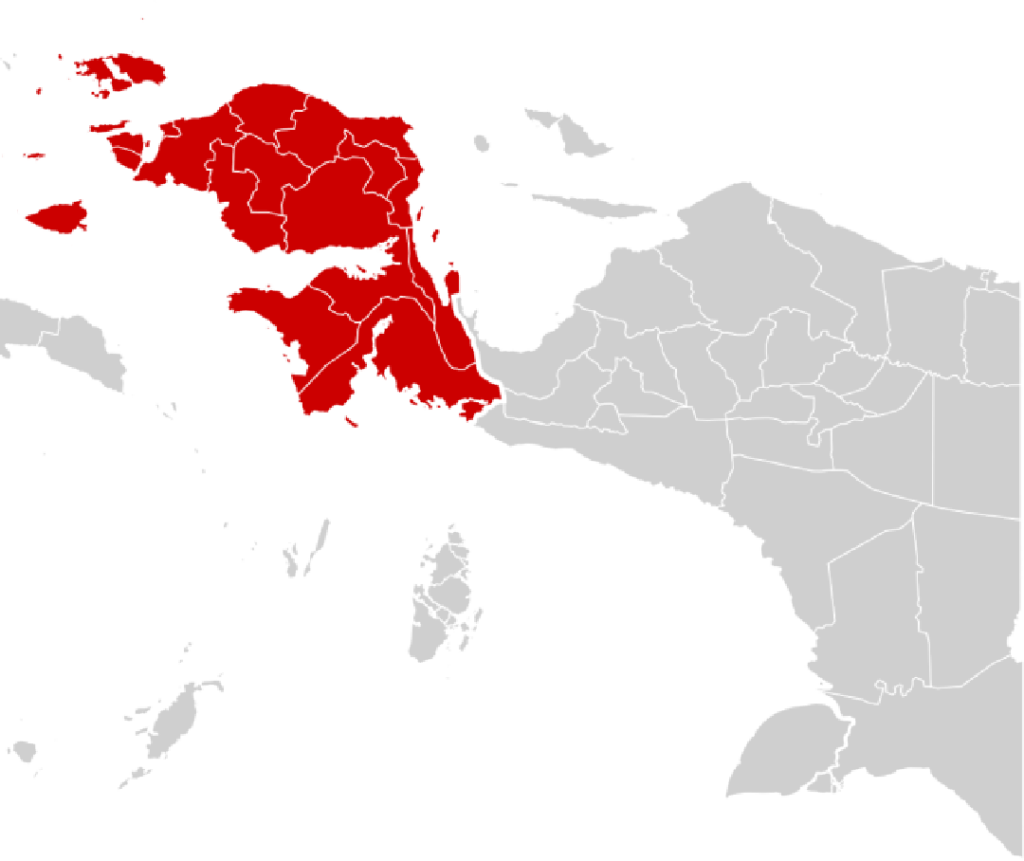
On the early night of November 18, 2025 night in Jayapura, 28-year-old Irene Sokoy, an expectant mother in critical condition, was rushed from her home in Hobong Village, Sentani District, Jayapura Regency, Papua by family members with speedboat desperate for help. She was in pain, bleeding heavily, and clearly in need of emergency care. Yet what unfolded over the next several hours would horrify Papua, ignite national outrage, and force the provincial government to take unprecedented action.
According to multiple reports from Kompas, Media Indonesia, and Tribun Papua, Irene was allegedly rejected by several hospitals in Jayapura (Yowari Hospital, Abepura Hospital, Dian Harapan Hospital, Bhayangkara Hospital and Dok II Jayapura Regional Hospital) with staff citing reasons ranging from unavailable beds to lack of specialist personnel. By the time her family managed to secure help, it was too late. Irene and her baby—who had not yet been given a name—both died before receiving critical, life-saving treatment.
The news spread rapidly across Papua, triggering waves of condemnation from the Saireri youth movement, women’s groups, and church networks. In towns and villages across the province, anger blended with exhaustion—this was not the first time a patient had been turned away. But it was one tragedy too many.
Public Outrage: “This Is Not Just Negligence—This Is Injustice”
Within hours, social media platforms across Papua lit up with messages demanding accountability. Videos circulated of community leaders denouncing the healthcare system, arguing that Irene’s death represented a systemic failure that Papuans had long endured. From Jayapura to Biak, residents spoke the same painful truth: access to reliable emergency care remained out of reach for far too many families.
The Saireri Youth Movement issued one of the strongest statements, calling Irene’s death “a moral crime” and urging the government to impose firm sanctions on hospitals that refused emergency patients. Youth representatives gathered outside government offices, holding signs that read, “Stop Rejecting Patients,” “Healthcare is a Right,” and “Justice for Irene.”
For many Papuans, Irene became a symbol—not only of tragedy, but of the fragility of healthcare access in remote and disadvantaged areas. Her story was heartbreaking, but it was not unfamiliar.
The Governor’s Fury: “Any Hospital That Rejects Patients Will Face Consequences”
Papua Governor Mathius Fakhiri responded swiftly—and fiercely.
In a series of statements reported by Paraparatv, Cepos Online, and Jayapura Post, Governor Fakhiri condemned the actions of the hospitals involved, calling their refusal to treat Irene an “unacceptable violation of medical ethics and public duty.”
His warning was unequivocal:
“Any hospital or puskesmas that refuses emergency patients will face immediate consequences. If necessary, I will dismiss the directors myself.”
This language—unusually strong for a provincial public official—reflected the gravity of the situation. For Fakhiri, Irene’s death was not an isolated incident but a symptom of deeper structural problems: understaffed emergency units, poorly coordinated referral systems, inadequate 24-hour services, and administrative barriers that slowed down urgent care.
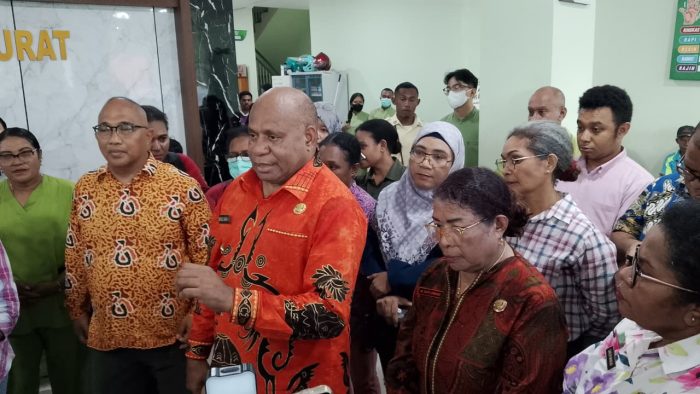
The governor personally conducted surprise inspections at hospitals across Jayapura, as reported by West Papua Voice, finding gaps in staffing, malfunctioning equipment, and miscommunication between medical units. He described the experience as “deeply alarming” and vowed that Papua’s healthcare system would undergo immediate reforms.
A Broken Referral System: Where the Crisis Truly Lies
One of the core issues highlighted in the aftermath was Papua’s referral system, especially in Abepura and greater Jayapura, where multiple facilities allegedly turned Irene away. An Antara News report emphasized that regional referral centers suffer from bureaucratic hurdles and poor coordination, often causing confusion about which hospital is responsible for emergency intake.
When minutes determine life or death, even small delays can be fatal.
Healthcare experts interviewed by local media noted that many hospitals in Papua are overburdened with chronic shortages—of doctors, of midwives, of anesthesiologists, of emergency rooms, of maternity beds, and even of basic triage staff. But while capacity constraints are real, they do not justify rejecting patients in critical condition, especially in an emergency maternity case like Irene’s.
The public’s central demand was clear: No more rejections. No more excuses. No more preventable deaths.
A Province on Edge: Maternal Mortality as a Longstanding Crisis
Papua has long struggled with high maternal mortality rates. Many rural and remote communities still lack adequate maternity clinics, leading expectant mothers to travel long distances—sometimes hours by boat, car, or on foot—to reach the nearest health facility. Even in urban centers, emergency maternity services remain fragile.
Irene’s death reopened painful memories for many families who had faced similar experiences. Churches, women’s networks, and civil society groups argued that Papua was facing a maternal health emergency, one that had not been fully addressed for years.
The tragedy forced the provincial government to confront a harsh reality: the healthcare system was not only failing patients but also losing the trust of the communities it served.
Governor Fakhiri’s Action Plan: Rebuilding Trust and Reforming Healthcare
In the days following the tragedy, Governor Fakhiri unveiled a multi-step reform agenda. According to various sources including WestPapuaVoice.ac, Noken Live, and regional Papua outlets, his reform initiatives include:
- Strict Sanctions for Hospitals That Reject Patients
Hospitals and puskesmas must accept all emergency patients. Directors who violate this mandate risk immediate dismissal.
- Upgrading Emergency Room Infrastructure
The government plans to enhance facilities at regional referral hospitals, including Abepura and Jayapura, with modern equipment and expanded capacity.
- Mandatory 24-Hour Emergency Readiness
All hospitals are required to ensure staffing availability, including midwives, ER doctors, and specialists on call.
- Faster Referral Procedures
Referral delays—often caused by administrative complications—will be streamlined to prevent life-threatening wait times.
- Independent Monitoring and Community Participation
Civil society groups and local journalists will be invited to help identify system weaknesses and report violations.
- Capacity Building for Medical Personnel
Training programs for emergency triage, maternal care, and crisis response will be expanded, particularly for midwives and frontline nurses.
Taken together, these measures represent one of the most ambitious healthcare reform efforts in Papua’s recent history.
The Role of Journalists: Witnesses and Watchdogs
One striking aspect of this case was the role of the media—especially Papua’s journalist networks. They followed Irene’s story from the moment it broke, interviewing family members, gathering eyewitness accounts, and documenting the systemic failures that contributed to her death.
Their reporting helped ensure that the tragedy did not fade quietly into the background. Instead, they transformed it into a national conversation about accountability, ethics, and human rights in medical care.
Governor Fakhiri acknowledged this publicly, stating that journalists had become essential partners in the fight for better healthcare governance. In many ways, the press served as both a mirror and a megaphone—reflecting the public’s frustration and amplifying demands for change.
A New Social Contract Between Government and Citizens
For many Papuans, what they want is simple: to be treated with dignity, to be kept safe, and to trust that when they seek help in an emergency, the healthcare system will not abandon them.
Governor Fakhiri’s reform plan reflects an attempt to rebuild that trust. But trust cannot be decreed—it must be earned. And the road ahead remains long and challenging.
Still, there is a sense of renewed urgency. Community leaders, midwives, journalists, advocates, and religious groups are now watching more closely than ever. The government knows this. Hospitals know this. And perhaps that public pressure, ignited by Irene’s death, may become the catalyst Papua has needed for years.
Conclusion
The death of Irene Sokoy should never have happened. It was preventable. It was unjust. And it exposed deep fractures in Papua’s healthcare system that had long been ignored.
But Irene’s story has also sparked something powerful—a collective demand for change, a call for dignity, and a public insistence that every life matters.
If Governor Fakhiri’s reforms succeed, this tragedy may mark not only an ending but a beginning: the beginning of a healthcare transformation that prioritizes humanity over bureaucracy, compassion over excuses, and life over indifference.
For now, Papua mourns. But it also moves forward—determined to ensure that no mother, no child, and no family will ever again suffer the fate of Irene Sokoy.