On most days, the waiting room at Regional Hospital (RSUD) Dok II in Jayapura fills up before noon.
Patients arrive early, some traveling from nearby neighborhoods, others from districts much farther away. A few sit quietly, holding referral papers. Others stand near the registration desk, asking questions about procedures they do not fully understand.
There is a rhythm to the place. Moderate pace. Somewhere in between.
If you spend enough time there, you begin to notice something.
The challenges are not always visible in the building itself.
The walls are standing. The equipment is there. The doctors are present.
But the system behind it all does not always move as smoothly as it should, often leading to delays in patient care and inefficiencies in service delivery.
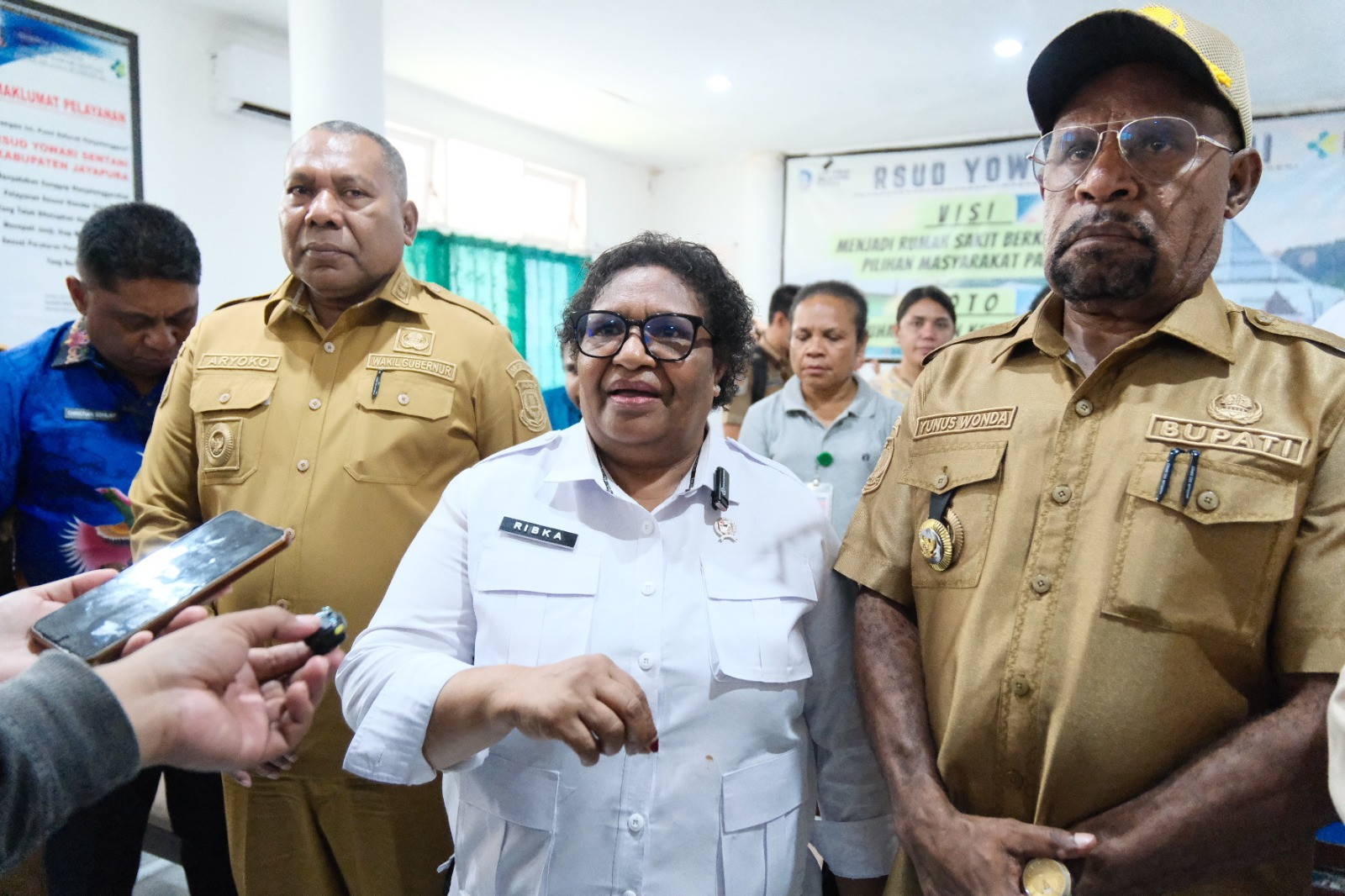
That is the problem that Deputy Minister of Home Affairs, Ribka Haluk, is trying to address.
And unlike many policy discussions that stay in documents and presentations, this one starts with something very concrete.
This discussion focuses on the daily operations of a hospital.
A Conversation That Felt Different
On March 27, 2026, Ribka Haluk spoke with hospital directors and local officials about the condition of healthcare services in Papua.
The conversation did not revolve around building new hospitals.
It focused on something less visible, but just as important: the management of existing healthcare services and the governance structures that support them.
Management.
Governance.
Coordination.
It was, in many ways, a recognition that improving healthcare is not only about adding more facilities.
It is about making sure the existing ones function properly.
What Was Found on the Ground
Earlier visits and evaluations revealed a series of issues that might seem technical at first but have real consequences for patients.
At several hospitals in Jayapura, including RSUD Dok II, RSUD Abepura, and RSUD Yowari, officials found problems that had little to do with medical expertise.
There were administrative gaps.
Unclear management structures.
Even issues related to land certification and the use of hospital space.
None of these are dramatic on their own.
But together, they create friction.
And in healthcare, even small inefficiencies can have large effects, such as delays in patient care, increased costs, and reduced overall quality of service.
A Doctor’s Quiet Frustration
A young doctor at one of the hospitals described it in a way that felt honest, without being critical.
“We can treat patients,” he said.
“That is not the issue.”
He paused, then added, “Sometimes the system makes things slower than they need to be.”
He did not elaborate further.
He did not need to.
Anyone who has spent time in a hospital understands what that means.
Why Governance Matters
Patients often judge healthcare systems based on their experiences.
Doctors.
Nurses.
Facilities.
But behind every interaction, there is a structure that determines how everything works.
Who handles registration?
How patient data is managed.
How referrals are processed.
How resources are allocated.
If that structure is weak, even the best medical professionals can struggle.
That is why the current effort focuses on governance.
Learning From Elsewhere
One of the more practical steps in this reform effort involves collaboration with RSUP Dr. Sardjito Hospital, a major teaching hospital in Yogyakarta.
Rather than reinventing systems from scratch, the approach is to learn from institutions that already function well.
Hospital teams from Papua are being encouraged to observe, train, and adapt.
At first, some of this training was conducted online.
But it quickly became clear that virtual sessions have limits.
“People need to see how things work directly,” Ribka Haluk emphasized during one discussion.
That means visiting.
Observing.
Asking questions in real time.
Why Face-to-Face Still Matters
There is something about being physically present that cannot be replaced by screens.
Seeing how a hospital manages patient flow.
Watching how administrative teams coordinate.
Understanding how small decisions are made throughout the day.
These details matter.
And they are often easier to grasp in person.
A System That Touches Everyone
Healthcare reform is often discussed in terms of policy.
But its impact is deeply personal.
For a mother bringing her child to a clinic.
For an elderly patient waiting for treatment.
A nurse is responsible for overseeing a hectic shift.
Every improvement in the system affects real people.
A Nurse’s Perspective
In a ward at RSUD Abepura, a nurse shared her experience.
“We try to do our best,” she said.
“But sometimes we are also waiting for the system.”
She explained how delays in administration can affect patient care.
“It’s not always about medical work,” she added.
“It’s about coordination.”
The Geography Factor
Papua’s geography adds another layer of complexity.
Many patients travel long distances to reach hospitals.
Some patients hail from remote areas with limited healthcare facilities.
For them, delays are not just inconvenient.
They can be serious.
Improving governance helps reduce unnecessary obstacles.
It makes the system more predictable.
Beyond Infrastructure
Over the years, there has been significant investment in healthcare infrastructure in Papua.
New buildings.
Additional equipment.
Expanded facilities.
These are important.
But infrastructure alone does not guarantee quality service.
A well-built hospital can still function poorly if management systems are weak.
A Shift in Thinking
What makes this current effort notable is the shift in focus.
From building more.
To manage better.
From adding resources.
To optimize what already exists.
It is a subtle shift.
But an important one.
The Role of the Central Government
The involvement of the Ministry of Home Affairs and the Ministry of Health signals that the project is not a localized initiative.
It is part of a broader national effort.
Both ministries directly monitor progress, ensuring the implementation of planned improvements.
This level of attention matters.
It creates accountability.
A Patient’s Experience
In the waiting area, a middle-aged man holds his medical file, glancing occasionally at the registration desk.
When asked about his experience, he responds simply.
“Sometimes we wait,” he says.
“But we understand.”
He pauses, then adds, “If it can be faster, that would be beneficial.”
It is a modest expectation.
But it reflects something universal.
People want systems that work.
The Human Side of Reform
Policy discussions often focus on structures and strategies.
But at its core, healthcare reform is about people.
The professionals who deliver services.
The patients who depend on them.
The administrators who keep everything running.
Improving governance means supporting all of them.
A Long Process
No one expects immediate transformation.
Reforming a system takes time.
It involves:
Adjusting procedures.
Training staff.
Changing habits.
Building new routines.
Each step may seem small.
But together, they create change.
A Quiet Determination
What stands out in this effort is not dramatic language or ambitious promises.
It is a sense of determination.
A recognition that the system can be better.
Additionally, there is a willingness to work through the details to make improvements happen.
Conclusion
The coming months will be important.
Training programs will continue.
Hospitals will begin to implement changes.
Progress will be monitored.
Challenges will emerge.
Adjustments will be made.
This is how systems evolve.
Back at the Hospital.
As the afternoon progresses, the waiting room at RSUD Dok II begins to empty.
Patients are called in one by one.
Doctors continue their work.
Nurses move between rooms.
From the outside, it looks like an ordinary day.
And in many ways, it is.
But beneath that routine, something is shifting.
Slowly.
Quietly.
Conclusion
Healthcare reform usually happens in gradual moments.
It happens in small adjustments.
In improved coordination.
In processes that become a little more efficient.
In waiting times that become somewhat shorter.
The effort led by Ribka Haluk is not about changing everything at once.
The goal is to gradually improve the system.
In Papua, where healthcare access has long been a challenge, small changes can mean a great deal.
Not just for the system.
But for the people who rely on it every day.