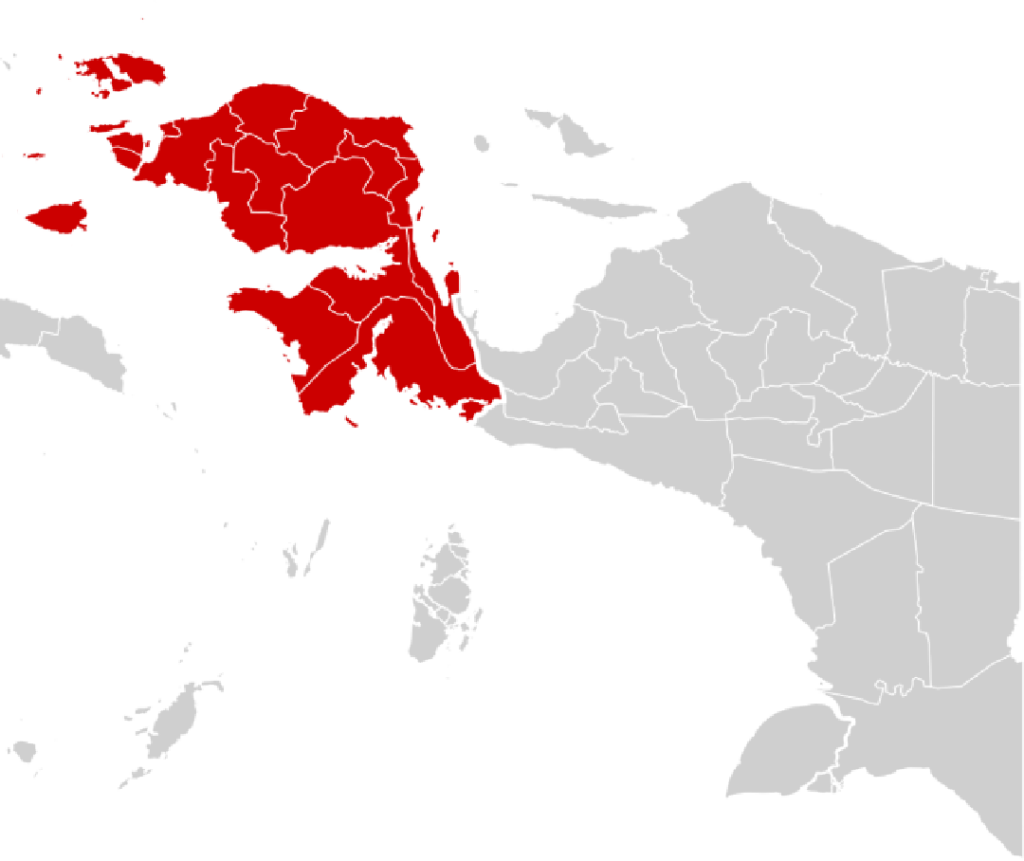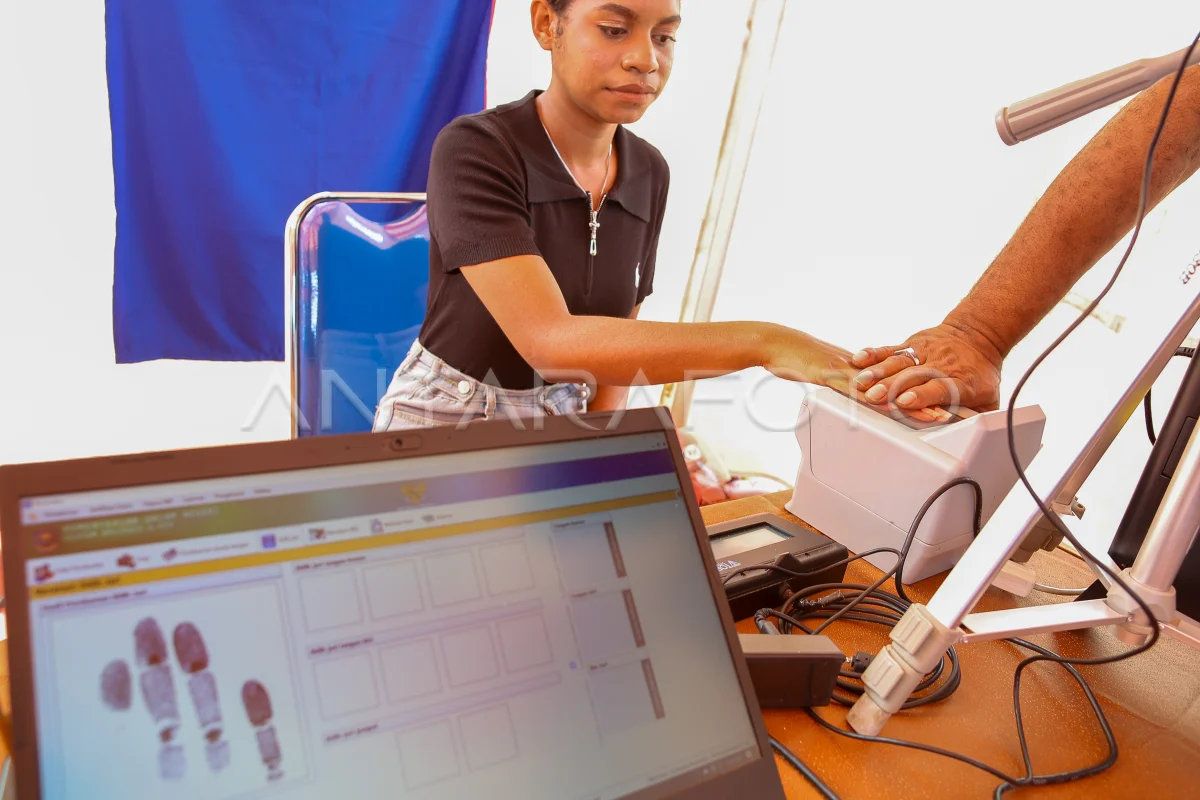
Papua has entered a new chapter in its administrative and social transformation with the launch of the Digital Population Identity for Indigenous Papuans, known as IKD OAP. The initiative marks one of the most significant reforms in the era of Papua’s Special Autonomy, symbolizing not only technological progress but also the government’s commitment to affirming the rights and recognition of Indigenous Papuans in an increasingly digital society. The launch took place at a symbolic moment during the commemoration of the 24th anniversary of Papua’s Special Autonomy on November 21, 2025, representing a convergence of political intention, cultural acknowledgment, and administrative modernization. More than just a digital ID, IKD OAP embodies a structure of protection—guarding authenticity, ensuring accuracy, and preventing identity manipulation that has historically affected Papuans in welfare distribution, political representation, and equitable access to state services.
At its core, the digital identity program is an effort to bring Papuans closer to the national digital ecosystem by personalizing administrative utilities in a way that acknowledges the distinct characteristics and status of Indigenous Papuans. The aim is to ensure that every Indigenous Papuan receives official recognition in government systems—recognition that is essential for justice, welfare, and inclusion. With Papua’s demographic complexity, vast geography, and evolving socio-political dynamics, the shift toward digital identity is expected to reshape how the state interacts with its Indigenous communities while reducing the risk of administrative disparities.
Modernizing Governance: Why Papua Needs a Digital Identity System
For decades, population administration in Papua has faced persistent challenges: limited access to civil registry offices, duplicate or inconsistent identity records, difficulty verifying Indigenous status, and administrative barriers that affect the distribution of public services. In many rural areas, people must travel hours or days to reach district offices, often facing poor connectivity and geographic isolation. These conditions have resulted in incomplete records, unregistered births, and unclear documentation of Indigenous identity—issues that directly impact eligibility for social programs, land rights recognition, and political representation.
Digitalizing identity for Indigenous Papuans seeks to tackle these problems at their root. The new system incorporates biometric verification, encrypted digital storage, and a dedicated Indigenous status indicator tailored to Papua’s sociocultural categories. By integrating this system into Indonesia’s broader digital population database, it becomes possible to streamline public services such as social assistance, education access, healthcare registration, banking requirements, and electoral participation. More importantly, it strengthens the integrity of Indigenous data, providing a clear and accurate demographic account of Indigenous Papuans that has implications for policymaking, budget allocation, and protection of Indigenous rights under Special Autonomy laws.
The digital-based identity also aims to minimize the long-standing issue of duplicate data or fraudulent identity claims. In the past, overlaps between Indigenous and non-Indigenous registrants sometimes resulted in inaccurate population projections and complications in the administration of region-based welfare programs. The new system integrates advanced verification technologies that help ensure the uniqueness of each individual’s record, reinforcing database security and reducing opportunities for exploitation.
Ensuring Authentic Representation: Preventing Duplicate Identities and Protecting Indigenous Rights
One of the strongest motivations behind the implementation of IKD OAP is the need to prevent identity manipulation. Cases of duplicate data, inconsistent registration, or falsified Indigenous claims have been concerns in many regions across Papua. These issues not only distort demographic statistics but also affect the distribution of government resources designed specifically for Indigenous communities under Papua’s Special Autonomy provisions. With a digital identity system that embeds Indigenous status onto secure, encrypted digital platforms, local governments now have a stronger mechanism to prevent double registration or identity misuse.
For Indigenous Papuans, accurate and authenticated identity is more than an administrative requirement—it is a gateway to political recognition, customary land rights, and access to community-based welfare programs. Under Special Autonomy, Indigenous populations are entitled to various forms of affirmative support, including Indigenous scholarships, community development funds, capacity-building programs, and preferential inclusion in government positions. Without a reliable and tamper-proof identity system, these entitlements risk being distributed inaccurately or unfairly. The launch of IKD OAP therefore strengthens the legal integrity of Indigenous rights by ensuring that each recognized beneficiary is recorded correctly.
Another key benefit is increased transparency in demographic reporting. By distinguishing Indigenous Papuans within the population database, policymakers can better identify specific needs such as educational disparities, local economic challenges, health service gaps, and employment barriers. This precision enables policies that are more targeted, contextual, and aligned with local realities—something that has long been demanded by Indigenous leaders and academics in Papua.

Bridging Digital Gaps: Social Inclusion Through Technology
The shift toward digital identity is not merely an administrative upgrade; it is a social inclusion project. By integrating Indigenous identity into digital formats accessible via mobile devices, Papua is reducing bureaucratic barriers and bringing public services closer to local communities. For many Indigenous Papuans living in remote or rural areas, accessing identity services used to require significant logistical effort. Now, digital identity can be stored on smartphones through secure applications, allowing people to validate their identity in real time at hospitals, banks, educational institutions, and public service counters.
This transformation also introduces a cultural dimension. For Indigenous Papuans, identity is deeply tied to lineage, territory, and tradition. Embedding Indigenous recognition within the digital ecosystem sends a strong message: that modern technology can coexist with cultural integrity and national unity. It demonstrates a model in which digital governance strengthens rather than erodes Indigenous identity.
Digital identity systems are also designed to accommodate individuals who may not have consistent internet access. The application allows offline storage and verification functions, ensuring that communities in remote areas are not excluded from essential services. Government teams continue to conduct outreach in various districts, distributing population documents, promoting awareness, and offering on-site registration to ensure that Indigenous communities can access the new system equitably.
The Social and Political Impact: Strengthening Papua’s Place within Indonesia
While the primary purpose of IKD OAP is administrative modernization, its broader impact reaches into social cohesion and political representation. By providing Indigenous Papuans with a digital identity system that clearly acknowledges their status, the policy reinforces Papua’s position within Indonesia’s multicultural framework. National and local leaders have emphasized that digital identity should serve as a bridge—promoting unity, reducing friction, and empowering Indigenous Papuans to participate more actively in national life.
Academic and community leaders have highlighted that digital identity must not be viewed solely as a technological tool but as an instrument of nation-building. For decades, Papua’s political environment has been marked by debates over identity, representation, and autonomy. A digital identity system that is accurate, transparent, and fair may help reduce suspicion or conflict arising from demographic uncertainties or misinterpretations. It strengthens Papua’s integration into national data systems, enabling better policy formulation and more equitable development programs.
Moreover, digital identity can help reduce the bureaucratic isolation that some Papuan communities have experienced. With verified digital profiles, Indigenous Papuans have greater access to labor markets, university admissions, civil service pathways, and financial inclusion programs. This means that the digital identity initiative has the potential to support long-term economic and social transformation in Papua, empowering Indigenous individuals to participate more fully in national opportunities without losing their unique cultural identity.
Implementation Challenges: The Need for Socialization and Public Understanding
Despite its benefits, the implementation of IKD OAP still faces challenges. Some Indigenous communities remain unfamiliar with the concept of digital identity, while others express concerns about data privacy, cultural implications, or administrative misunderstandings. Community leaders and local legislators have urged the government to intensify public communication, ensuring that the meaning, function, and benefits of digital identity are clearly understood.
Public outreach is essential not only to build trust but also to prevent misinformation. Socialization programs are being carried out in districts and villages, involving traditional leaders, youth groups, local governments, and civil society organizations. These efforts aim to ensure that people understand how digital identity works, what protections are in place, and how they can use it to access state services or validate their Indigenous rights. The success of IKD OAP ultimately depends on how well communities embrace it and how effectively local authorities manage the transition from paper-based administration to digital systems.
Conclusion
The launch of the Digital Population Identity for Indigenous Papuans stands as a milestone in Indonesia’s commitment to recognizing and empowering Indigenous communities. By integrating modern technology with Papua’s Special Autonomy framework, the government has taken an important step toward administrative justice, improved public services, and stronger protection of Indigenous rights. The digital identity system is not merely an innovation; it is a symbol of trust—affirming that Indigenous Papuans deserve accurate representation, improved access to national services, and a system that safeguards their identity.
As Papua moves forward into this new era, the digital identity initiative will play a transformative role in shaping social inclusion, strengthening demographic integrity, and promoting equitable development. The hope is that IKD OAP will not only streamline governance but also fortify Papua’s connection to the Indonesian nation, empowering Indigenous Papuans to participate more fully in the country’s future while preserving their cultural heritage and asserting their rightful place within the nation’s diverse identity landscape.