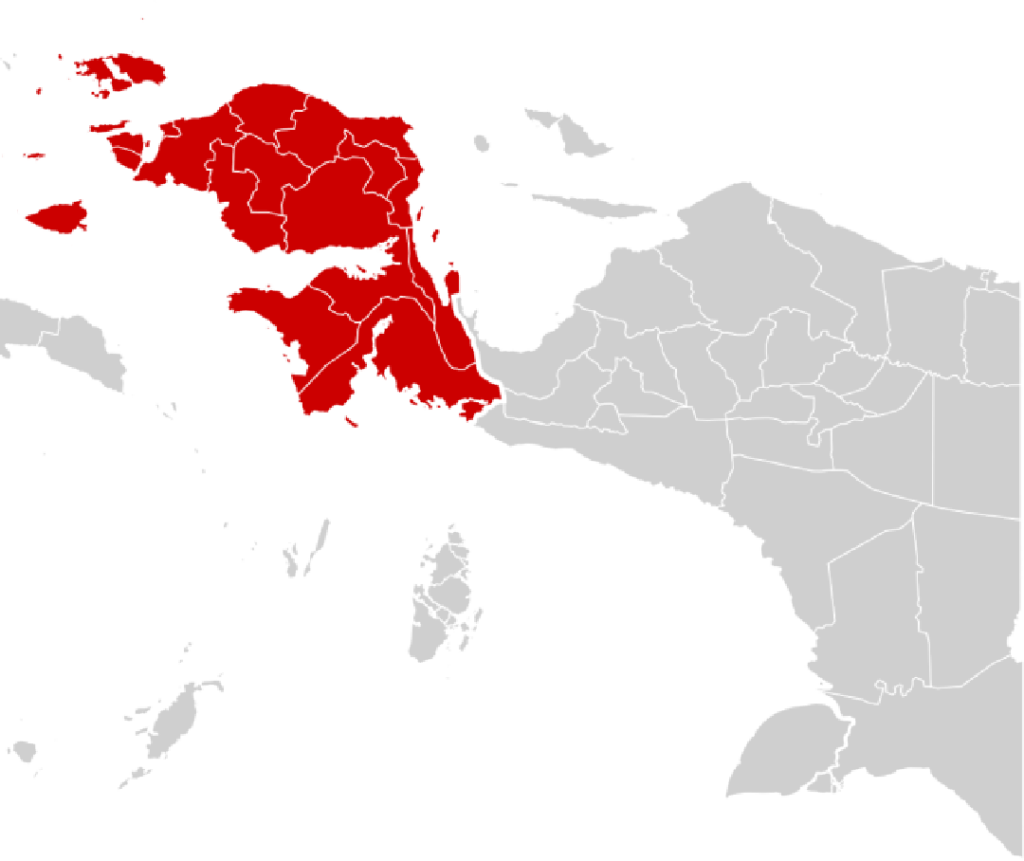
Scientists have found something amazing deep in the thick rainforests of Papua’s remote Bird’s Head Peninsula. There, a thick canopy blocks out most of the sunlight, and rivers carve quiet paths through ancient mountains. Researchers have confirmed that a small, hard-to-find marsupial that was thought to have gone extinct thousands of years ago is still alive. This news has shocked biologists around the world.
For a long time, the species only existed in fossils and museum records that were hard to find. Many scientists thought it went extinct about 6,000 years ago, near the end of the Ice Age. But careful fieldwork, working with local communities, and a renewed interest in science have shown that the animal never really disappeared. Instead, it had just been hiding in one of the least explored ecosystems on Earth.
The rediscovery is more than just a scientific curiosity. It shows how important Papua’s forests are to the environment, how much of Earth’s biodiversity is still unknown, and how important it is to protect the area as development threatens it more and more.
A Creature Thought Lost to Time
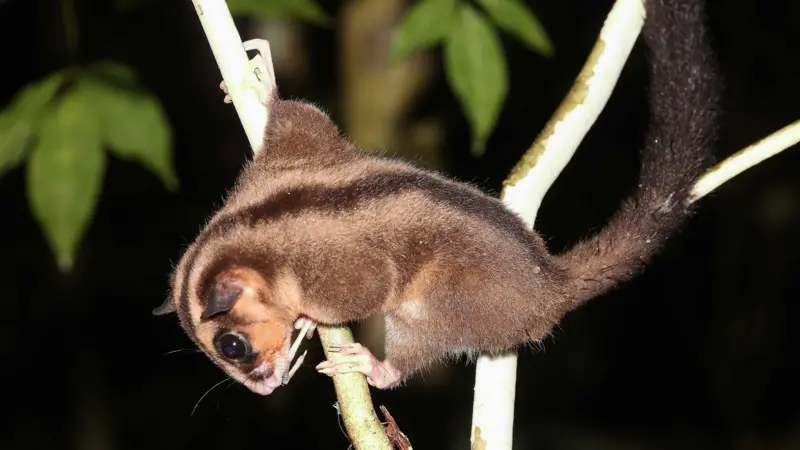
The pygmy long-fingered possum, or Dactylonax kambuayai, is the main character in this amazing story. It is a small marsupial that lives in trees and has black and white stripes on its head and body. The opossum is only about 17.6 centimeters long from head to tail, so it might be hard to see among branches and vines.
But it is very unusual because of one thing. One of its fingers is very long, which is a special adaptation that helps it get insect larvae that are hiding in tree bark. The possum uses this long finger to tap and probe wood before pulling out beetle larvae and other insects. This is similar to how the aye-aye lemur in Madagascar eats.
But for a long time, scientists only knew about the species from fossils and a few historical records. These fossils showed that similar animals lived in parts of Australia a long time ago, but their numbers seemed to drop off around the end of the Ice Age. Scientists thought the species had completely disappeared as the climate changed and habitats moved.
That idea lasted for thousands of years.
Up until now.
The Expedition That Changed Everything
The rediscovery came out of a bigger scientific study of the biodiversity of the Vogelkop Peninsula, a part of western Papua that is known for having some of the richest ecosystems in the world.
Tim Flannery, a well-known paleontologist and conservation scientist, led the research team. He worked with experts from around the world and Indonesian partners. The study used fossils, museum specimens, field observations, and interviews with Indigenous communities who have lived in the area for a long time.
It didn’t happen all at once. The scientific mystery started decades ago when scientists found hints that some Papuan marsupials might still be alive, even though they don’t seem to be in any modern records.
A specimen that was collected in 1992 and incorrectly identified in a museum collection was a very important piece of evidence. Years later, when scientists looked at the specimen again, they saw that it had features that were similar to those of the supposedly extinct possum.
Soon after, they did fieldwork in Papua.
Researchers found living groups of pygmy long-fingered possums in the remote forests of the Bird’s Head Peninsula. Their presence proved that the species had lived for thousands of years without being seen.
Biologists call this kind of discovery a “Lazarus taxon.” It refers to species that go missing from the fossil record or scientific observation for a long time and then suddenly show up again.
A Second Surprise in the Forest
The trip led to another surprise find. Scientists found a second marsupial species called the ring-tailed glider, Tous ayamaruensis, along with the possum.
This gliding mammal is part of a group that includes Australia’s greater gliders. It can move through the forest canopy by gliding between trees. The species makes long-term pairs and builds nests in tree hollows high above the ground.
Before, people mostly knew about the ring-tailed glider from fossils, just like the possum. The fact that it still lives in Papua today suggests that ancient evolutionary lineages have been around in the area for much longer than scientists thought.
These new discoveries show that Papua may be a safe place for species that went extinct in other places thousands of years ago.
Papua as a Biological Time Capsule
Scientists have been interested in Papua for a long time because of its amazing biodiversity. New Guinea, which is made up of the Indonesian provinces of Papua and West Papua, is thought to be one of the most biologically diverse places on Earth.
It has been cut off from the rest of the world for millions of years, and its rough terrain and huge rainforests have allowed many species to evolve on their own. There are no other places on Earth where these species live.
Papua can sometimes be like a living museum for evolutionary biologists. Animals that lived a long time ago and went extinct in other parts of the world are still alive in its forests.
The marsupials that were found again are a strong example of this. Fossil records show that animals that are related to each other used to live in parts of Australia, but they disappeared as the climate changed and ecosystems changed. These species, on the other hand, seem to have survived in Papua’s stable tropical forests.
This pattern isn’t new. Scientists have found rare or thought-to-be-extinct animals in Papua many times. This suggests that there may still be many unknown species in the area that are waiting to be found.
The Role of Indigenous Knowledge
The participation of local Indigenous communities was a key part of the discovery.
A lot of people who live in Papua’s forest areas have a lot of ecological knowledge that has been passed down through the years. Hunters and villagers often know animals that scientists may have never seen before.
Researchers in the Bird’s Head Peninsula depended a lot on working with Indigenous groups, like those from the Tambrauw and Maybrat regions. Scientists were able to find places where the rare marsupials might still live because they knew a lot about the local wildlife.
In some instances, the animals were already familiar to the local populace prior to formal scientific acknowledgment.
More and more people think that this partnership between modern science and traditional ecological knowledge is necessary for biodiversity research. In places like Papua that are far away, local communities often know the most about the ecosystem.
Why the Discovery Is Important
At first glance, finding a small forest marsupial again might seem like a small scientific event. But the effects are much bigger.
First, the finding shows how little we still know about biodiversity. In the 21st century, species thought to be extinct may still be present in uncharted ecosystems.
Second, the discovery makes the case that Papua’s forests are some of the most important places on Earth to protect.
The Bird’s Head Peninsula is already known as a place with a lot of different kinds of plants and animals. But logging, mining, and building new infrastructure are putting more and more pressure on the area.
Scientists say that protecting these habitats is important not only for known wildlife but also for species that have not yet been found. They say this because ancient species have lived there for thousands of years.
Finally, the rediscovery gives us new information about the history of evolution. Scientists could learn more about how ecosystems are able to bounce back by studying how these animals lived through changes in their environment that killed off their relatives in other places.
The Fragile Future of a Rediscovered Species
Even though the discovery is exciting, researchers warn that the possum and the ring-tailed glider are still very weak.
Papua’s forests are almost the only thing that keeps them alive.
Cutting down trees and changing the use of land could quickly destroy the unique habitats these animals need. Even small changes to the environment could put their populations at risk because they live in dense canopy areas and depend on certain food sources.
Scientists are now asking for stronger conservation measures in the Vogelkop region to make sure these old species are safe.
The rediscovery has also led to new research projects that try to figure out how many animals there are, where they live, and how they behave in the wild.
A Reminder of Earth’s Hidden Wonders
In a time when news about extinction is everywhere in the news, the rediscovery of a species that was thought to be extinct for 6,000 years is a rare moment of hope.
It makes us remember that there are still things we don’t know about the natural world.
Somewhere in the forests of Papua, small striped marsupials still move silently along branches at night, using their long fingers to tap tree bark and look for bugs. They have lived through ice ages, changes in the weather, and thousands of years of change.
For scientists, the fact that they are still alive is both amazing and scary.
A wonder because it shows how strong life can be when ecosystems stay the same.
A warning because the same forests that kept them safe for thousands of years may now be in the most danger they have ever been in.
As scientists keep looking into Papua’s remote areas, one thing is becoming more and more clear. There is still a lot to learn about the biodiversity of Earth. There may be many more species that the world has already declared lost hiding in its last wild places.