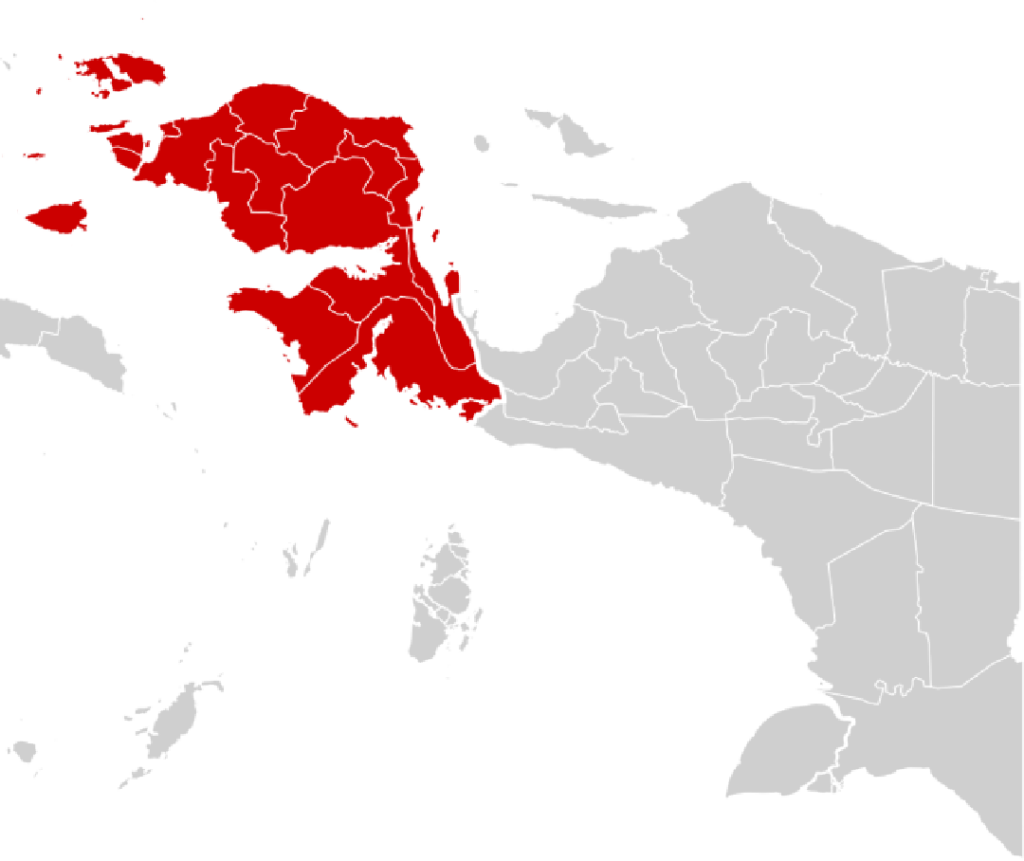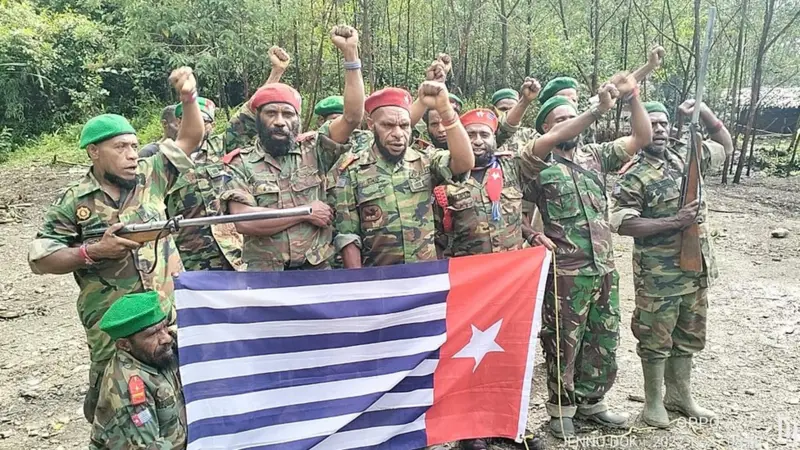
For many communities across Papua, 2025 will be remembered not by celebrations or development milestones, but by funerals, fear, and unanswered questions. Throughout the year, acts of violence linked to armed criminal groups (KKB) associated with the Free Papua Movement (OPM) claimed the lives of 94 people. The number, confirmed by Papua Regional Police at the end of the year, reflects not only a security crisis but also a humanitarian tragedy that continues to shape daily life in one of Indonesia’s most complex regions.
The victims were not statistics on paper. They were farmers tending gardens, traders traveling between districts, teachers serving in remote villages, miners working to support their families, and security personnel assigned to protect civilians. Each death left behind grieving families and communities struggling to cope with trauma that extends far beyond the immediate crime scene.
Understanding the Scale of Violence in 2025
Police data show that violence throughout 2025 was widespread and persistent. More than one hundred violent incidents were recorded across multiple districts under the Papua Regional Police jurisdiction. These cases occurred in various terrains, from mountainous interiors to forested valleys and rural settlements far from major towns.
Out of the 94 fatalities, the majority were civilians. Dozens of ordinary residents lost their lives in attacks that often occurred suddenly and without warning. In addition to civilian casualties, members of the Indonesian National Armed Forces and the National Police also paid a heavy price. Several soldiers and police officers were killed during patrols, ambushes, or operations aimed at restoring security. Armed group members themselves were also among the dead, indicating the intensity of confrontations throughout the year.
Beyond fatalities, many more people were injured. Gunshot wounds, physical trauma, and psychological scars placed additional pressure on already limited healthcare facilities in remote areas. For families, injuries often meant long journeys to hospitals, significant expenses, and months of recovery with uncertain outcomes.
Civilians as the Primary Victims
One of the most alarming aspects of the 2025 violence was the high number of civilian victims. Many attacks occurred in areas where residents were simply trying to live normal lives. Some were targeted while traveling on rural roads, others while working in plantations or mining areas. In several incidents, violence erupted near villages, forcing residents to flee their homes in fear of further attacks.
These conditions have created a climate of anxiety. Parents worry about sending children to school. Farmers hesitate to work distant fields. Traders avoid certain routes altogether. In regions where access to basic services is already limited, insecurity further isolates communities and deepens existing challenges.
Local leaders have repeatedly emphasized that civilians are suffering the most, despite having little connection to the political narratives promoted by armed groups. For many Papuans, the violence has become a burden imposed upon them rather than a struggle they chose.
Security Forces on the Front Line
The losses suffered by police and military personnel also highlight the dangerous environment in which security forces operate. Assignments in Papua often involve navigating dense forests, steep terrain, and isolated villages where communication and logistics are difficult. Officers face not only physical danger but also psychological pressure from prolonged deployments far from their families.
Each fallen officer represents a personal tragedy and a reminder of the risks inherent in maintaining public safety in conflict-prone areas. Police leadership has acknowledged these sacrifices while reiterating that protecting civilians remains the primary mission.
Despite the dangers, authorities stress that operations are conducted within legal frameworks and with an emphasis on minimizing harm to civilians. The challenge lies in confronting armed groups that blend into difficult terrain and sometimes exploit civilian presence to evade law enforcement.
Geographical Spread and Persistent Instability
Violence in 2025 was not confined to one district or a single hotspot. Incidents were reported across numerous regencies, illustrating that armed groups retain mobility and influence in several parts of Papua. This geographical spread complicates security efforts and reinforces the need for coordinated responses involving local governments, security forces, and community leaders.
In some areas, repeated incidents have led to temporary school closures, reduced economic activity, and disruptions to public services. Health workers and teachers have at times been reluctant to serve in remote posts due to safety concerns, affecting long-term human development.
The wide distribution of incidents also shows that security challenges in Papua cannot be addressed through isolated operations alone. A broader approach that considers social, economic, and cultural factors is increasingly viewed as essential.
The Police Perspective on the Conflict
At the end of 2025, Papua Regional Police leadership presented a reflection on the year’s security situation. While acknowledging the rise in violent incidents and the high death toll, police officials emphasized that the situation requires more than a purely force-based response.
According to police assessments, armed violence is fueled by a mix of ideological narratives, local grievances, misinformation, and economic vulnerability. These factors create conditions where young people can be drawn into armed networks, perpetuating cycles of violence.
Police leaders have consistently rejected claims by armed groups that their actions represent legitimate political struggle. Instead, they characterize the violence as criminal acts that primarily harm innocent civilians and undermine social stability.
Human-Centered Security Approaches
In response to ongoing challenges, police authorities have increasingly promoted what they describe as a human-centered approach to security. This strategy emphasizes community engagement, dialogue, and cooperation alongside law enforcement operations.
Community policing initiatives aim to rebuild trust between residents and security forces. Officers are encouraged to work closely with local leaders, religious figures, and customary authorities who play influential roles in Papuan society. By strengthening communication and addressing misunderstandings, authorities hope to reduce tensions and prevent violence before it occurs.
Human-centered approaches also include supporting government development programs that improve access to education, healthcare, and economic opportunities. The belief is that reducing social inequality and isolation can weaken the appeal of armed movements over time.
The Impact on Development and Daily Life
The consequences of violence extend far beyond immediate casualties. Persistent insecurity undermines development efforts that are critical for improving living standards in Papua. Infrastructure projects face delays, investment is discouraged, and essential services struggle to reach remote populations.
For ordinary residents, the impact is deeply personal. Families may lose their primary breadwinner. Children grow up amid fear and uncertainty. Communities that once relied on mutual cooperation may become fragmented by suspicion and trauma.
Education is particularly affected. In areas where violence is frequent, school attendance drops and teacher retention becomes difficult. This creates long-term consequences for human resource development, limiting opportunities for future generations.
Community Resilience Amid Hardship
Despite the grim reality, many Papuan communities continue to demonstrate resilience. Local initiatives focused on peacebuilding, inter-village dialogue, and mutual support have emerged in various districts. Religious institutions and customary councils often play central roles in calming tensions and assisting affected families.
In some areas, community leaders have worked with authorities to discourage youth involvement in violence and promote alternative pathways such as education, vocational training, and entrepreneurship. These efforts, though limited in scale, offer glimpses of hope in an otherwise difficult landscape.
Civil society groups and humanitarian organizations have also contributed by providing trauma counseling, legal assistance, and advocacy for victims’ families. Their work highlights the importance of addressing not only physical security but also emotional and social recovery.
Conclusion
As Papua enters 2026, the memory of 94 lives lost in 2025 weighs heavily on policymakers, security forces, and communities alike. Authorities have acknowledged that armed groups remain a serious threat and that further incidents cannot be ruled out. However, there is also growing recognition that sustainable peace requires patience, inclusion, and consistent engagement.
Future strategies are expected to combine security measures with expanded development programs, improved governance, and stronger community participation. Building trust remains a slow and challenging process, but many believe it is the only path toward lasting stability.
The tragedy of 2025 serves as a stark reminder that behind every statistic lies a human story. The hope shared by many Papuans is that future years will be marked not by loss and fear, but by dialogue, opportunity, and peace.