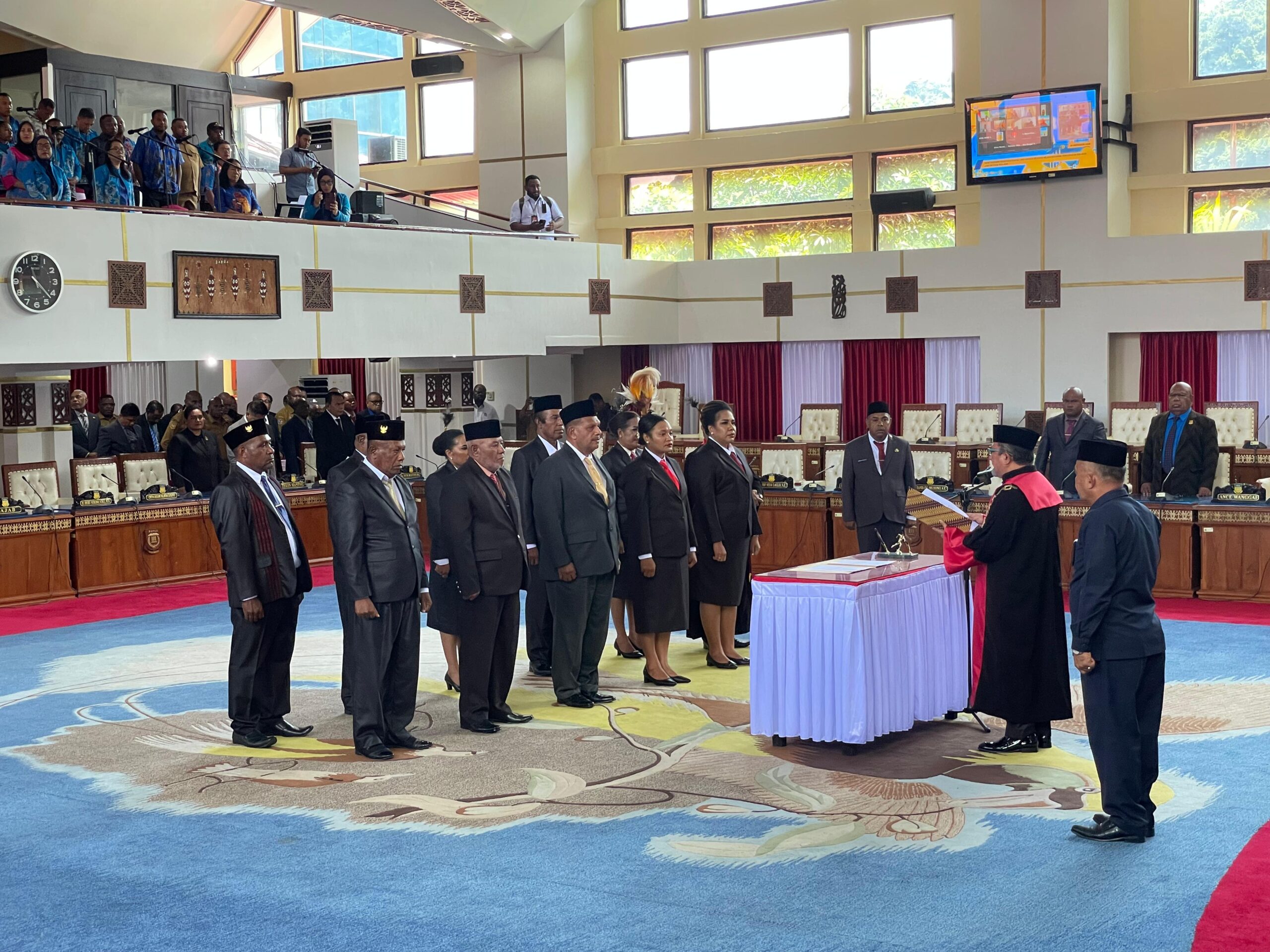
Eleven new members appointed to the Papua Provincial Regional House of Representatives marked a significant moment in the province’s ongoing effort to strengthen Indigenous political representation. Sworn in through the Special Autonomy mechanism, these new legislators symbolize a renewed commitment to ensuring that the voices of Orang Asli Papua, or Indigenous Papuans, are meaningfully represented within formal governance structures.
For many Papuans, the event was more than a ceremonial addition to the legislature. It reflected a long-standing aspiration for political inclusion that acknowledges Papua’s unique historical, cultural, and social context. The Special Autonomy pathway, designed specifically to address representation gaps, once again demonstrated its role as a bridge between customary leadership and modern democratic institutions.
A Long Journey Toward Political Inclusion
Papua’s political history has been shaped by complex dynamics, including geographic isolation, cultural diversity, and persistent calls for fair representation. Indigenous Papuans have often expressed concerns that conventional electoral systems alone were insufficient to guarantee their participation in decision-making processes. These concerns were among the key reasons behind the establishment of Papua’s Special Autonomy Law, which recognizes the province’s distinct status within Indonesia.
The law introduced a range of affirmative measures aimed at empowering Indigenous Papuans. Among the most important is the allocation of appointed seats in the provincial DPRD, reserved for Indigenous representatives selected through a structured mechanism rather than general elections. This system seeks to ensure that Papuan perspectives are present in legislative deliberations, particularly on issues directly affecting customary lands, cultural identity, education, and community welfare.
The recent induction of eleven new DPRD members reflects the continued implementation of this policy. It underscores the government’s acknowledgment that political representation must go beyond numerical participation and address historical imbalances that have shaped Papua’s governance.
The Inauguration of New Voices in the Legislature
The swearing-in ceremony, held at the Papua Provincial DPRD building, was attended by provincial officials, legislative leaders, community representatives, and family members of the newly appointed lawmakers. The atmosphere was formal yet emotionally charged, as many attendees recognized the broader significance of the moment.
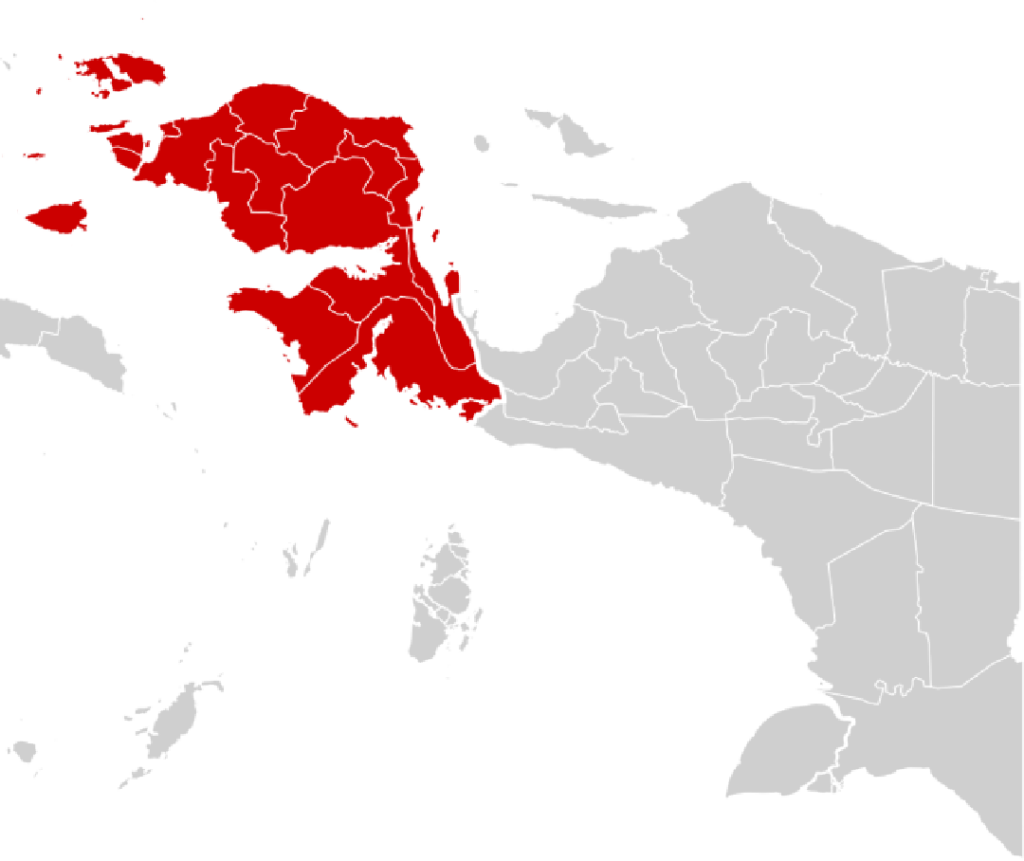
As the eleven representatives took their oaths, they pledged to uphold the constitution, serve the public interest, and work for the welfare of the Papuan people. Each individual came with a background rooted in community engagement, cultural leadership, or advocacy for Indigenous rights. The 11 members of the Papuan DPR who were appointed from the Tabi customary region are Musa Yan Youwe, Gerson Julianus Hassor (Jayapura City), Ceselia Noviani Mehue, Erik Ohee (Jayapura), Marinus Isagi (Keerom), Lidia Astrid Mest (Sarmi), and Yotam Bilasi (Mamberamo Raya). Their appointment was the culmination of a rigorous selection process that involved verification of Indigenous status, evaluation of community standing, and alignment with the principles of Special Autonomy.
Observers noted that the composition of the new members reflected Papua’s diversity. Representatives came from different regions and cultural backgrounds, reinforcing the idea that Indigenous Papuan identity is not monolithic but shaped by a wide range of traditions, languages, and social structures.
Why the Special Autonomy Pathway Matters
The Special Autonomy appointment mechanism is not merely a political formality. It represents an institutional acknowledgment that Indigenous Papuans require guaranteed space within governance systems to articulate their interests effectively. Unlike electoral contests, which can be influenced by demographic advantages, financial resources, and party machinery, the Otsus pathway emphasizes cultural legitimacy and community trust.
This approach has been widely viewed as an effort to correct structural inequalities. By reserving seats for Indigenous Papuans, the DPRD becomes a more inclusive institution, capable of reflecting the realities faced by communities in remote highlands, coastal villages, and interior regions.
Policy experts have noted that such mechanisms are consistent with global practices that seek to enhance the representation of Indigenous peoples within state institutions. While debates continue over how these systems should evolve, their core objective remains clear: to ensure that development policies and legislative decisions are informed by those most directly affected by them.
Expectations from Indigenous Legislators
With their formal induction completed, the eleven new DPRD members now face high expectations from the communities they represent. Many Papuans hope these legislators will serve as effective advocates for local needs, particularly in areas such as education access, healthcare services, infrastructure development, and economic empowerment.
Community leaders have emphasized that Indigenous representatives bring valuable perspectives shaped by lived experience. They understand the challenges of limited road access, the impact of education gaps, and the importance of protecting customary land rights. Their presence in the DPRD is expected to enrich policy discussions and encourage more grounded decision-making.
Several newly appointed members expressed their commitment to maintaining close ties with their constituencies. They spoke about the importance of listening to community voices and ensuring that legislative work translates into tangible benefits on the ground.
Balancing Cultural Values and Legislative Duties
One of the unique aspects of Indigenous representation through the Special Autonomy pathway is the integration of customary values into formal governance. Many of the new DPRD members are not only legislators but also respected figures within their traditional communities.
This dual role presents both opportunities and responsibilities. On one hand, it allows for the inclusion of cultural perspectives in legislative debates. On the other, it requires careful navigation to ensure that traditional values align with legal frameworks and administrative procedures.
Observers believe that this balance is essential for effective governance in Papua. Laws and regulations that disregard cultural realities often face resistance or fail to achieve their intended outcomes. Indigenous legislators, with their understanding of local customs, can help bridge this gap by advocating policies that respect tradition while supporting development.
Public Response and Symbolic Importance
Public reaction to the appointment of the eleven DPRD members has largely been positive. Across Papua, many citizens view the development as a sign that their voices are being recognized within provincial institutions. For younger generations of Indigenous Papuans, the appointments serve as an example that participation in governance is possible and valued.
Civil society organizations have also welcomed the move, describing it as a reaffirmation of the principles underlying Special Autonomy. They have urged the new legislators to use their positions to promote transparency, accountability, and inclusive policymaking.
At the same time, some observers have stressed that representation alone is not enough. They argue that the effectiveness of the Special Autonomy mechanism depends on how actively and independently Indigenous representatives engage in legislative work. Their ability to influence policy outcomes will determine whether the appointments lead to substantive change or remain largely symbolic.
Challenges Ahead in Papua’s Governance Landscape
Despite the positive momentum, Papua continues to face significant governance challenges. Disparities in development persist between urban centers and remote regions, while access to basic services remains uneven. Addressing these issues requires coordinated efforts between the provincial government, the DPRD, and national authorities.
The newly appointed Indigenous legislators are expected to play a role in shaping these efforts. Their participation in budget discussions, oversight functions, and legislative initiatives will be critical in ensuring that development priorities reflect community needs.
Experts caution that the success of Indigenous representation also depends on institutional support. Capacity building, access to policy expertise, and collaboration with other lawmakers will be essential for the new members to perform their roles effectively.
A Broader Message of Inclusion
Beyond its immediate political implications, the appointment of eleven new DPRD members carries a broader message about Indonesia’s approach to diversity and inclusion. Papua’s Special Autonomy framework represents an attempt to reconcile national unity with regional uniqueness, recognizing that governance must adapt to local contexts.
The inclusion of Indigenous voices within provincial legislatures reflects an understanding that sustainable development is closely linked to social cohesion and political trust. When communities see themselves represented in decision-making processes, they are more likely to engage constructively with government initiatives.
Looking Forward
As the new DPRD members begin their term, attention will turn to how they navigate their responsibilities and fulfill the expectations placed upon them. Their performance will influence public perceptions of the Special Autonomy system and its effectiveness in addressing Papua’s long-standing concerns.
For many Papuans, the hope is that these representatives will not only speak on behalf of Indigenous communities but also contribute to building a more inclusive and responsive provincial government. Their success could strengthen confidence in special autonomy as a meaningful tool for empowerment rather than a symbolic gesture.
Conclusion
The induction of eleven new members into the Papua Provincial DPRD through the Special Autonomy pathway marks an important chapter in the province’s political evolution. It reflects a deliberate effort to strengthen Indigenous representation and ensure that Orang Asli Papua have a direct voice in shaping the policies that affect their lives.
While challenges remain, the appointments demonstrate a commitment to inclusive governance and recognition of Papua’s unique identity. As these legislators take on their roles, they carry the hopes of communities seeking fair representation, responsive leadership, and sustainable development.
The true impact of this moment will be measured not by the ceremony itself, but by the actions taken in the months and years ahead. If the newly appointed members succeed in translating representation into meaningful policy outcomes, their presence in the DPRD may become a defining example of how inclusive governance can take root in one of Indonesia’s most diverse provinces.