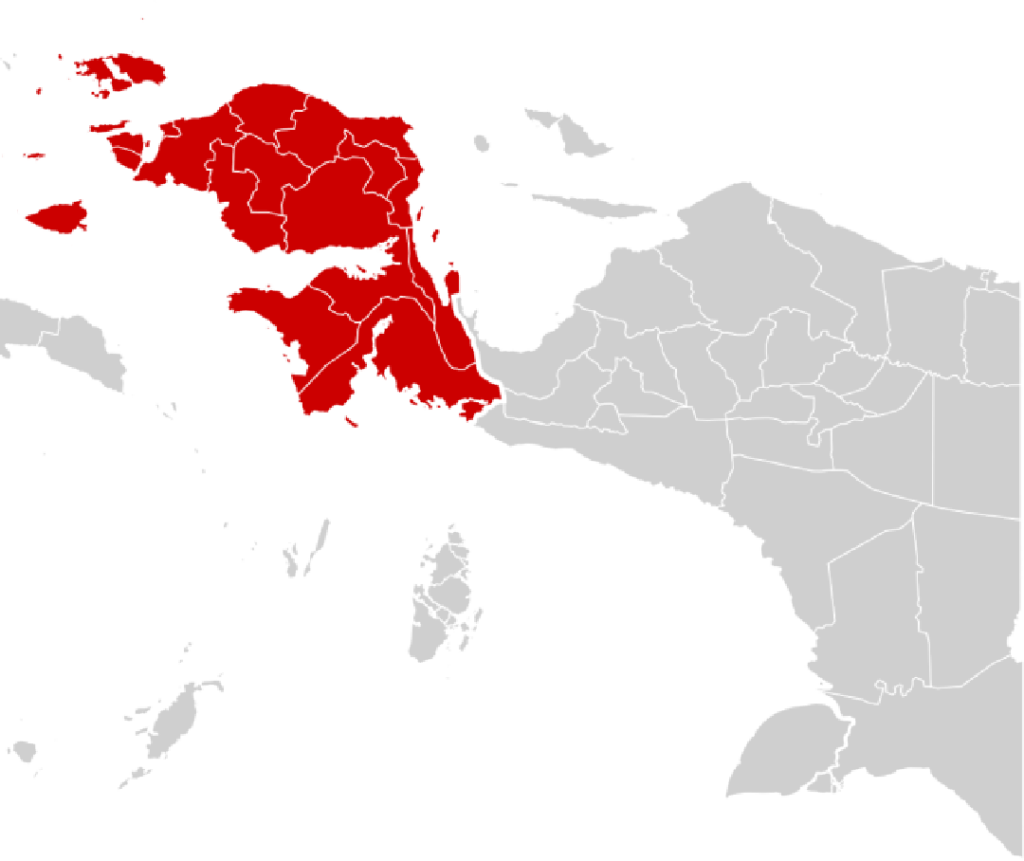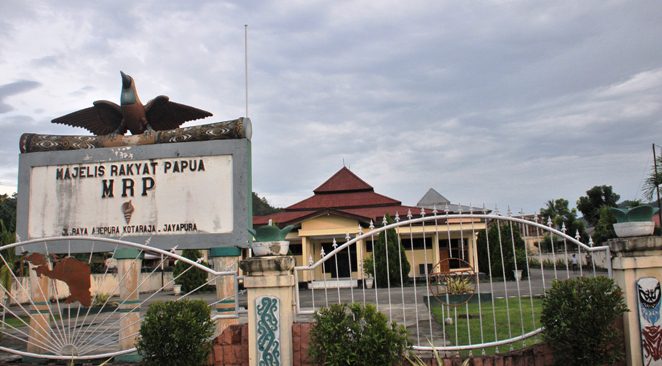
The city of Jayapura is on Papua’s northern coast, where the Pacific Ocean is calm. There are government buildings along the shore, and officials and community leaders meet in meeting rooms to talk about policies that will affect the future of the area. The Papuan People’s Assembly, or Majelis Rakyat Papua (MRP), is one of the groups that people talk about a lot.
The assembly is a unique part of Indonesia’s government. It doesn’t work like a regular parliament. It doesn’t work like the regional legislative councils that make laws and talk about money. It was instead turned into a cultural institution that would give Indigenous Papuans (Orang Asli Papua or OAP) a say in the regional government.
Many people in Papua care a lot about the MRP. It shows that the Indonesian government respects the culture and identity of its native people. People are talking more and more about how well the institution has done its job more than twenty years after Papua’s special autonomy policy went into effect.
The MRP is a story about how culture is shown and a conversation that is still going on about how institutions need to change to better serve society.
The Origins of the MRP
The creation of the MRP is closely tied to the political changes that happened in Indonesia at the end of the twentieth century.
Indonesia became a democracy in 1998 after decades of being ruled from the center. People in communities all over the archipelago began to demand more say in how things are run and more respect for their regional identities.
Papua had the strongest hopes of all. Local leaders and civil society groups asked for policies that would give indigenous communities more freedom and let them have a bigger say in how their future is shaped.
In 2001, the Indonesian government passed the Special Autonomy Law for Papua in response to these requests. The law was meant to help with political, economic, and cultural problems in the area while keeping Papua a part of Indonesia.
The group was officially formed in 2005 as a cultural group for Indigenous Papuans. The MRP was supposed to reflect the traditional social structures of Papuan society, while regional legislative councils choose their members based on political parties.
A Different Kind of Institution
The MRP was set up in a way that shows how different Papua is socially.
Members of three important groups in society choose the members of these groups. These groups include leaders from indigenous communities, religious groups, and women’s groups.
There are seats in the assembly for each of these groups. This makes sure that when regional policy is being talked about, different voices from Papuan society are heard.
This structure makes it clear that Papua’s government should not be separate from cultural traditions and community leaders.
A lot of Papuans still believe that traditional leaders are important for keeping the peace and settling disputes in their communities. Religious leaders also have a lot of power to shape people’s morals and how they live in their communities. This is especially true when it comes to settling disagreements, putting together community events, and getting people to do the right thing.
The MRP was supposed to bring together traditional authority and modern government structures in one place.
Protecting Indigenous Rights
The MRP’s main goal is to protect the rights and identity of Indigenous Papuans, who are also called Orang Asli Papua.
The Special Autonomy Law lets the assembly come up with and talk about policies that affect indigenous communities.
For example, the MRP is part of talks about protecting indigenous land rights, local traditions, and culture. The institution can also approve or suggest changes to some of the regional rules that make up Papua’s unique system of self-government.
The assembly doesn’t make laws, but it does give advice to make sure that indigenous points of view are taken into account when decisions are made.
Supporters of the institution in Papua’s government often call it a “cultural guardian.”
Bridging Tradition and Modern Governance
Papua is one of the most culturally diverse parts of Indonesia because it has hundreds of different ethnic groups and languages.
Many communities still follow the old rules and ways of leading that have been around for a long time.
It has always been hard to mix these old ways with the way things are done now.
One way to deal with this problem was to create the Multi-Relationship Program (MRP).
The MRP lets native groups talk about policies without losing their cultural identity. The institution gives community representatives and traditional leaders a formal way to tell government officials what they think.
For a lot of people, this way of doing things is a way to find a balance between two important truths. Papua is part of a modern nation-state with official ways of running things. But traditional social structures still have a big impact on how people live their lives, how communities make decisions, and how the government works.
Criticism and Debate
People have criticized the MRP over the years, even though it is important in a symbolic way.
Some people think that the institution hasn’t done what it was supposed to do.
People don’t like the assembly very much because it doesn’t have a lot of power. The MRP can’t always have a big say in policy decisions because it can’t make laws.
In reality, the institution often needs to work with other government agencies to make sure that its suggestions are put into action. This can make things take longer and make it harder for it to speak up for indigenous communities in a meaningful way.
Some people say that this situation makes it hard for the assembly to quickly or decisively deal with issues that affect indigenous communities.
People have asked if the MRP has done enough to help Papuans with social issues like land disputes, economic inequality, and keeping their culture alive.
People are calling for a bigger look at how well the institution is doing because of these talks.
Calls for Reflection Rather Than Dissolution
Some people in the community are against the MRP, but many leaders say that getting rid of it is not the answer.
They say that the institution should instead think about what it does and make changes to improve it.
Some people have said that reading the evaluation of MRP members’ work could be a way to bring down the whole organization.
Instead, evaluation is thought of as a way to make the assembly better and make sure it stays useful for the people it serves.
People who agree with this view think that the MRP is still a good way for indigenous people to be heard.
They say that the assembly could do a better job of running Papua if they made things clearer, made leadership stronger, and made institutional authority clearer.
The Symbolic Importance of the MRP
For many indigenous communities, the MRP means more than just what it has to do with its official duties.
It is important to include the voices of Indigenous Papuans in the region’s governance framework because it exists.
The MRP is a big step toward including communities that have wanted to be recognized for their culture and identity for a long time.
The institution is also a reminder that running Papua isn’t just about following rules. There is a strong connection between the values, traditions, and relationships in a community.
This cultural factor continues to influence Papuans’ perceptions of the assembly’s function and their expectations regarding the governance framework’s representation and decision-making procedures.
Looking Forward
More than twenty years after Papua’s Special Autonomy Law was passed, people are still talking about the MRP’s future.
Some people in charge think the institution should have more power so it can do more to protect the rights of native people.
Some people want the MRP and regional governments to work together better so that policies that help indigenous communities work better and their voices are heard in government.
It is still clear that the assembly is in a unique place in Indonesian politics.
The MRP is one of the few groups that can represent Papuan culture and govern at the same time in a way that meets the needs and goals of the Papuan people while also dealing with the problems of regional governance.
Many leaders and communities are wondering how this organization can stay true to its original purpose while also changing to meet new challenges as Papua grows and changes.
People in Jayapura’s meeting halls and in villages all over Papua’s mountains and coastal plains are still talking about what will happen to the MRP.
They are not only talking about an institution; they are also talking about Papua’s future, identity, and representation.