Diplomatic shifts rarely happen overnight.
They take shape slowly, often through meetings that do not attract much attention. A statement here, a joint exercise there, a line in a policy document that only a few people read closely.
But every so often, those small steps begin to point in a clearer direction.
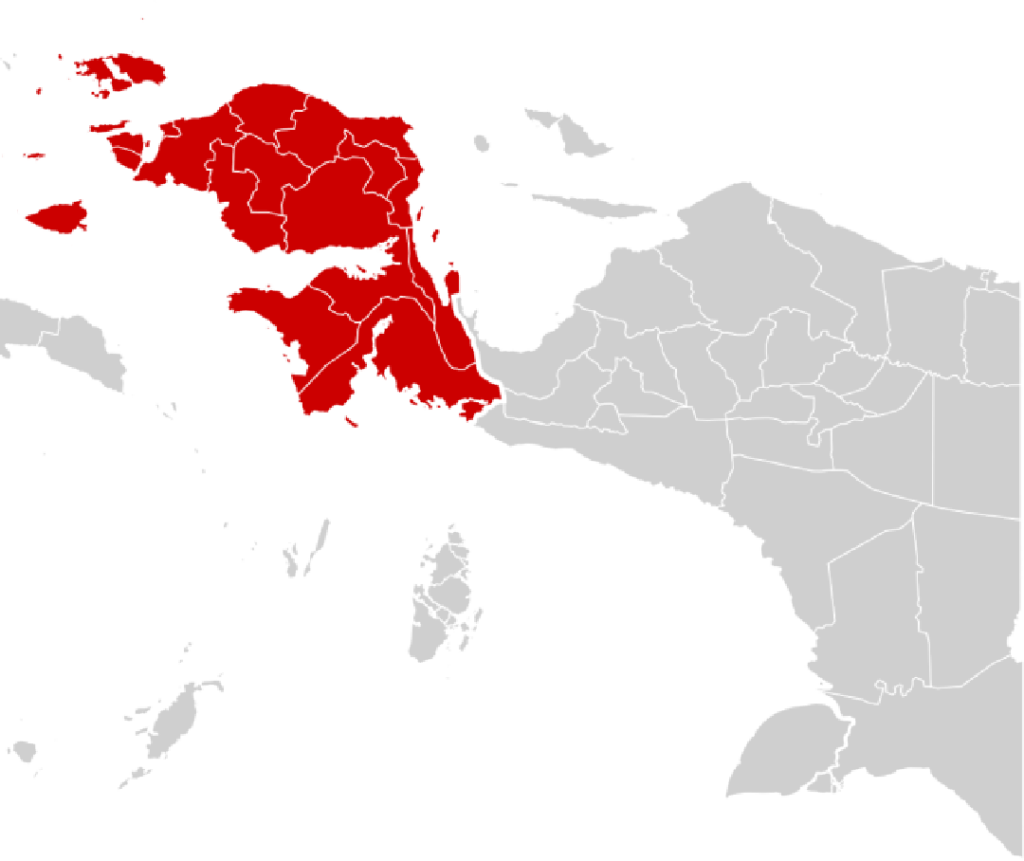
That is what appears to be happening now as Indonesia expands its security cooperation with Australia, bringing in Japan and Papua New Guinea into a wider framework that reflects not just regional concerns but also deeper questions about geography, sovereignty, and the future of Papua.
At first glance, it may sound like another example of countries working together on defense.
Look closer, and it becomes something more layered.
A Conversation That Signals Change
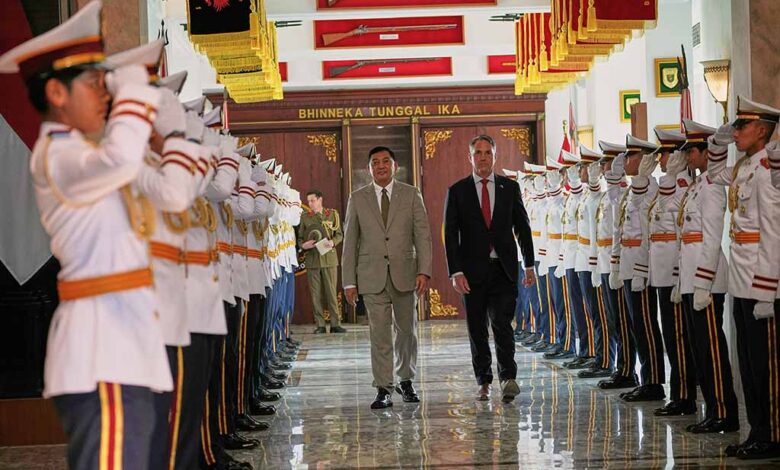
The discussions that took place in March 2026 between Indonesian and Australian officials did not come with dramatic language.
There was no talk of alliances in the traditional sense. No sweeping declarations about military integration.
Instead, the emphasis was on cooperation.
On strengthening existing ties.
On exploring ways to involve other partners, particularly Japan and Papua New Guinea.
For Indonesia, this kind of wording matters.
The country has long positioned itself as independent in foreign policy, careful not to be drawn too closely into major power rivalries.
So when it expands cooperation, it tends to do so in a measured way.
Not too fast.
Not too rigid.
But steady enough to matter.
Why Now?
To understand why this expansion is happening, it helps to step back and look at the broader picture.
The Indo-Pacific is changing.
Sea lanes are becoming more contested. Military presence is increasing. Countries are paying closer attention to their neighbors, not only in terms of trade but also security.
Indonesia sits in the middle of this region.
Geographically, it connects the Pacific and Indian Oceans.
Politically, it tries to maintain balance.
It does not want to be seen as aligning fully with any major power.
But it also cannot ignore the shifts happening around it.
Expanding cooperation with Australia, and then bringing in Japan and Papua New Guinea, is one way of responding to that environment.
The Role of Australia
Australia has long been one of Indonesia’s closest partners in security.
The relationship has not always been smooth, but over time, it has developed a level of trust.
Joint military exercises have become more common.
Communication between defense institutions has improved.
Earlier in 2026, both countries agreed to deepen their cooperation through a new security arrangement that includes consultation mechanisms in case of threats.
That step laid the groundwork for something broader.
Bringing in Japan
Japan’s involvement adds a different dimension.
Unlike Australia, which shares geographic proximity with Indonesia, Japan’s connection is more strategic.
Over the past decade, Japan has increased its role in regional security, particularly in the Indo-Pacific.
It has invested in partnerships, capacity building, and defense cooperation with countries across Southeast Asia.
For Indonesia, working with Japan offers access to advanced technology and expertise.
But it also comes with a need for balance.
Indonesia does not want to be seen as part of any single bloc.
So cooperation with Japan is framed carefully.
Practical, but not binding.
Papua New Guinea and the Border Reality
If Japan represents strategy, Papua New Guinea represents geography.
The two countries share a long and complex border.
In many areas, that border is not heavily guarded.
Communities on both sides often have cultural and family ties.
People move back and forth, sometimes informally.
This creates both opportunity and risk.
On one hand, it allows for connection.
On the other, it can complicate security.
Illegal crossings, smuggling, and the movement of armed groups are concerns that require coordination.
Bringing Papua New Guinea into the security framework is, in many ways, a practical decision.
It reflects the reality on the ground.
Papua at the Center of the Conversation
Although the discussions are framed in regional terms, Papua remains central.
Not always explicitly.
But inevitably.
Papua is Indonesia’s easternmost region and one of its most sensitive.
It is rich in natural resources, culturally diverse, and geographically close to the Pacific.
It is also an area where security challenges persist.
For Indonesia, maintaining stability in Papua is closely tied to sovereignty.
Any international cooperation that touches on the region must be handled carefully.
Sovereignty as a Guiding Principle
Indonesian officials have been consistent on one point.
Papua is part of Indonesia.
That is not open for negotiation.
This principle shapes how Indonesia engages with partners.
Security cooperation must support national integrity, not undermine it.
That is why the expanded framework is designed as cooperation, not intervention.
Foreign partners may assist with training, information sharing, or capacity building.
But they do not take on operational roles within Indonesian territory.
What This Means in Practice
On the ground, the impact of these agreements may not be immediately visible.
There are no foreign troops arriving in Papua.
No sudden changes in daily life.
Instead, the changes are more subtle.
Increased coordination between agencies.
Improved communication across borders.
Joint exercises that build familiarity.
These are long-term processes.
They do not produce instant results.
But they shape how security is managed over time.
A View From the Border
In areas near the Indonesia–Papua New Guinea border, the effects of cooperation are more tangible.
Local officials often deal with issues that cross national lines.
People moving without documentation.
Goods being transported informally.
Occasional security concerns.
For them, better coordination can make a difference.
Not in dramatic ways.
But in practical ones.
Faster communication. Clearer procedures. Shared understanding.
The Risk of Misinterpretation
Any expansion of security cooperation can be interpreted in different ways.
Some may see it as a step toward stronger regional stability.
Others may view it as part of broader geopolitical competition.
Indonesia is aware of this.
That is why its messaging remains careful.
It emphasizes independence.
It avoids language that suggests alignment with any major power bloc.
Balancing Multiple Relationships
Indonesia’s approach can be described as balancing.
Working with Australia, while maintaining ties with other partners.
Engaging Japan, without becoming dependent.
Coordinating with Papua New Guinea while managing domestic concerns.
This balancing act is not new.
But it is becoming more complex.
The Human Dimension
Beyond policy and strategy, there is a human dimension to all of this.
People living in Papua.
Communities along the border.
Officials working in remote areas.
For them, security is not an abstract concept.
It is part of daily life.
It affects how they move, how they work, and how they interact with others.
A Gradual Process
The expansion of cooperation will not transform the region overnight.
It will take time.
Plans will need to be implemented.
Relationships will need to be maintained.
Trust will need to be built.
Looking Ahead
What happens next will depend on how these plans are carried out.
Whether cooperation remains practical and balanced.
Whether it respects local realities.
Whether it strengthens stability without creating new tensions.
More Than Strategy
At its core, this development is not only about defense.
It is about how countries in the region adapt to change.
How they work together without losing independence.
How they manage complexity.
Conclusion
The meetings in Jakarta may not have seemed significant at first.
There were no dramatic headlines.
No immediate consequences.
But they reflect something that is already underway.
A gradual reshaping of how Indonesia engages with its neighbors.
And within that process, Papua remains a key part of the story.
Not only as a region on the map.
But as a place where geography, politics, and everyday life intersect.
And where the outcomes of these decisions will eventually be felt, even if only in quiet, incremental ways.