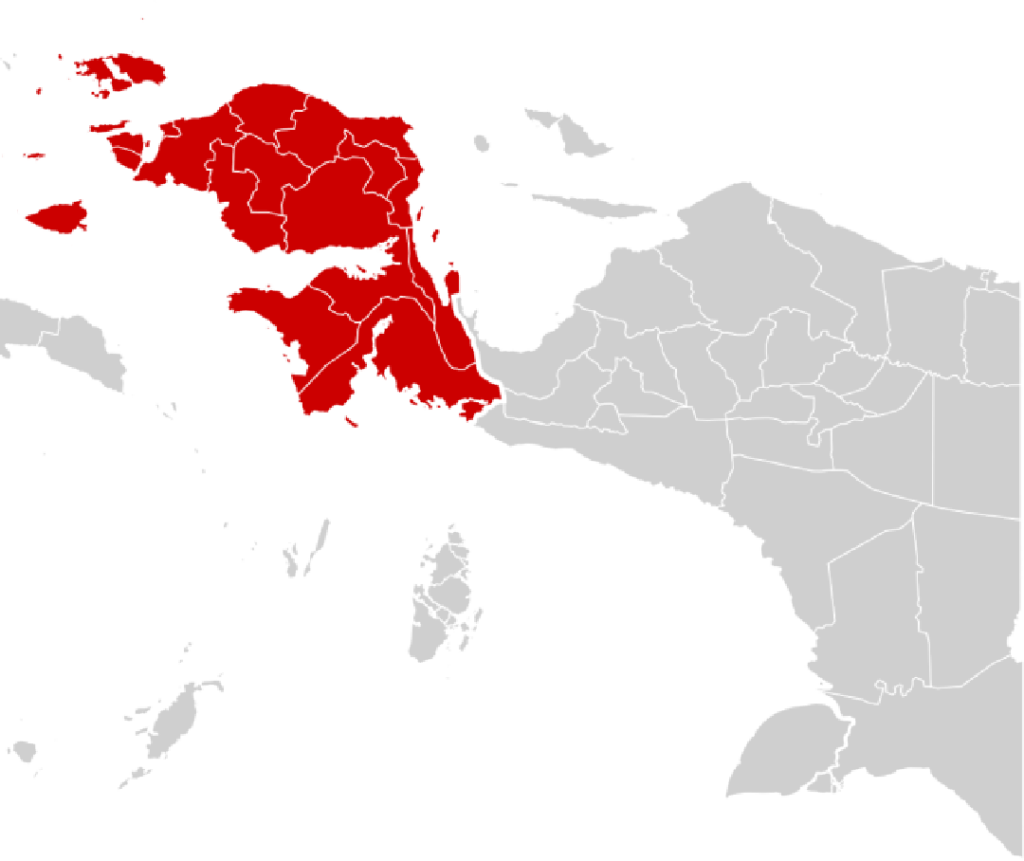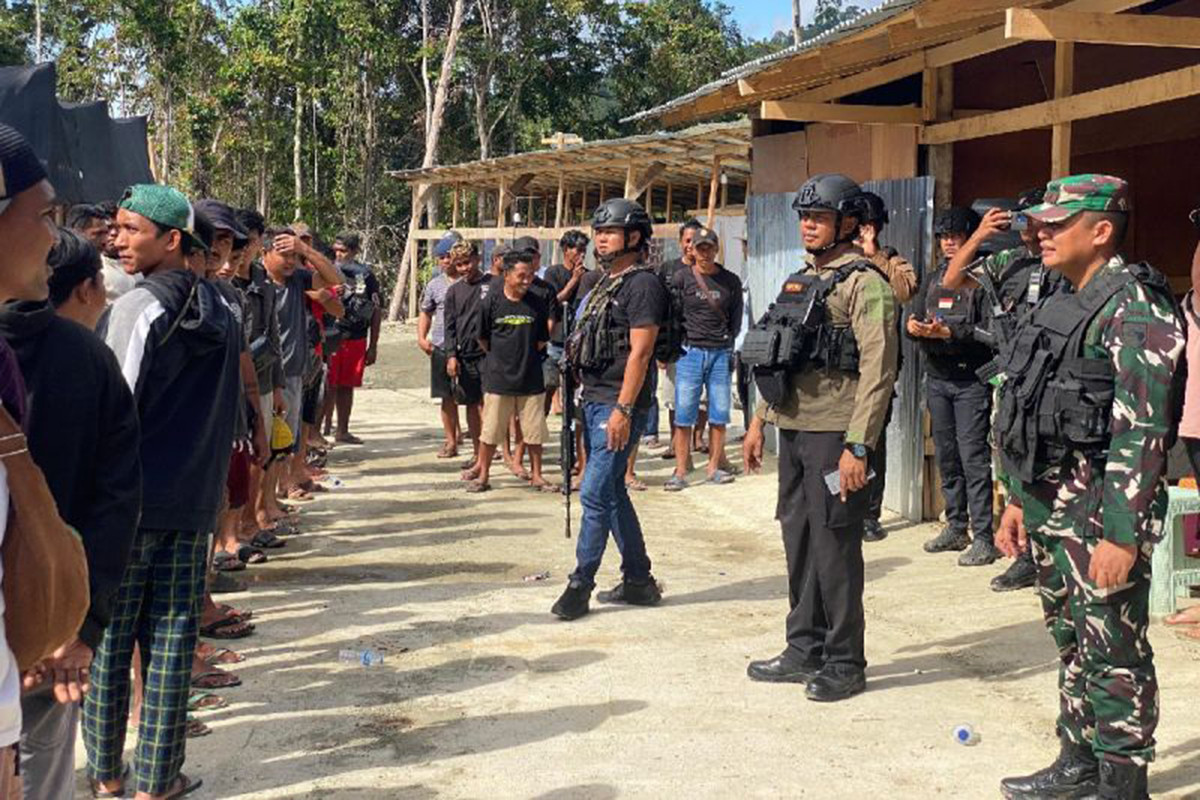
Their blades cut through the humid air above the forests of Makimi District, Nabire Regency, sending dust and leaves swirling across the clearing near PT Kristalin Ekalestari, a gold mining site tucked deep in Papua’s rugged landscape. Workers gathered in tight groups, some clutching small bags, others holding nothing but their phones. Faces were pale. Voices were low. No one knew exactly what would happen next, only that they needed to leave.
It was February 22, 2026, hours after an armed attack in the area left two members of the Indonesian National Armed Forces (TNI) dead. The violence, attributed by authorities to elements of TPNPB OPM, shattered what had been a routine workday and triggered one of the largest emergency evacuations in the region recently.
The operation resulted in the evacuation of 198 mining workers from the site. Among them were 26 Chinese nationals, engineers, and technical specialists who had come to Papua to seek opportunities in Indonesia’s resource sector. The rest were Indonesian workers, many from Papua itself, who had built their livelihoods around the mine.
For them, the evacuation was not just a logistical operation. It was a moment that divided life into before and after.
A Day That Began Like Any Other
That Saturday, on February 21, 2026 had started quietly. Machinery hummed, trucks rolled along dirt roads, and workers moved between processing areas and administrative buildings. Around 14:30 local time, gunfire shattered the routine.
Some workers said they first thought it was a mechanical malfunction or distant blasting. Then came shouting. Then smoke. Within minutes, word spread that an armed attack had targeted a security post near the mining area. The attack fatally wounded two TNI personnel assigned to guard the location.
Panic rippled through the workforce. Workers scrambled to safe zones, hiding in reinforced rooms or crouching behind equipment. Phone lines lit up as people tried to reach loved ones. Some calls went unanswered.
“We did not know if they would come closer,” one Indonesian worker later said. “We were afraid they would enter the compound.”
In the confusion, managers instructed employees to remain calm and await further direction. Security personnel coordinated with local authorities. The message soon became clear: evacuation was necessary.
The Decision to Evacuate
Within hours, Indonesian authorities began mobilizing. According to official statements reported by Antara News and confirmed by the National Police Public Information Division, the government prioritized the safety of all personnel at the mining site.
Security forces moved into position to secure evacuation routes. Helicopters and ground transport were arranged. The objective was simple and urgent: remove workers from potential danger and relocate them to a secure area.
Coordinating Minister for Political, Legal, and Security Affairs Djamari Chaniago emphasized in a public statement that protecting lives was the immediate priority. The government, he said, would not risk further casualties.
The evacuation unfolded in phases. Workers were grouped, counted, and escorted under armed protection. Some were flown out directly by helicopter. Others were transported by convoy to safer zones before being transferred onward.
By nightfall, the site that had been buzzing with activity hours earlier was nearly empty.
198 Lives in Motion
The official count stood at 198 evacuees. The number included 26 Chinese nationals, whose presence added an international dimension to the crisis.
For the Chinese workers, many of whom had arrived in Papua under contract to provide technical support, the attack was a shock. Some had been in the region for months. Others were relatively new arrivals.
One engineer described how he had been inspecting equipment when the first shots rang out. “At first, I did not understand what was happening,” he said quietly after reaching safety. “Then I saw people running.”
Representatives from the Chinese Embassy coordinated with Indonesian authorities to maintain open communication channels and provide consular assistance as needed. The embassy later expressed appreciation for the swift evacuation efforts.
For Indonesian workers, the evacuation felt deeply personal. Many were from nearby communities. Some had children attending local schools. Others supported extended families in rural villages.
One worker said he kept thinking about his mother when he boarded the helicopter. “I told her I was safe,” he said. “But I could hear the fear in her voice.”
Fear, Relief, and Uncertainty
Evacuations are often described in operational terms: numbers, routes, and security layers. But behind each number is a person.
Inside the temporary evacuation shelters, workers sat on plastic chairs and shared water bottles. Some stared at their phones, scrolling through news updates. Others tried to sleep.
A Papuan employee said he felt grateful to be alive but worried about what would come next. “This is my job,” he said. “If the mine closes for a long time, what will we do?”
Small business owners in Nabire echoed that concern. Many local vendors depend on my employees for daily income. Transportation drivers, food stall operators, and supply chain workers all felt the ripple effect.
“It is not only the mine,” said one shopkeeper near the main road leading to Makimi. “When workers leave, our customers disappear.”
Government Assurance and Security Measures
The Indonesian government stressed that the evacuation was a preventive measure, not a signal of abandonment. Authorities promised a thorough security assessment and reinforced patrols in the region.
Police and military units increased their presence around key infrastructure. Investigations into the attack continued. Officials reiterated their commitment to maintaining stability and preventing further violence.
Minister Djamari Chaniago stated that Indonesia would continue safeguarding strategic economic sites while prioritizing civilian safety. “We cannot allow violence to intimidate communities or disrupt lawful economic activity,” he said.
The evacuation also prompted discussions about improving security coordination between companies, local authorities, and national forces. Remote mining operations in Papua often require complex logistics and layered protection, given the terrain and sporadic tensions.
The Broader Impact on Papua
Papua’s economy depends on a delicate balance between natural resource development and community stability. Mining operations provide employment and revenue, but they also exist in areas where historical grievances and security challenges persist.
The evacuation of 198 workers underscored the importance of prioritizing safety. It also highlighted the government’s readiness to respond quickly when threats escalate.
For international observers, the incident underscored the risks associated with operating in conflict-prone regions. For local communities, it was a reminder of how quickly normal life can be interrupted.
Yet amid the disruption, there were moments of solidarity.
Neighbors checked on each other. Churches and mosques held prayers for peace. Community leaders urged calm and rejected rumors that could inflame tensions further.
Human Stories That Remain
In the days following the evacuation, some workers reunited with families who had spent hours anxiously awaiting confirmation of their safety.
At the airport, a young father who had undergone evacuation tightly hugged his daughter. “She asked me why I left work,” he said. “I told her it was just for a while.”
A Chinese technician sent a voice message to his parents thousands of kilometers away, telling them he was safe. His mother, he later said, cried with relief.
These scenes did not appear in official press releases. But they define the emotional reality of the event.
Looking Forward
The question now is not only when operations will resume, but also how confidence can be restored.
Authorities have pledged to strengthen security, investigate the attack thoroughly, and coordinate closely with local communities. Business leaders are watching carefully. So are families whose livelihoods depend on stability.
For the 198 workers who boarded helicopters on 21 February 2026, the memory of that afternoon will linger. The sound of gunfire. The rush to assemble. They take off into uncertain skies.
But they also carry something else: the knowledge that swift action saved lives.
In Papua, where geography is unforgiving and tensions sometimes flare, resilience has become part of daily life. Communities adapt. Workers return. Families endure.
The evacuation of PT Kristalin workers is a story of tragedy, fear, and relief intertwined. It is a reminder that behind every headline about conflict are individuals with dreams, families, and futures worth protecting.
And as the helicopters faded into the evening sky that day, carrying 198 people away from danger, they also carried hope that stability can be restored and that life in Papua will move forward once more.