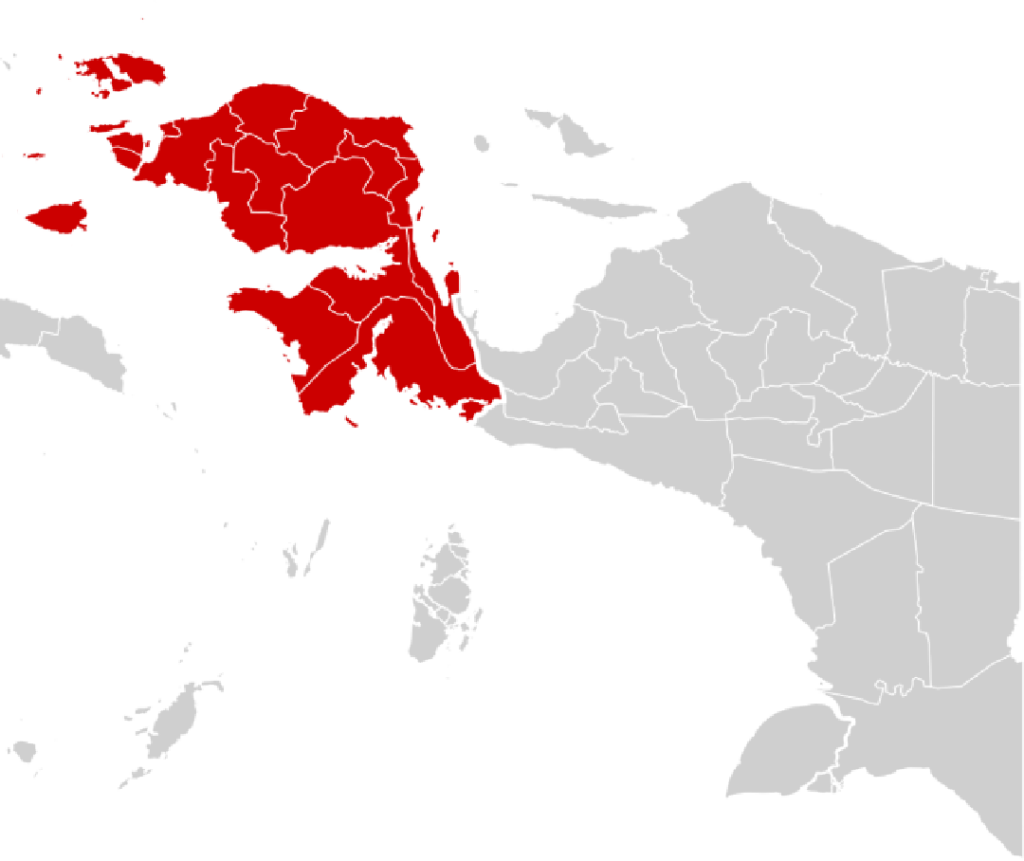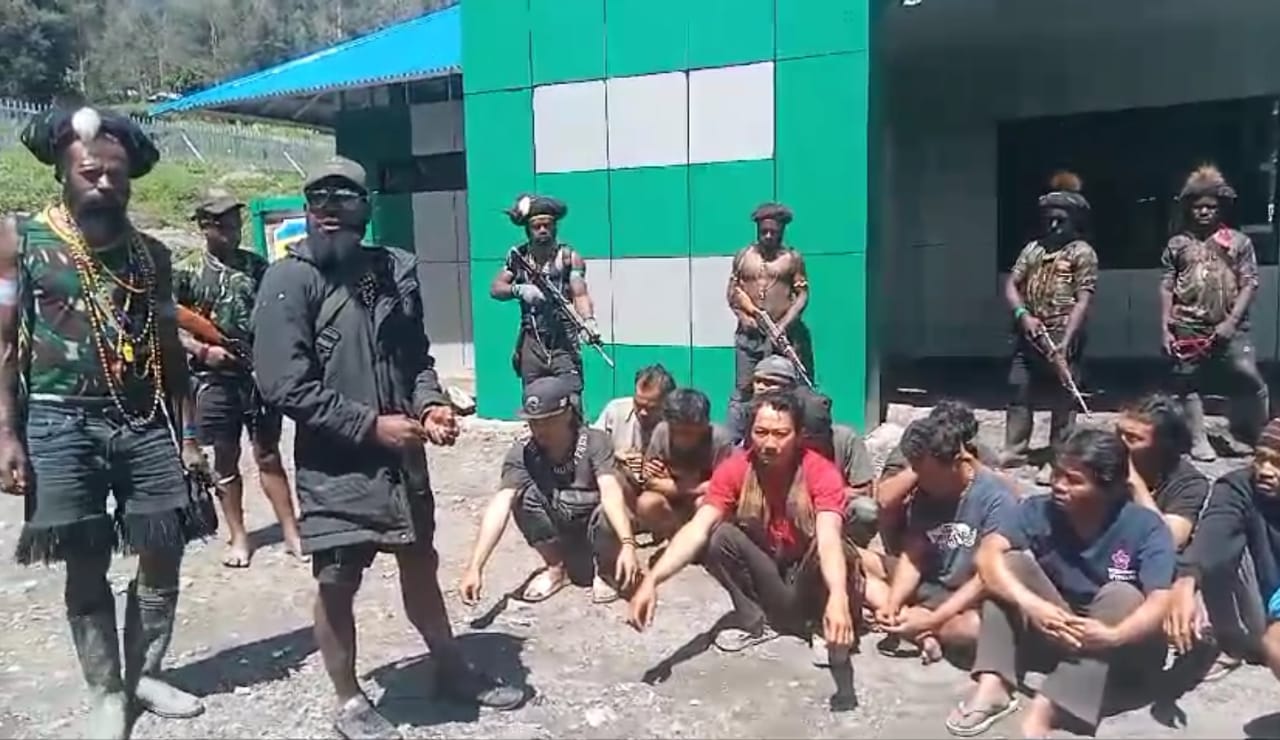
Something scary happened in Papua Tengah (Central Papua) Province in early February 2026 that made the local business community very worried and unsure. Companies in the area started getting letters that asked for money. These letters were called “extortion letters.” The letter with the number 001/55Ex/Pang-Dev.II Pemka WPNG 2026/2027, which was sent out on February 4, 2026, asked for a lot of money in the form of “security fees” or “protection payments” that were supposedly sent by the West Papua National Liberation Army, which is known locally as TPNPB OPM. The event has made people very worried about the investment climate, the health of the local economy, and the bigger problems that illegal money causes in a region that is already dealing with violence.
People first heard about the extortion charges when they heard that a company in Papua Tengah got a letter asking for Rp700 million (about USD 44,000). The letter asked for money, saying it was to protect the company during a time of rising armed conflict. As a result, the local community, security experts, and officials all saw how these kinds of claims could make people less likely to do business in the area.
Rumors and Responses
At first, the letter sent to private businesses looked scary and full of information. It said a certain amount of money and had markings that some people thought were linked to armed groups in the area. Many business owners in Papua Tengah were worried about getting more informal requests for money. They already have to deal with rough terrain and logistical issues every day.
Business owners said they felt uneasy and uncomfortable as the letter made its way through their networks. People were worried that investing and running a business were becoming riskier because of rumors about where the letter came from and whether the demand was real. People were scared not only of the letter, but also of the thought that armed groups could use the situation to make money.
In the middle of all this confusion, Demianus Magai Yogi, a leader often linked to the West Papua Army, made a public statement to clear things up. He said that the letter that some local news outlets were reporting on and spreading was not an official message from TPNPB OPM and had logos that the group no longer used. He said that the document didn’t go through any official command structure, so it didn’t show what the West Papua Army wanted or what they were told to do.
His comments made the story harder to follow. The letter made local businesses and investors angry on the other hand. On the other hand, a high-ranking member of the group said openly that the paper wasn’t real and that it was made by unofficial people or people who wanted to take advantage of the situation. The leaders’ explanation was meant to stop false information from spreading and make it easier for people to see what TPNPB OPM is doing to keep the area safe.
Local Business and investors Reactions
People who worked for the company in Papua Tengah had mixed feelings about it. Some executives were happy to hear that the letter might not have come from the official channels of a separatist group that uses violence. Others, on the other hand, were careful and said that the event shows how people’s opinions of armed groups can still make them afraid and hurt business.
A manager at a medium-sized farm in Timika said that his coworkers were nervous. “We’re working hard to grow our business here,” he said. People begin to question whether it is safe to work here when letters like that circulate, even if they are false. It changes how we talk to banks and business partners and how we plan to invest in the future.
The effects were strongest on businesses with fewer employees. Businesses, transportation companies, and service providers in the area all said that not knowing about the law and security could keep investors away or slow down plans for growth. A lot of people were worried that even rumors of extortion could make Papua Tengah seem unstable to people from outside the area who are looking for opportunities.
Broader Security Context
The letter demanding money was not the only time this happened. Papua has been a place of conflict and tension between separatist groups for decades. Some of these groups are part of the Free Papua Movement, which is also known as Organisasi Papua Merdeka (OPM). In some parts of Papua, there has been a long history of violence and war. For instance, in the 1970s, letters and threats were used to pressure companies like Freeport Indonesia when things were unstable.
Over the years, security officers have been attacked, ambushed, and there has been ongoing fighting between Indonesian security forces and separatist groups. In this situation, reports of extortion or requests for money, whether true or not, could cause more than just financial problems.
This environment has changed how investors and businesses in Papua think about risk for a long time. A lot of companies do a lot of research before they do business in the area. They work closely with local governments, community leaders, and national government agencies to solve security problems.
Legal Considerations and Public Order
Indonesia’s laws are very clear that extortion, making illegal demands for payment, and putting any kind of pressure on businesses or people are all against the law. Law enforcement made it clear that trying to get money in ways that are not legal or follow the rules is against the law. The police have said many times that they will look into any reports of extortion that turn out to be true and punish the people who did it.
In Indonesia, threats and coercion that are against the law are handled by criminal law. Officials have said over and over that organized extortion will not be allowed in Papua or anywhere else. Business leaders have been told to call the police right away if they see something bad happen, and security guards have said they will protect businesses and communities.
The West Papua Army’s officials said that the letter was not official, which is another problem in the area: spreading false information can be just as bad as confirmed crimes. When people don’t know where information comes from or what it means, it can make stories of instability worse, which hurts community health and investor confidence.
Impact on Investment Climate
People who buy and sell things and people who invest are very aware of how risky things look. In places that are already thought to be hard to get to or far away because of infrastructure or logistics, any hint of a security issue, whether real or not, can change investment decisions.
Experts in economics say that even the slightest hint of threats or extortion can have a big effect. International investors usually want to see that the law is being followed, that things are stable, and that things are clear. Even if people dispute extortion charges, investors may not want to put money into long-term projects. They might move resources to places that are thought to be safer or have less political risk.
Papua Tengah is in a lot of danger. The area has potential in areas like mining, farming, and ecotourism. People still care about government infrastructure projects and policies that promote decentralization. But if people are very worried about security or know more about risks than they do about stability, investment could stop.
In response, local leaders have once again said that they are committed to keeping business safe and open. They said that keeping people’s trust means being clear, acting quickly on criminal accusations, and getting the community involved.
Community Voices and Resilience
People in towns like Timika, Nabire, and other parts of Papua Tengah talked about how the event made them feel while these talks about the economy and security were going on. For a lot of people, it wasn’t just about money; it was also about stability and daily life.
A teacher in Nabire said that parents in her area were worried about rumors that were hurting schools and kids’ chances of getting ahead. She said, “It’s not just the businesses that are worried.” “When the news talks about armed groups and threats, parents worry about their kids’ safety and whether their villages’ economies will stay stable.”
Small business owners also spoke with a mix of strength and fear. One café owner said, “We want to do business here, but we need clear, accurate information.” She hopes that this will help the government and the people talk to each other more. It is harder for us to get through the day when we read scary stories.
Looking Ahead
The extortion letter case shows that things are still very complicated in places like Papua Tengah. It has parts about conflict, what people think, the government, and the strength of the community. Officials have made it clear that the letter did not come from the TPNPB OPM leadership in an official way. This episode shows how easy it is to lose trust in places where armed groups and government work together.
For local businesses, investors, and everyday people, stability depends on having the right information, good police work, and open lines of communication. The government has said again that it will support legal businesses and won’t put up with illegal activities like extortion.
Papua needs to deal with these complicated security issues while it tries to make its economy, infrastructure, and investment climate better. Officials have been clear but careful so far: not all threats are real, and not all accusations are true. Both communities and businesses need to make choices based on correct information and cooperate with the police to uphold the law and maintain peace.
Even though they are scared and unsure, many people in Papua still believe that truth and openness can bring lasting peace and economic growth to the area.