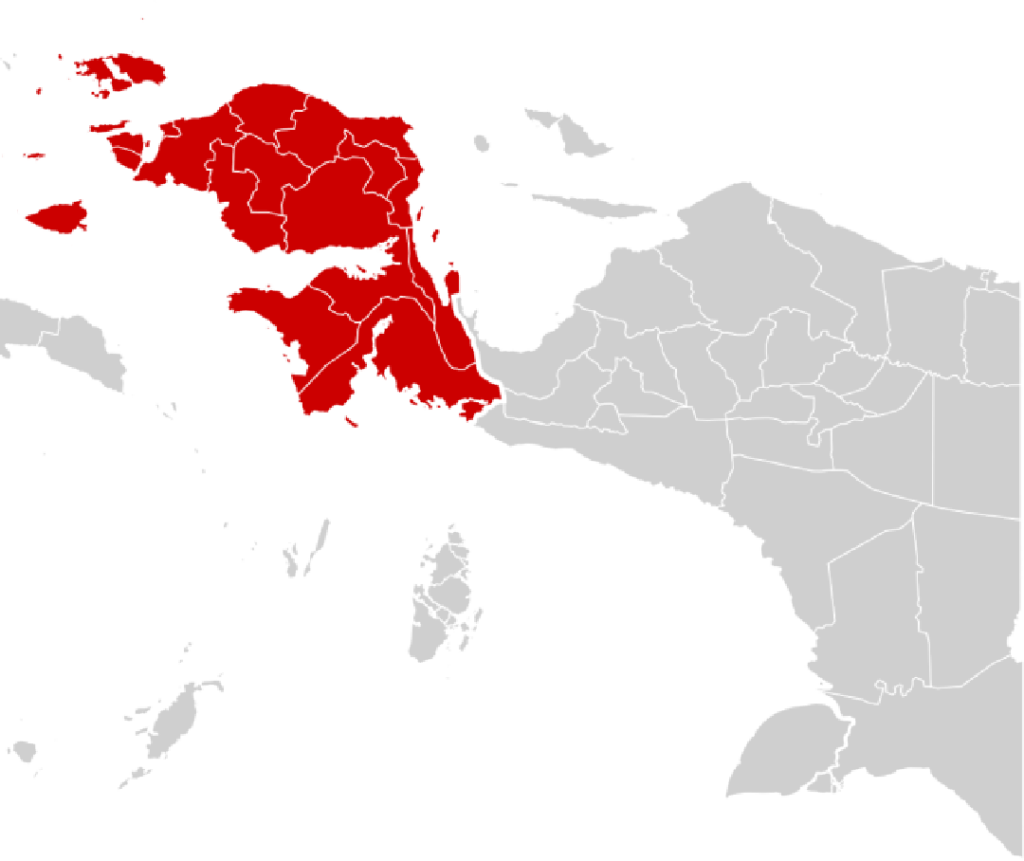
In the misty hills and forested expanse of Keerom Regency, Papua, a corruption scandal has erupted that underscores both the promise and the peril of Indonesia’s special autonomy arrangement. The Papua High Prosecutor’s Office (Kejaksaan Tinggi Papua, or Kejati) has launched an aggressive, full-scale investigation into the alleged embezzlement of Rp 11.18 billion in Dana Alokasi Khusus (Special Allocation Fund, or DAK), funds that were meant for vital road infrastructure. For Jakarta, the case is more than a local controversy—it is a powerful demonstration of the Indonesian government’s unwavering commitment to accountability and transparency, even in its most remote provinces.
Origins of the Scandal: A Road Built, But Money Missing
The story begins with the Yuruf–Amgotro–Semografim road, a DAK-funded development project in Keerom Regency. According to the Papua High Prosecutor’s Office, in 2023 the government allocated Rp 14 billion to upgrade this road—an investment meant to bolster connectivity, improve access to public services, and integrate isolated communities.
By February 7, 2024, the road was officially declared 100% complete and handed over to local authorities.
Yet despite the completion, something did not add up. The Kejati reports that only Rp 3.7 billion, or roughly 25% of the contract value, was disbursed as an advance payment.
The remaining Rp 11.18 billion—a staggering portion of the total—was allegedly diverted into other budget lines, in violation of DAK’s mandated usage.
This is not a minor accounting error. Under Indonesian regulations, DAK funds must be used strictly for the purposes they are designated for; they cannot be reallocated to unrelated programs.
In the words of Nixon Nikolaus Nilla Mahuse, Assistant for Special Crimes (Aspidsus) at Kejati Papua, “The question is, where did that Rp 11 billion go?”
His office has already summoned nine individuals—including officials from the Keerom PUPR (Public Works and Housing) office—for questioning.
The upgrade of the case from investigation to prosecution signals serious intent by the Indonesian justice system.
Breach of Trust: Misused Funds and Legal Violations
At the core of the fallout is a legal breach: allegations that the DAK funding, earmarked specifically for road improvement, was misused or misallocated. According to Kejati Papua’s findings, this money was allegedly transferred into other budget lines that had no relation to the original project.
By doing so, those responsible may have violated not only corruption statutes but also the strict rules governing DAK usage—rules designed to prevent abuse and ensure funds are spent where they are most needed.
This breach impacts more than just the state budget. It undermines the governance model that underpins Papua’s special autonomy—a political framework that gives Papua greater control over its own finances but also demands higher standards of accountability. When funds intended to build roads that connect rural communities instead disappear into opaque budget lines, the very promise of autonomy—to deliver infrastructure, equality, and growth—begins to ring hollow.
Kejati Papua’s Role: Institutional Strength in Action
The involvement of Kejati Papua’s Special Crimes Unit (Pidsus) is a clear signal that this is not a peripheral or symbolic investigation. Rather, it is being treated with the full force of the criminal justice system.
The fact that a high-value, politically sensitive case is being prosecuted in Papua itself—not shuffled off to Jakarta—shows a maturing and empowered legal institution in the province.
By taking strong action, Kejati Papua is building local legitimacy: corruption will not be tolerated even at the edges of the sovereignty. This helps reinforce the narrative that the Indonesian state is not only present in Papua but also vigilant and capable of enforcing its laws uniformly, regardless of geography or local power dynamics.
Political and Social Ramifications: Why This Case Resonates
The Keerom scandal is about far more than missing money—it strikes at the heart of political and social trust in Papua. For many Papuans, DAK-funded projects like road construction are not luxuries but necessities: they promise better access to schools, hospitals, markets, and government services in places where terrain and infrastructure remain major barriers. When funds allocated for those projects go missing, it is the most vulnerable communities who suffer.
Politically, this case is also being watched closely in Jakarta. Special autonomy has long been framed as a way to address Papua’s historical marginalization, and misuse of autonomy funds threatens to erode that justification. By going after corruption aggressively, the central government is making a public statement: special autonomy is a privilege, not a blank check, and it comes with strings—transparency, rule of law, and accountability.
Rebuilding Trust: Transparency as a National and Local Strategy
Kejati Papua’s investigation is not just about prosecuting corruption—it is also a strategy to restore trust between Papuan communities and the Indonesian state. By publicly naming suspects, promising to trace diverted funds, and committing to legal accountability, the prosecutor’s office is positioning itself as a defender of public interest rather than an instrument of political favoritism.
In a region with a fraught history of distrust toward Jakarta, this kind of open, high-stakes investigation matters. It signals that institutions in Papua can function independently, that funds will not be misused with impunity, and that the central government supports genuine reform rather than symbolic sporadic crackdowns.
Risks and Complexities: What Lies Ahead for the Investigation
Despite the promising start, the Keerom case faces serious obstacles. First, tracing financial flows is never easy: if the Rp 11.18 billion was shuffled into multiple budget lines or bank accounts, forensic accounting will be critical but difficult. Second, there may be political interference—local power networks often resist investigations that penetrate long-standing patronage structures.
Third, local skepticism could challenge prosecutorial efforts. Many Papuans are understandably wary: in the past, cases may have stalled, or consequences may have seemed distant. This time, Kejati Papua must not only build a strong legal case but also maintain continuous community engagement to show that this is real.
Finally, there are legal loopholes. Even though DAK regulation restricts reallocation, some budget maneuvering may still be hidden behind creative accounting or superficially legitimate transfers. For the Kejati to succeed, prosecutors need both legal rigor and institutional support.
Broader Implications: Reinforcing Special Autonomy with Good Governance
If the Keerom investigation leads to accountability, it could become a defining case for the future of Papua’s special autonomy. A successful prosecution would demonstrate that the Indonesian state can and will supervise its own funds—even in remote, sensitive regions—without undermining local self-government. It would reaffirm that special autonomy is not just about devolution but also about responsibility.
Moreover, the case could serve as a model for institutional strengthening: encouraging more independent audits, audits by civil society, and continuous oversight of regional spending. This transparency could help to ensure that future allocations of DAK and other special funds actually benefit the people who need them most.
The Path Forward: Restitution, Reform, and Reinvestment
To make the most of this moment, several concrete steps must follow:
- Comprehensive forensic audit: Kejati Papua must map out exactly how the Rp 11.18 billion was moved, who received it, and whether it was spent appropriately.
- Prosecution of wrongdoers: If evidence confirms diversion, the implicated officials and administrators must be prosecuted fairly, regardless of their status or political affiliation.
- Recovery and reinvestment: Funds proven to have been misused should be recovered and redirected to the original project—finishing the Yuruf–Amgotro–Semografim road—and to related infrastructure or community development.
- Improved accountability systems: Local governments should commit to stronger reporting, independent public audits, and mechanisms for community oversight.
- Ongoing public engagement: Papuan citizens, including civil society groups, must be involved in monitoring projects financed by DAK to rebuild confidence that autonomy delivers real benefits, not corruption.
Conclusion
The Keerom corruption case is a litmus test for Indonesia’s dual promises: to respect Papua’s special autonomy and to uphold state integrity through transparency and the rule of law. As the Papua High Prosecutor’s Office investigates and potentially prosecutes this case, it stands at a crossroads—not just of legal accountability, but of political and moral significance.
If handled transparently and decisively, this scandal could mark a turning point: a shift from cynicism to trust, from suspicion to genuine institutional reform. It could reinforce that the Indonesian state is present, powerful, and fair—even in its most remote and sensitive regions.
For Jakarta, for Keerom, and for Papua at large, the message is clear: special autonomy is not a free pass—it is a pact of responsibility. Misused funds will not go unnoticed. Corruption may be pervasive, but so is Indonesia’s commitment to justice, good governance, and equitable development. The road ahead may be long, but with accountability and resolve, it can be built—not just in asphalt, but in trust.