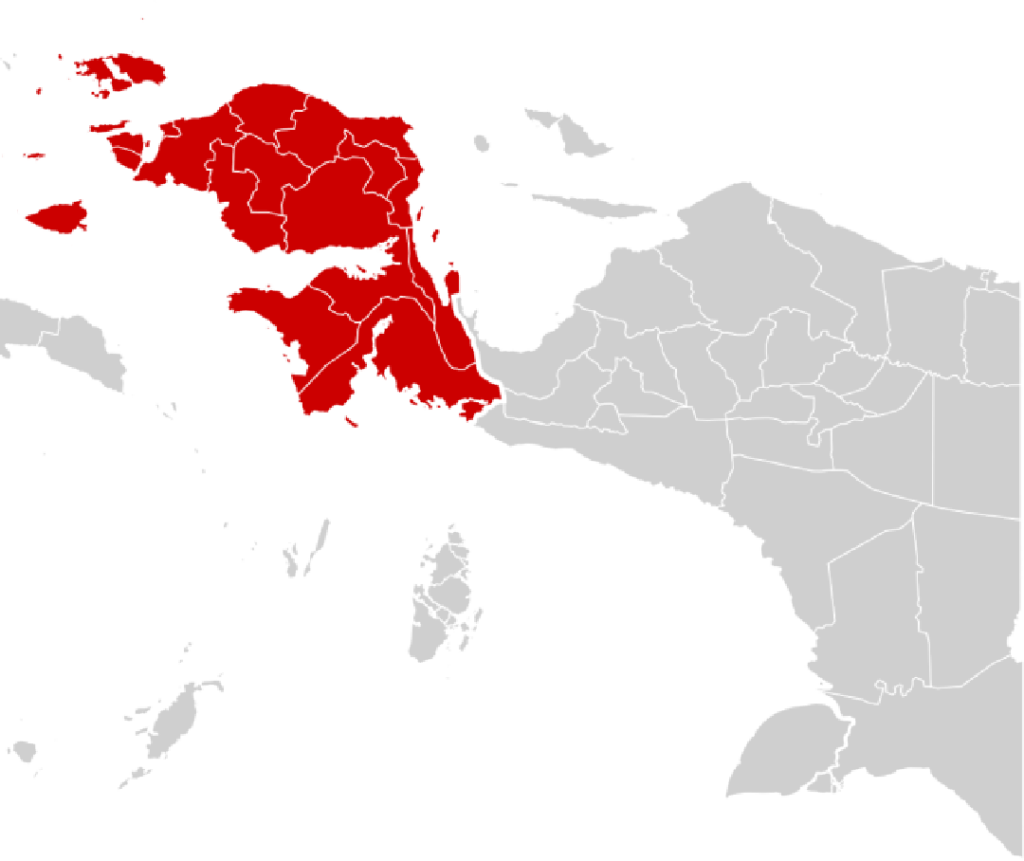
Huko Papua Tengah (Papua ya Kati), upatikanaji wa chakula chenye lishe kwa muda mrefu umekuwa mojawapo ya changamoto tulivu zinazounda maisha ya kila siku. Familia nyingi huishi mbali na masoko rasmi, hutegemea mapato ya msimu, au hutegemea kilimo cha kujikimu ambacho si mara zote huhakikisha lishe bora. Kwa watoto, ukweli huu mara nyingi hutafsiriwa kuwa kujifunza huku wakiwa na njaa. Kwa wazee, inamaanisha kugawa kwa uangalifu chakula kidogo. Hali hizi hufanya lishe kuwa si suala la kiafya tu bali pia wasiwasi wa kijamii na kiuchumi unaoathiri mustakabali wa jimbo hilo.
Katika muktadha huu, Programu ya Mlo Lishe Bila Malipo, inayojulikana kama Makan Bergizi Gratis, iliibuka mwaka wa 2025 kama mojawapo ya hatua zinazoonekana zaidi za serikali zinazolenga kuboresha ustawi wa binadamu. Kile kilichoonekana awali kama programu ya usaidizi wa chakula kilitokea haraka na kuwa harakati pana ya kijamii iliyounganisha sera na uzoefu wa kila siku wa binadamu kote Papua Tengah.
Maono Nyuma ya Programu ya Mlo Lishe Bila Malipo
Serikali ya Mkoa wa Papua Tengah ilibuni programu hiyo kwa falsafa iliyo wazi: maendeleo hayawezi kufanikiwa ikiwa watu wana njaa. Maafisa walisisitiza mara kwa mara kwamba lishe ndiyo msingi wa elimu, tija, na ukuaji wa uchumi wa muda mrefu. Mtoto anayekula ipasavyo ana uwezo zaidi wa kujifunza. Mtu mzima mwenye afya njema ana tija zaidi kazini. Mzee aliye na lishe bora anaweza kuishi kwa heshima.
Katika mwaka mzima wa 2025, maono haya yalitafsiriwa kuwa vitendo vya kila siku. Programu hiyo ililenga sio tu kusambaza chakula bali pia kutoa milo inayokidhi viwango vya msingi vya lishe. Msisitizo ulikuwa kwenye usawa badala ya kupita kiasi, kuhakikisha kwamba kila sehemu inachangia kwa maana mahitaji ya kila siku ya lishe.
Kufikia Makumi ya Maelfu Kote Papua Tengah
Kufikia mwisho wa mwaka 2025, Programu ya Mlo Lishe Bila Malipo ilikuwa imewafikia wanufaika 46,871 kote Papua Tengah. Wapokeaji hawa walitoka katika malezi mbalimbali, ikiwa ni pamoja na watoto wa shule, wazee, familia zenye kipato cha chini, na wafanyakazi wasio rasmi. Kiwango cha huduma kilionyesha uzito wa dhamira ya serikali ya mkoa katika ulinzi jumuishi wa kijamii.
Each meal distributed carried symbolic weight. For many recipients, it represented more than food. It was a sign that the government was present and attentive to their daily struggles. In remote areas and urban centers alike, distribution points became spaces of interaction where people felt acknowledged and supported.
Nutritious Meals Rooted in Local Reality
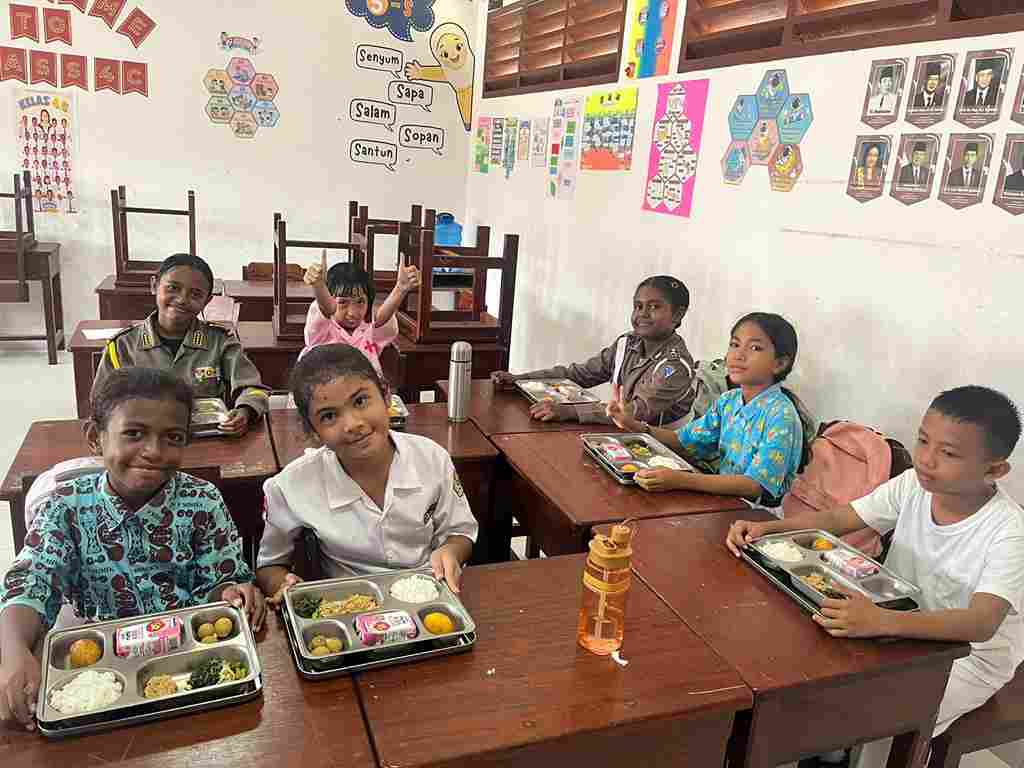
The meals provided through the program were intentionally simple but nutritionally balanced. Staples such as rice, vegetables, eggs, fish, and fruit formed the core of the menu. These choices reflected both health considerations and local food habits, making the meals familiar and acceptable to recipients.
For many families, the meals offered through the program were more nutritious than what they could afford regularly. Parents noted improvements in their children’s energy levels, while elderly recipients reported feeling stronger and more resilient in their daily routines. Over time, these small changes accumulated into noticeable improvements in overall well-being.
Creating Jobs and Strengthening Local Economies
One of the most significant impacts of the Free Nutritious Meal Program was its contribution to employment. Throughout 2025, 935 local workers were directly involved in meal preparation, logistics, and distribution. These workers were drawn from local communities, ensuring that the program circulated economic benefits within Papua Tengah itself.
Many of those employed were women and young adults who previously faced limited job opportunities. Through the program, they gained steady income and valuable skills, including food safety practices, basic administration, and teamwork. For households relying on irregular income, this employment provided financial stability and a renewed sense of purpose.
The economic ripple effects extended beyond direct employment. Small vendors and local suppliers near distribution centers benefited from increased activity, while households with employed members experienced improved purchasing power. In this way, the program quietly stimulated local economies while addressing immediate nutritional needs.
Impact on Education and Child Development
Schools became one of the most visible arenas where the program’s impact could be observed. Teachers across Papua Tengah reported improved concentration and participation among students who received free nutritious meals. Attendance rates showed signs of improvement in several areas, as children were more motivated to come to school knowing they would receive food.
For many students, the meal provided at school was the most balanced meal of the day. This had a direct effect on learning outcomes, as hunger was no longer a constant distraction. Parents expressed relief, knowing that their children’s basic nutritional needs were being met during school hours.
Supporting the Elderly and Vulnerable Groups
Beyond schools, the program played a crucial role in supporting elderly residents and vulnerable populations. For older individuals living alone, daily meals reduced the burden of food insecurity and provided moments of social interaction. Distribution points became informal community spaces where people could connect and support one another.
For low-income families and informal workers, the program helped stabilize daily life. Knowing that at least one nutritious meal was guaranteed allowed households to allocate limited resources toward other essential needs such as healthcare, education, and transportation.
Overcoming Geographic and Logistical Challenges
Delivering meals across Papua Tengah was not without obstacles. The province’s challenging geography, limited infrastructure, and remote settlements required careful planning and coordination. Weather conditions and transportation constraints occasionally disrupted schedules, particularly in hard-to-reach areas.
Despite these challenges, the program maintained consistent operations throughout most of the year. Local coordination teams played a critical role in ensuring that meals reached intended recipients. Their familiarity with local conditions proved essential in overcoming logistical barriers.
Closing 2025 and Preparing for the Future
As 2025 drew to a close, the Free Nutritious Meal Program entered its final operational phase for the year. Officials announced a temporary pause at the end of December to allow for evaluation and planning. Services were scheduled to resume in early January 2026, following a review of data and community feedback.
Rather than generating concern, the pause was widely understood as a necessary step toward improvement. Beneficiaries and workers alike expressed hope that the program would return stronger, with expanded coverage and refined implementation strategies.
Nutrition as a Long-Term Investment in Human Development
Health experts emphasized that the benefits of the program extend beyond immediate hunger relief. Consistent access to nutritious food supports immune systems, reduces health risks, and enhances cognitive development, particularly among children. In regions where healthcare access is limited, preventive approaches like nutrition programs play a vital role in improving public health outcomes.
The Free Nutritious Meal Program therefore stands as an investment in Papua Tengah’s future. By addressing basic needs today, it helps build a healthier, more productive population for years to come.
Conclusion
What ultimately distinguishes the Free Nutritious Meal Program is its human impact. It strengthened trust between communities and the government. It created jobs, improved health, and supported education. Most importantly, it affirmed a simple but powerful principle: that development begins with dignity.
Huku Papua Tengah ikitazamia mwaka wa 2026, uzoefu wa mwaka wa 2025 unatumika kama mfano mzuri wa jinsi programu za kijamii zenye mawazo zinavyoweza kubadilisha maisha. Kupitia kitu cha msingi kama mlo wenye lishe, jimbo hilo lilionyesha kwamba maendeleo yenye maana yanawezekana sera inapokutana na huruma.