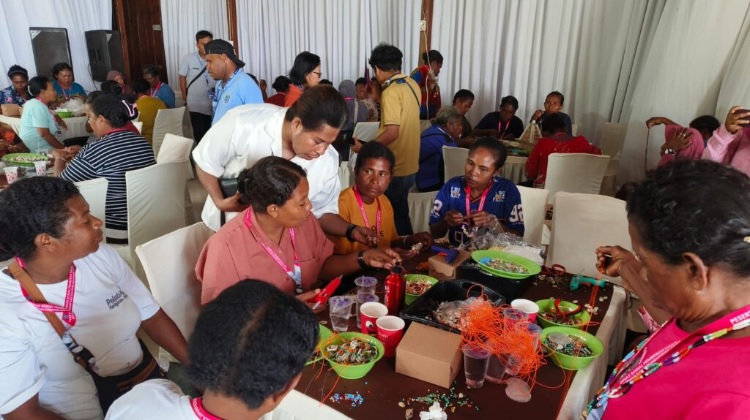
On the morning of December 2, 2025, the air at D’Coral Resort in Raja Ampat carried a sense of quiet excitement. A Hundred women from remote coastal villages gathered in a modest hall, clutching thin carving tools, string, glue, and raw seashell material. For many of them, this was the beginning of more than just a training session—it was the opening of a new chapter, one where local natural wealth might be transformed into creative livelihoods.
The training, organized by the provincial Dinas Sosial, Pemberdayaan Perempuan dan Perlindungan Anak Papua Barat Daya (Dinsos P3A PBD), marks a deliberate effort by local authorities to harness the abundant marine resources of Raja Ampat—specifically shells—to foster creative industries, empower women, and strengthen coastal micro, small, and medium enterprises (UMKM).
From Sea to Art: The Idea Behind the Program
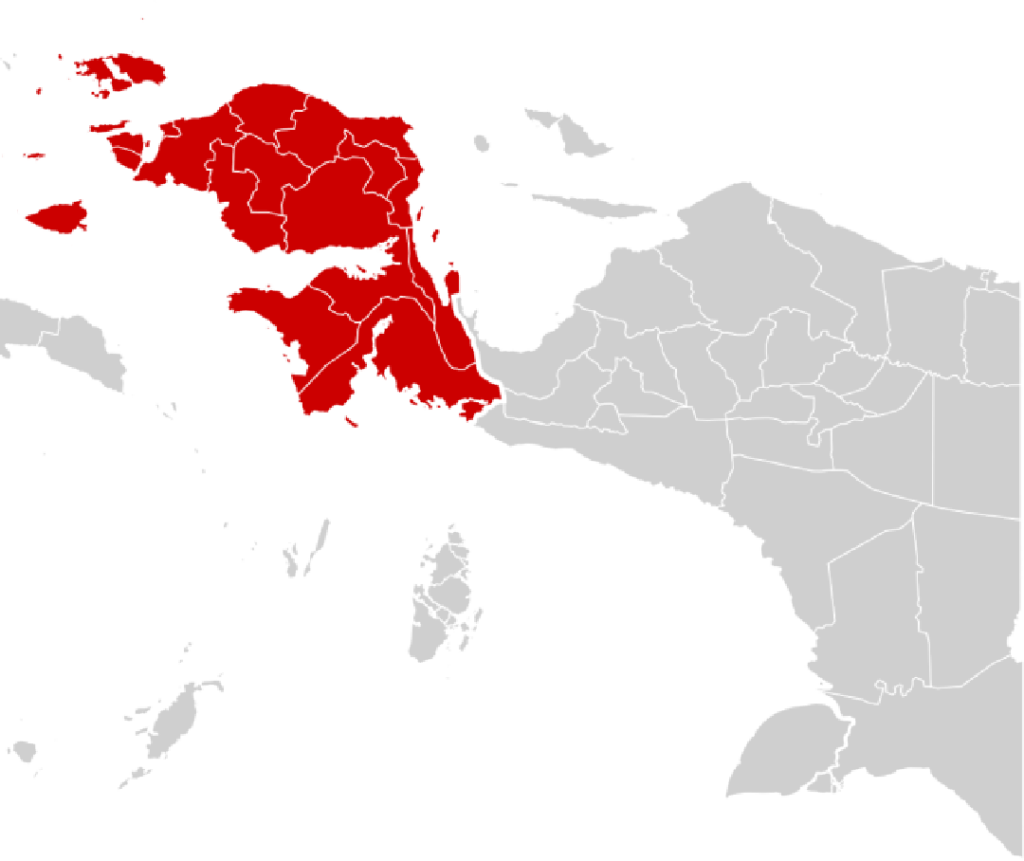
Raja Ampat, part of the Papua Barat Daya (Southwest Papua) region, is known for its turquoise reefs, abundant marine biodiversity, and rich coastal resources—including a myriad of seashells that wash up on its shores. Yet until now, much of that potential remained untapped. For many coastal communities, shells were simply natural waste or, at best, used crudely for simple decoration.
“Papua Barat Daya has abundant coastal marine resources, especially shells, but they have not been optimally utilized because the community lacks processing skills,” acknowledged Dinsos P3A PBD Secretary Rosiana Kambu during the opening of the training.
The vision was clear: transform those shells into objects of beauty and commerce—from decorative lamps and ornaments to accessories—turning a natural asset into a source of sustainable income, especially for women who often have limited employment opportunities in remote coastal areas.
A Cohort of One Hundred: Who Participates
The training attracted 100 participants drawn from five villages across Raja Ampat: Kampung Friwen, Yembeser, Lapintol, Sapokren, and Waisai.
These women, many of whom are mothers and housewives, arrived with little to no prior experience in crafting. Their everyday lives revolve around subsistence fishing, gathering, and household chores. For them, the training offered more than technical skills—it offered a chance to transform daily routines into real economic opportunities.
The training was led by skilled instructors brought in from Bali—including the noted artisan I Made Kanan Jaya—whose expertise in turning shells into marketable crafts promised to equip the women with new creative capabilities.
The First Days: Transforming Shells Into Craft
Over the course of five days—from December 2 to December 6—participants immersed themselves in a carefully designed curriculum. Early sessions focused on basic shell preparation: cleaning, sorting, sanding, and preserving shell pieces. Later, they practiced assembling shells into decorative items such as lamps, wall hangings, and small ornaments.
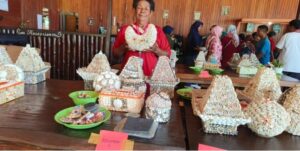
By the third day, the workshop floor was already dotted with early prototypes. Shell fragments began to transform into delicate lampshades, mosaics, and decorative motifs. According to reports, even within this short span, the results were promising—and participants were visibly proud of what they had created.
One participant, Dewiyanti from Kampung Yembeser, expressed her gratitude: she said the training “was very good—we learned that shells have many benefits, not just waste. We can make them beautiful and sell them.”
Beyond Training: Intentions for Long-Term Empowerment
While the immediate outcome of the workshop was the creation of crafted shells, the aspirations behind the program are much deeper. Government officials have framed the initiative as part of a broader strategy to stimulate creative industries, boost tourism appeal, and widen economic opportunities for local women.
According to Rosiana Kambu, the goal is not for the crafting to stop once the training ends. She hopes the women will form craft groups, continue refining their skills, and turn shell-craft making into viable microenterprises that support their households. “This is a strategic step to increase the skills of women artisans,” she said.
Supporting this ambition is the open commitment of local government. The staff expert of the provincial government, Beatriks Msiren, emphasized the broader potential: if processed with proper technique, shellcraft can grow into a creative industry contributing significantly to the regional economy. At the same time, it can preserve local culture and boost Raja Ampat’s image as not only a marine paradise but also a hub of cultural and artistic tourism.
Meanwhile, the local government of Kabupaten Raja Ampat reaffirmed its support. The Asisten Bidang Ekonomi and Pembangunan, Manaf Sangadji, said that his office would back the development of local creative industries rooted in indigenous resources and aimed at improving community welfare.
The Significance of Women-Led Craft in Coastal Communities
Why target women for this training? The answer lies in the social and economic fabric of Raja Ampat’s coastal villages. In many of these communities, men are typically involved in fishing and gathering, while women handle household responsibilities—limiting their opportunities for income generation.
By equipping women with craft skills, the program aims to create inclusive economic growth that benefits entire households. Shellcraft requires time, patience, and creativity—qualities often compatible with women’s daily routines. Moreover, craft-making can be done from home and does not require large capital or heavy infrastructure, making it suitable for households with limited resources.
Furthermore, women-led craft enterprises can foster community cohesion. When craft groups form, women can collaborate, share skills, and support each other. Over time, these groups can evolve into cooperatives or small businesses, giving women a collective voice—especially important in regions where traditional power structures may marginalize them economically.
Challenges and Aspirations: What Lies Ahead
Despite the promise, several challenges remain—and participants themselves acknowledged them during the closing of the training. Many asked for follow-up support: not only further training, but also dedicated spaces to display and sell their products. Some proposed establishing stalls at ports or airports, places frequented by tourists, to give their crafts visibility and market access.
Another challenge is sustainability. For shellcraft to truly become a stable source of income, participants need a consistent supply of raw materials, good-quality tools, proper finishing techniques, and—crucially—access to markets. Without buyers, even the most beautiful lamp or ornament could end up stored at home, unused.
Finally, there’s the question of scale: can this initiative remain a small undertaking of a few dozen women, or can it grow into a broader, sustainable creative economy? The hope is with continued support from local government, institutions, and perhaps tourism stakeholders, shellcraft could evolve from a local novelty into a recognized brand—rooted in Papuan identity, sustainable sea-based resources, and women’s creativity.
A Closing Ceremony—And a Beginning
On Friday, December 5, 2025, the training officially closed, but for many participants, the journey was just beginning. Certificates were handed out, smiles exchanged, and photo sessions held. But behind the ceremonial farewell was a shared sense of possibility, pride, and hope.
“We hope that what we learned doesn’t end here,” one participant said. Another voiced hopes for similar trainings in the future, perhaps with different materials or further refinement in design and finishing.
Local lawmaker Ruben Sawiyai, present at the closing, encouraged the women to keep practicing, repeating techniques, and producing more items. He emphasized that the real opportunity lies ahead—as Raja Ampat is an international tourism destination, and its UMKM should be ready to serve global markets.
Why This Matters—for Raja Ampat and Beyond
At first glance, a small shellcraft workshop might seem modest. But in Raja Ampat’s context—remote villages, limited economic opportunities, logistic challenges, and a strong tourist influx—such an initiative can carry outsized significance.
For the women, shellcraft represents self-reliance, dignity, and economic independence. For coastal communities, it is a step toward diversifying livelihoods beyond fishing. For the region, it is a chance to turn its natural bounty into sustainable, creative wealth, preserving cultural identity while embracing economic modernity.
For Indonesia at large, this may serve as a model for coastal empowerment. Many coastal regions across the archipelago share similar conditions: abundant marine resources, underutilized potential, and vulnerable coastal populations. If shellcraft or other resource-based handicrafts are nurtured properly—with training, quality control, market access, and support—they can contribute meaningfully to local economies, reduce economic disparity, empower women, and foster sustainable development.
The Road Forward: What Needs to Be Done
To realize this vision, several steps are critical:
- Sustained Support: The initial training is a great start—but continued mentorship, periodic follow-up workshops, and material supply are necessary to transform skills into lasting enterprises.
- Market Access and Infrastructure: Local government, tourism agencies, and private stakeholders should provide venues—such as craft stalls at airports, ports, and tourist spots—where produced goods can be exhibited and sold.
- Quality Control & Branding: To compete beyond local markets, products need consistent quality, finishing, packaging, and perhaps a shared brand that evokes “Raja ”Ampat”—combining cultural authenticity with aesthetic appeal.
- Cooperatives and Networks: Encouraging participants to form cooperatives or craft groups can help scale production, reduce costs, and better negotiate with buyers.
- Sustainable Resource Management: As demand for shells increases, there must be consideration for sustainable harvesting to avoid ecological damage.
Conclusion
The shell-craft training in Raja Ampat is far more than an arts-and-crafts workshop. It represents a conscious attempt to transform natural coastal wealth into economic opportunity, to place creative power in the hands of women, and to build a foundation for sustainable, community-rooted, creative industries.
As the women of Friwen, Yembeser, Lapintol, Sapokren, Waisai—and perhaps many more coastal villages—return to their homes carrying new skills and new dreams, they embody a simple but powerful idea: that with guidance, creativity, and opportunity, shells can become more than relics of the sea. They can become symbols of hope, resilience, and empowerment—small hand-crafted steps toward a more prosperous and inclusive future for Raja Ampat.
If the momentum continues, in a few years we may no longer read about “training of artisans.” Instead, we may follow the journey of “Raja Ampat shell-craft”—a growing collective of women entrepreneurs, local culture ambassadors, and creative storytellers shaping not only local economies but also the identity of coastal Papua itself.