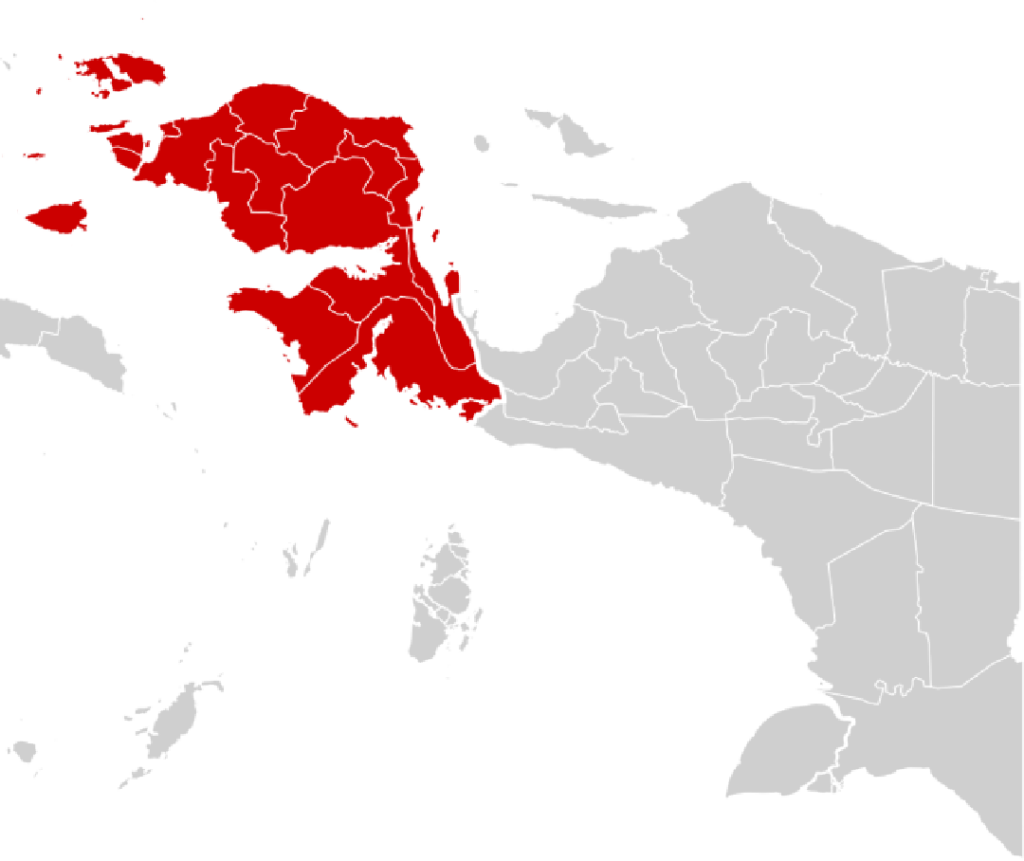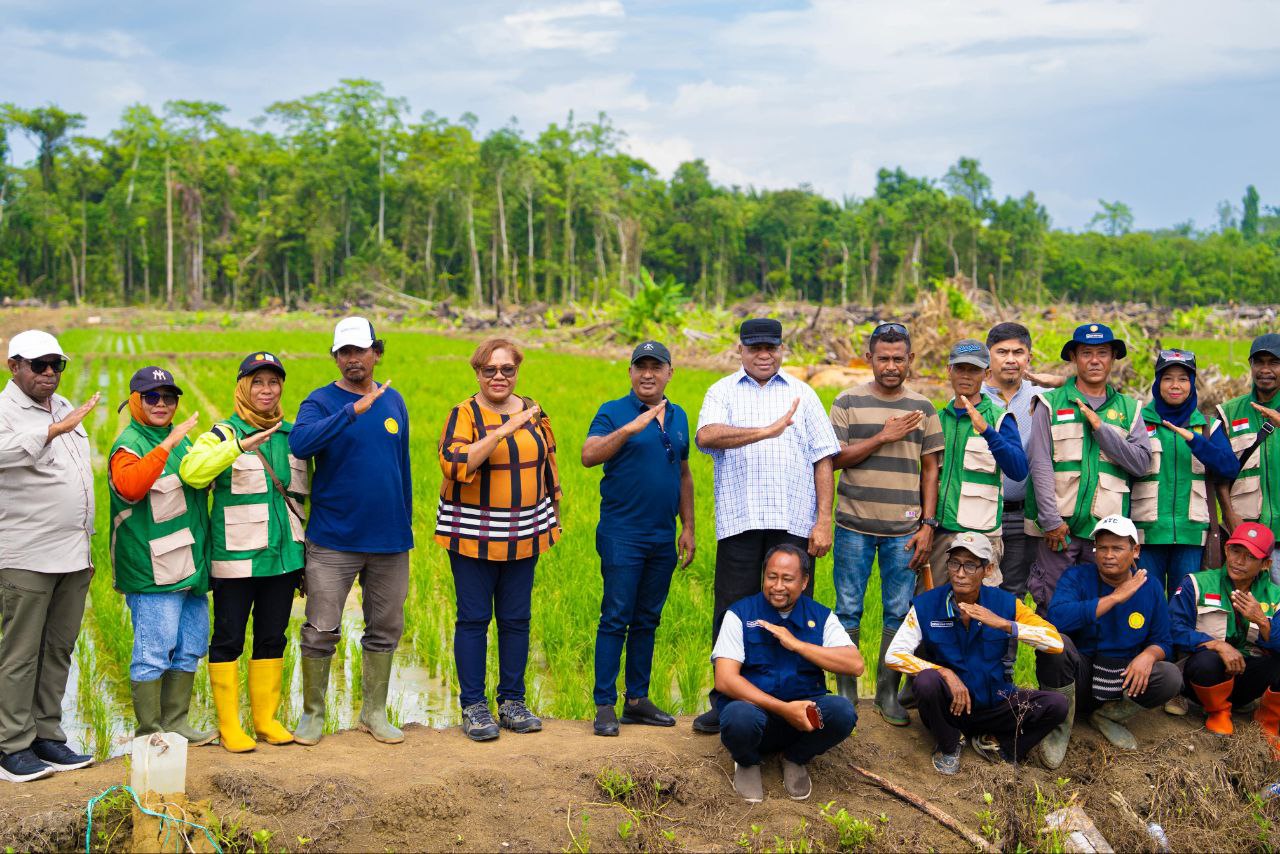
The bright green of the newly sprouted rice paddies in the early morning mist of Jayapura and Keerom tells a story of hope, strength, and change. These fields are more than just plots of land that are farmed. They are part of a bigger effort by the Papua provincial government to help Indonesia’s national food security goals by supporting the ambitious plan to open and farm 30,000 hectares of new rice fields across Papua. This project shows a strong commitment to food self-sufficiency, economic opportunity, and long-term growth in agriculture.
Papua’s geography has made it hard to grow rice on a large scale for a long time. The province’s rolling hills, thick forests, and complicated river systems have always been better for subsistence farming, fishing, and horticulture than for large-scale rice farming. Papua’s government, along with the Ministry of Agriculture, local communities, and agricultural experts, thinks that change is possible.
This article talks about how Papua got involved in the national program to expand rice fields, shares stories from farmers and officials on the ground, and looks at how this effort is changing the region’s agriculture and its future.
Planting the Seeds of Change
On a cool morning, February 23, 2026, farmers and farmworkers met in Jayapura to get flooded fields ready for planting. The ground was flat and shiny with water. Farmers used both old-fashioned tools and new machines to carefully turn the soil and plant seeds.
The site was not just a farm. It was a picture of future harvests, better lives, and Papua’s bigger role in helping Indonesia meet its food security goals.
The provincial government said that Papua had started planting rice as part of the effort to open 30,000 hectares of new rice fields that would be productive. This was a goal set by the central government to make the country’s food supply more stable. Local news outlets, such as Jubi, Antara News, and agricultural websites, reported on this information.
The program is part of a national plan to grow more rice in the country and rely less on imports. Rice is a staple food for Indonesia’s 280 million people, so having a strong rice crop is an important part of the country’s food security plan.
Leadership and Vision in Government
Provincial leaders in Papua have led the way in this initiative, seeing agricultural development as a way to improve food security and boost the economy.
Governor Mathius Fakhiri has been a public supporter of the rice field program. In February 2026, he went to field sites in Keerom Regency, where they had set up huge areas of land for farming. He spoke as a politician and as someone who knows how farming is a part of many Papuan families’ daily lives while standing in a freshly plowed paddock.
“We are working toward food independence,” he said. “This program is part of our duty to make sure that Papua makes a real contribution to Indonesia’s food security while also giving our communities more chances.”
Local farmers agreed with what he said because they saw the program as a way to boost production, stabilize local markets, and raise household income.
Collaboration with National Agriculture Authorities
The Ministry of Agriculture has helped Papua by giving them technical help, seed varieties that work well in Papua’s climate, and assistance with planning for irrigation and mechanization.
Antara News says that the provincial government has worked closely with agricultural extension services to make sure that planting, managing fields, and harvesting are all done in the best way possible. The ministry’s involvement shows that Papua’s program is part of a coordinated national framework, not just a provincial program.
Farmers have been able to get better rice seeds, advice on how to deal with pests, and training on how to grow crops in a way that is good for the environment because of this partnership.
The Rice Field Expansion in Keerom
Keerom Regency has become a key area among the regions chosen for growth. Keerom has a long history of having different types of landscapes and farming. It could become one of Papua’s main rice-growing areas.
Governor Fakhiri has been to Keerom’s fields several times to talk to farmers, check on their progress, and hear what people in the area have to say. His presence drew attention to Keerom’s part in the larger food security agenda.
Farmers in Keerom were proud to see their fields turn into rice paddies. Many had worked for years to grow small gardens and plots to feed themselves. The move to bigger, off-take rice production opened up new opportunities and gave people a chance to help feed the country.
One farmer, whose family has farmed land in Keerom for generations, said the program gave them more than just seeds and tools. It also gave them more confidence. “We are planting rice not just for ourselves,” she said, “but for the future of Papua and Indonesia.”
Building Capacity and Sustainability
Papua’s government is focusing on improving the long-term agricultural capacity of the country, which goes beyond just planting and harvesting crops. This includes teaching farmers better methods, helping with irrigation infrastructure, and promoting climate-smart farming.
The Balai Penyuluhan Pertanian (Agricultural Extension Center) has been very helpful in helping farmers learn new things. Local trainers have worked closely with people in the community to help them choose seeds, manage water, and improve the fertility of the soil.
Officials stress that growing rice in a way that is good for the environment takes more than just planting seeds. It means knowing how the weather works, how to manage water resources, and how to combine modern methods with what people in the area already know.
The government is putting money into irrigation projects to make sure that the bigger rice fields stay productive year after year. This means putting in water pumps, canals, and reservoirs that can control the flow of water during the growing season.
Voices From the Field
It was sunny but not too hot on the day Governor Fakhiri came to Keerom. In the bright light, farmers squinted as they talked about how planting rice had changed their daily lives. They used to only take care of small vegetable plots or fruit gardens, but now they organize bigger teams to take care of bigger areas of land.
Yohanis, a young farmer, talked about how his family had always had trouble with crops that didn’t always grow well because of changes in the weather. Now that the province was helping them, they could get high-quality seeds and technical advice that made it more likely that they would succeed.
“We used to pray for rain or sun,” he said with a shy smile. “Now we have tools and help that make us feel like we’re part of something bigger.”
Maria, another farmer, talked about how proud she was to be a part of a national program. She said that she felt appreciated because her work in the fields helps not only her family but also Indonesia’s food security.
Economic and Social Impacts
We think that the growth of rice fields will have effects that go beyond just growing food. As fields become more productive and harvests rise, local markets may see more business. More agricultural output will help business owners, transport providers, and processors all at the same time.
A shopkeeper in Jayapura said that farmers who came to his store to buy supplies already brought a new energy to the local economy. He said, “There is hope in the air.” “People are talking about planting and picking.” It seems like something big is going on.
At the same time, the government knows that it needs to find a way to balance more production with access to markets. Officials are looking into how to connect Papua’s rice production with distribution networks at the regional and national levels. This will make sure that extra rice is sold and farmers make money.
A Contribution to National Food Security
For decades, people have been worried about how easy it is for Indonesia to run out of food. Strengthening domestic food production is a strategic priority because the population is growing and global conditions that affect world food markets are always changing.
Papua’s involvement in the 30,000-hectare rice expansion program makes the province a part of this national goal. Papua’s fields may not be as big as Java’s or Sumatra’s rice belts, but they are becoming more and more important.
Local leaders often talk about how their region works with other regions instead of competing with them. An agricultural officer said during a field visit, “We are all part of one Indonesia.” “When Papua grows more rice, the whole country benefits.”
Challenges and Perseverance
Even though things are going well and people are excited, there are still problems. The landscape of Papua is hard to predict. The way it rains changes. The soil conditions at each site are different. It can be hard to plan how to get equipment and crops to market.
These problems, however, have not made people less committed. Instead, they have made it even more important to plan well, keep learning, and get involved in the community.
The provincial government and its partners have made it clear that they see solving problems as part of the process. Every problem is a chance to learn how to do things better or make plans more precise.
Farmers also face problems with determination. They know that with each new harvest, they get closer to safety and stability.
A Symbol of Hope and Resilience
As rice sprouts grow in the flooded fields of Jayapura and Keerom, they bring more than just the promise of food.
They carry the hopes of farmers, the plans of government officials, the support of agricultural experts, and the dreams of communities that used to rely only on subsistence farming.
Papua’s involvement in the national program to expand rice fields is part of a larger story about inclusion and opportunity. It shows that Papua, which has long been seen as remote and difficult, is now playing an important role in shaping Indonesia’s future.
The province is at the center of the country’s food security plan by planting rice, a staple grain that feeds millions of Indonesians.
As the sun sets over the paddies that are now turning golden in their early growth, it feels like a new chapter has begun. Papua not only feeds itself, but it also makes all of Indonesia stronger and more resilient.