The line at the Samsat office in Jayapura started forming earlier than usual that morning.
It was not chaotic, just longer. People stood quietly, holding folders, envelopes, and sometimes just a few folded sheets of paper. Some had come alone, others with friends or relatives. A few looked relaxed. Others seemed unsure, checking their documents again and again before stepping forward.
Inside the building, the routine was familiar.
Counters opened. Names were called. Numbers were processed.
But there was a noticeable difference.
More people had shown up than on an ordinary day.
And most of them were there for the same reason.
News That Travels Quickly
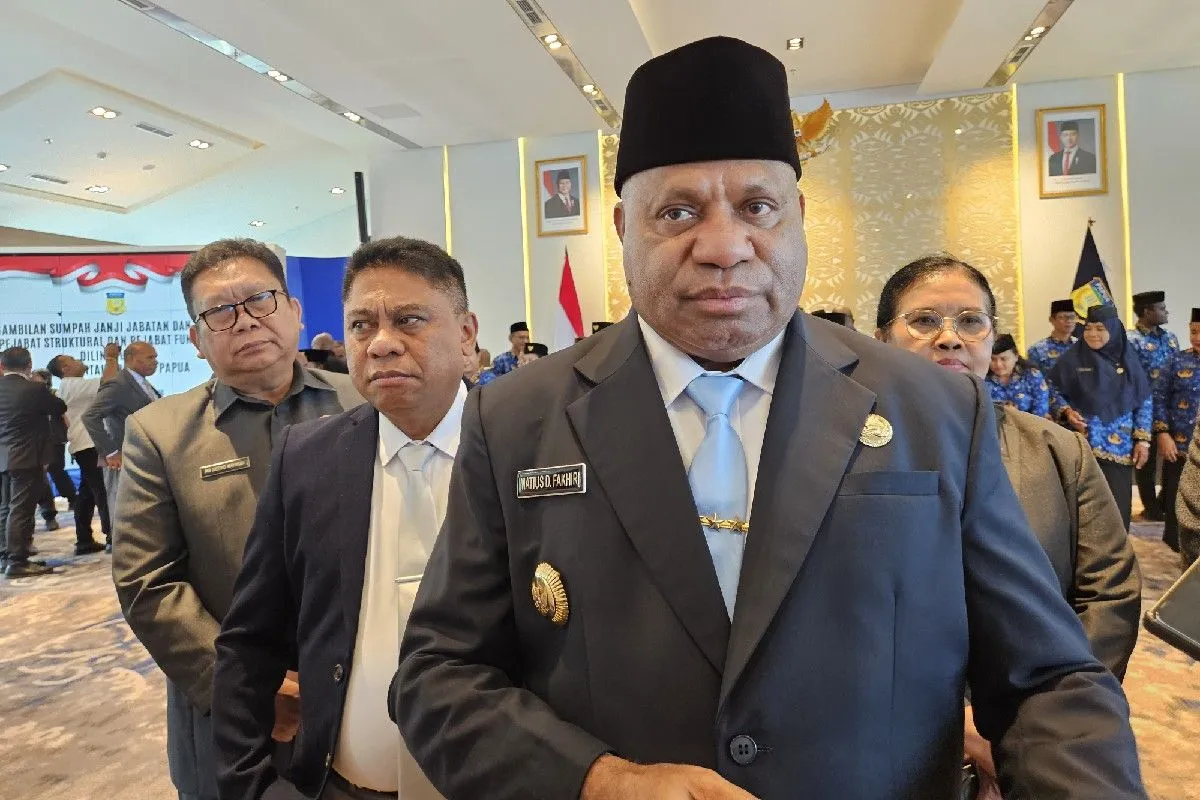
A few days earlier, the provincial government had announced a discount program for vehicle taxes, introduced by Governor Mathius Fakhiri as part of a broader effort to ease financial pressure ahead of Eid.
In Papua, news like this travels in its own way.
News like this does not always spread through official channels first.
Sometimes through conversations.
Someone hears about it at a market. Another mentions it at a roadside stall. A message circulates through phone groups.
By the time it reaches the Samsat office, it has already become part of everyday discussion.
“Did you hear about the discount?”
“How much is it?”
“Until when?”
A Policy That Feels Practical
On paper, the policy is straightforward.
Residents are offered discounts of up to 30 percent on motor vehicle taxes, along with reductions for overdue payments and waivers for certain penalties.
But for many people, the details matter less than the timing.
Eid is approaching.
And with it comes spending.
Food. Travel. Clothing. Small gifts for family.
Even for those who try to keep things simple, expenses tend to increase.
So any reduction in costs, even temporary, feels relevant.
A Man With an Old Envelope
Near the entrance of the Samsat office, a man in his forties stood holding a slightly worn envelope.
He had arrived early, before the line grew longer.
Inside the envelope were documents for his motorcycle.
“I have been delaying this,” he admitted.
He explained that he had not paid his vehicle tax for more than a year.
“At first, I thought I would pay it next month,” he said.
“But then other things came.”
School fees. Household expenses. Unexpected costs.
Over time, the amount grew.
This included not only the original tax but also the penalties.
“It became heavy,” he said.
When he heard about the discount, he decided to come.
“Maybe now I can finish it,” he added.
Why Vehicles Matter Here
In many parts of Papua, owning a vehicle is not about convenience.
It is about necessity.
Public transportation is limited, especially outside major towns.
Distances between places can be long.
Road conditions vary.
For many people, a motorcycle or car is essential.
To go to work.
To carry goods.
To visit family.
To handle daily life.
But ownership comes with costs.
And those costs do not always align with income.
The Weight of Accumulated Penalties
One of the most significant parts of the policy is something other than the discount itself.
It is the reduction of penalties.
For people who have delayed payments, penalties can grow quickly.
What starts as a manageable amount can become difficult to pay.
This creates a cycle.
People delay further because the total feels too high.
The policy aims to interrupt that pattern.
By reducing penalties, it makes payment feel possible again.
A Conversation in Line
As the line moved slowly, two men began talking.
One asked the other how much he owed.
“I’m not sure,” the second replied.
“But I know it is a lot.”
They both laughed, not because it was funny, but because it was familiar.
When asked about the discount, the second man shrugged.
“Whatever it is, it will help,” he said.
The Government’s Perspective
For the provincial government, the policy serves more than one purpose.
It provides relief.
But it also encourages compliance.
Officials have emphasized that the program is designed to motivate people to pay their taxes, both current and overdue.
In regions where tax collection can be uneven, incentives can be effective in increasing compliance rates and ensuring that individuals fulfill their tax obligations.
These incentives provide a reason for individuals to take action.
A Limited Window
The program is not permanent.
It runs from April to June 2026, allowing residents a limited time to take advantage of the offer.
This creates urgency.
People know they cannot delay indefinitely.
They must decide.
Pay now, or miss the opportunity.
A Shop Owner’s Routine
In a small shop not far from the Samsat office, a woman arranged goods on a shelf while talking about the policy.
She owns a motorcycle, which she uses for both personal and business needs.
“I use it every day,” she said.
“To go to the market, to bring things here.”
When asked about the tax discount, she nodded.
“I will pay this month,” she said.
“For me, it is better.”
She did not describe the policy as a major change.
However, she views it as something that fits into her routine.
The Broader Economic Context
The geography of Papua shapes its economy.
Transportation costs are higher.
Goods take longer to arrive.
Prices can fluctuate.
In this context, even small financial adjustments can have noticeable effects.
The vehicle tax discount is one of those adjustments.
It does not change the overall structure.
But it affects individual decisions.
Encouraging Local Registration
Another part of the policy focuses on vehicles registered outside Papua.
Owners who transfer their registration into the province are eligible for additional discounts.
This has practical implications.
It increases local revenue.
It improves data accuracy.
It helps authorities understand how many vehicles are actually operating in the region.
Inside the Office
As the day continued, the Samsat office remained busy.
Staff worked steadily, processing applications, answering questions, and guiding people through procedures.
For them, this period means more work.
More people. More transactions. More pressure.
But it is also a sign that the policy is working.
People are responding.
A Quiet Kind of Relief
Not everyone expresses it openly.
But there is a sense of relief among many who take advantage of the program.
It is not dramatic.
It does not change everything.
But it reduces a burden.
And occasionally, that is enough.
A Young Rider’s View
Outside the office, a young man sat on his motorcycle, waiting for a friend.
He had just finished paying his tax.
“I did not want to delay again,” he said.
When asked why, he smiled.
“Because next time, maybe there will be no discount.”
It was a simple answer.
But it reflected a practical way of thinking.
Challenges That Remain
Despite the positive response, challenges persist.
Not everyone has easy access to tax offices.
Some live in remote areas.
Others may not be aware of the program.
Economic conditions still affect people’s ability to pay.
The policy addresses some issues.
But not all.
Looking Beyond the Policy
As the program continues, its impact will become clearer.
Will more people become compliant?
Will the revenue increase?
Will similar policies be introduced in the future?
These questions will shape what comes next.
More Than Numbers
From a policy perspective, the vehicle tax discount can be measured in numbers.
Percentage reductions.
Number of participants.
Revenue collected.
But on the ground, it is experienced differently.
As a decision.
As a calculation.
As a moment when something becomes manageable.
Conclusion
As the sun began to set over Jayapura, the Samsat office slowly emptied.
The line shortened.
People left, some satisfied, others still thinking about their options.
Life returned to its usual rhythm.
Traffic moved through the streets.
Shops remained open.
Families prepared for the evening.
The policy did not change the city overnight.
But it touched something real.
The policy had a significant impact on the daily equilibrium between income and expenses.
And in a place where that balance is often fragile, even a small adjustment can make a difference.