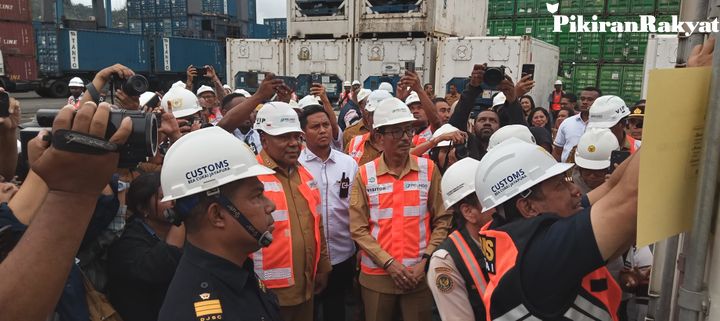
The morning air at Jayapura Port carried the scent of salt and diesel fuel as workers moved carefully between rows of insulated boxes. Inside those boxes lay something more than frozen yellowfin tuna. They carried pride, expectation, and a quiet sense of history in the making.
On 24 February 2026, the Vice Governor of Papua, Aryoko Rumaropen, officially released the province’s first export of 17.8 tons of processed tuna products to the United States. For many in attendance, the ceremony was not merely procedural. It felt personal.
Fishermen stood near port officials and company representatives after spending decades casting nets in the deep waters off Papua’s coast. Some wore worn sandals and faded hats, hands still rough from hauling lines at dawn. They watched forklifts lift pallets that would soon travel thousands of miles across the Pacific Ocean.
Those fish, caught in the waters they know like a second home, were heading to one of the world’s largest seafood markets.
A Milestone for Papua’s Maritime Economy
Papua’s seas are among the richest in Indonesia. The province sits along the Pacific’s fertile waters, where currents bring nutrients that sustain abundant marine life. Yellowfin tuna, prized for its firm texture and flavor, thrive here.
For generations, fishing in Papua has been about survival and tradition. Fathers taught sons to read the tides. Mothers sold fresh catch in local markets. The ocean served as both a source of livelihood and a key part of their identity.
But exporting nearly 18 tons of processed tuna to the United States marked a shift. It signaled that Papua was no longer only a supplier for local consumption. They were stepping confidently into the global seafood trade.
According to reports from Antara Papua and other national outlets, the shipment consisted of three main products: frozen yellowfin tuna loin, frozen ground tuna meat, and frozen tuna poke cubes. All had passed strict quality and safety standards required by American importers.
For the local processing facility involved, meeting those standards was not simple. It required upgraded equipment, trained staff, and consistent cold storage management. It required discipline.
One technician at the facility said that every box represented weeks of careful work. “We know the world is watching,” he said. “If we fail once, it will be difficult to gain trust again.”
Leadership and Vision
During the export ceremony, Vice Governor Aryoko Rumaropen spoke with calm conviction. He described the shipment as a symbol of Papua’s potential and resilience.
“This export shows that Papua’s marine resources can compete globally,” he said. “It also shows that our people are capable of producing high-quality goods that meet international standards.”
His message went beyond celebration. He emphasized sustainability and long-term planning. Economic growth, he noted, must not come at the expense of the ocean that sustains communities.
Standing beside stacks of sealed containers, he reminded stakeholders that protecting marine ecosystems is just as important as increasing exports.
For many fishermen present, his words resonated. They know that overfishing would damage not only the sea but also their children’s future.
The Human Side of the Shipment
Behind the official speeches were human stories.
A fisherman from a coastal village near Jayapura said he had been fishing for more than 20 years. He remembers when buyers offered low prices and transport was unreliable. Sometimes fish spoiled before reaching the market.
Now, he said, things feel different. With access to proper cold storage and structured purchasing agreements, income has become more predictable.
“When I heard our tuna would go to America, I did not believe it at first,” he admitted with a laugh. “We are far from America. But the sea connects us.”
Another worker at the processing plant described calling his parents after the ceremony. I informed them that another country would consume the fish we handled. They were proud. They said, ‘Work hard and keep Papua’s name good.’”
These are small moments, but they reveal the emotional weight of economic progress.
Economic Ripples Across Coastal Communities
The export is expected to create ripple effects beyond fishermen and processors.
Transport drivers are needed to move catches from landing sites to processing facilities. Cold storage technicians must monitor temperatures around the clock. Administrative staff manage export documentation and customs clearance. Small food vendors near the port benefit from increased activity.
A café owner near Jayapura Port said she noticed more customers in the days leading up to the shipment. “People were talking about tuna export,” she said. “It made the town feel busy and hopeful.”
For young Papuans seeking employment, the seafood industry offers new opportunities. Instead of leaving for distant cities, some may find stable work in processing plants or logistics companies tied to marine exports.
Papua’s Place in Indonesia’s Economic Future
Indonesia has long sought to strengthen exports beyond traditional commodities. Papua’s tuna shipment aligns with national efforts to diversify and increase value-added products.
Rather than exporting raw fish, Papua is exporting processed tuna. This adds economic value locally before goods leave the country.
Vice Governor Aryoko emphasized that this first shipment should not be the last. He expressed hope that more coastal districts would join the export ecosystem and that partnerships with international buyers would expand.
The United States, known for its strict import regulations, represents a significant milestone market. Success there could open doors to other global destinations.
Balancing Growth and Sustainability
Economic optimism, however, comes with responsibility.
Marine scientists and policymakers have warned that global demand for tuna is high, and without proper management, stocks can decline. Papua’s leaders appear aware of this challenge.
During the ceremony, officials stressed that fishing quotas and monitoring systems must remain in place. Sustainable practices ensure that tuna populations remain healthy for future generations.
One community elder, who attended the event quietly, later reflected on this balance. “The ocean gives,” he said softly. “But we must respect it.”
His words carry the wisdom of lived experience.
Looking Ahead
As the container doors closed and the shipment began its long journey toward the United States, there was a sense that something meaningful had shifted.
National conversations often discuss Papua through the lenses of geography, infrastructure challenges, or security concerns. But on that February morning, the narrative was different.
It was about opportunity.
It was about fishermen who wake before sunrise and now see their work valued on a global scale.
It was about young technicians who learn international quality standards and apply them with pride.
It was about a provincial government that sees marine wealth not as a static resource but as a pathway to economic dignity.
The journey from Papua’s shores to American tables is long. It crosses oceans and time zones. But it begins with simple acts: casting a net, hauling a line, trimming a fillet, sealing a box.
Seventeen point eight tons of tuna may seem like a statistic. In reality, it represents thousands of hours of labor and decades of accumulated knowledge passed down through families.
For coastal communities in Papua, this first export is a reminder that their skills, traditions, and resources have value far beyond their villages.
And as ships depart Jayapura carrying frozen tuna toward distant markets, they also carry a message. Papua is ready to share its marine wealth with the world and, in doing so, build a more secure and hopeful future for its people.