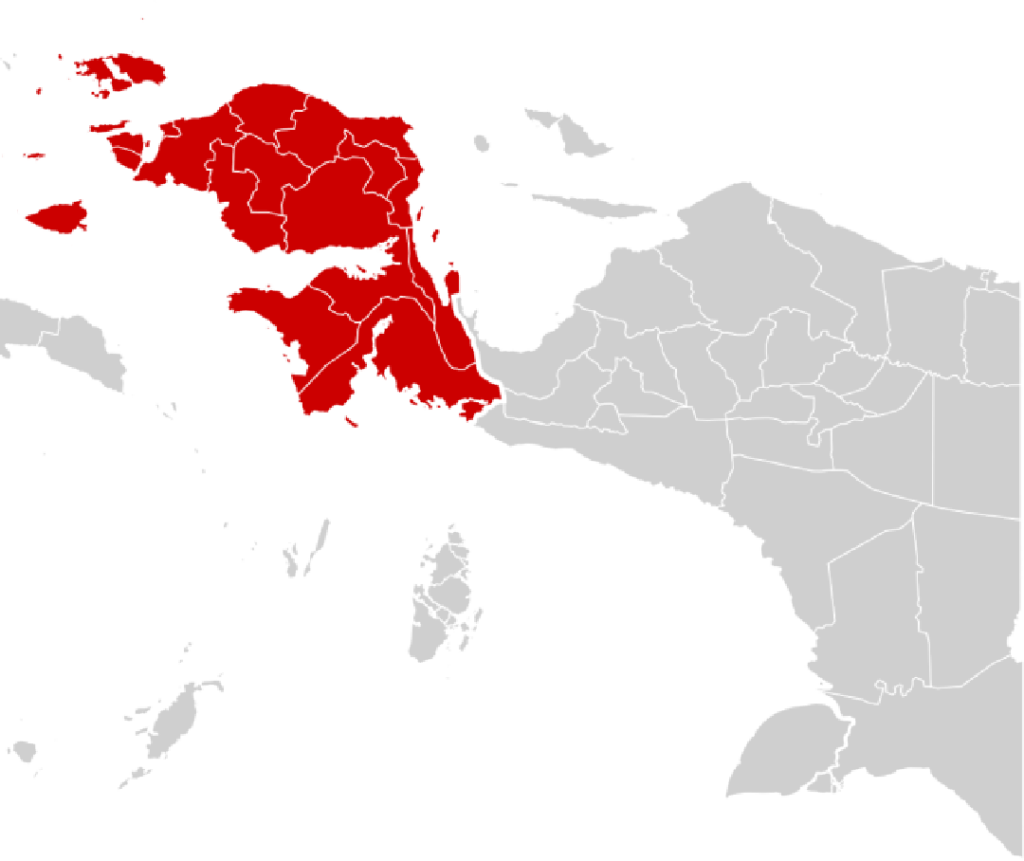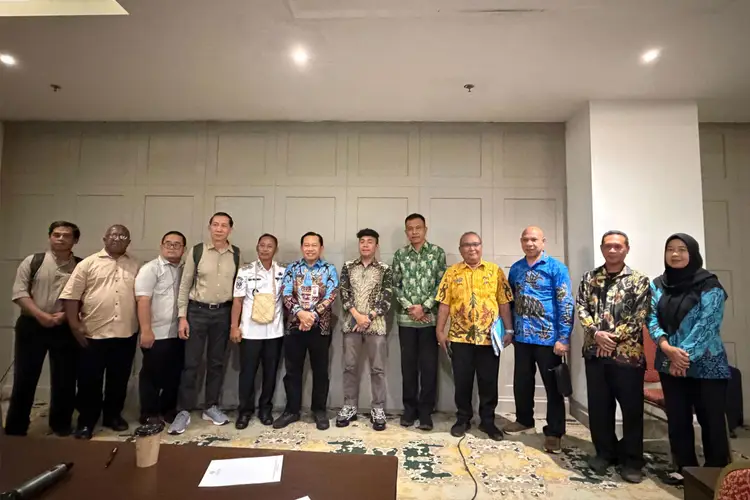
A new kind of chance is growing in the soft morning light that comes through the trees in Papua. International business interest is starting to wake up behind the normal flow of life in Jayapura and other places. On February 19, 2026, Billy Mambrasar, a member of the Executive Committee for the Acceleration of Special Autonomy Development in Papua, and Sumule Tumbo, a representative of the Ministry of Home Affairs (Kemendagri), facilitated a strategic meeting bringing together 21 European investors in the cocoa sector with the local governments of three cocoa-producing regencies in Papua: Yapen Islands Regency, Jayapura Regency, and South Manokwari Regency in Hotel Shalva, Jakarta. The news hit home in the province, combining hopes for economic growth with dreams of long-term development.
Papua is known for its rough terrain and rich cultural history. It also has fertile soil and a tropical climate that are good for growing cocoa. Cocoa has been a source of income for many farmers on the island for a long time, but progress has been slow because of poor infrastructure and limited access to global markets. European investors, on the other hand, bring the promise of new money, technical know-how, and access to markets that could change farming and the lives of people in the area.
In Jakarta’s government offices, in the hallways of provincial halls in Jayapura, and in rural villages where cocoa trees line winding paths, people are talking about European investment with both hope and thoughtfulness.
A Meeting of Interests in Jakarta
On February 19, 2026, officials from three regencies of Papua and potential investors from Europe met at a roundtable meeting in Jakarta. Local government leaders, economic advisers, and business delegations all came together to talk about how to unlock Papua’s cocoa potential.
The mood was serious. People from very different professional and cultural backgrounds came together around a polished table to talk about business and culture. For the Papua officials, the chance was more than just an economic one; it was a chance to show that Papua is ready to join the global economy while still caring about its social and environmental values.
“We own the land. We have the weather. “Now we need partners,” one representative from the province told a group of investors. People who watched said that the conversation was more about long-term partnerships, sustainability, and inclusive growth than short-term profit.
European investors wanted to know a lot about land rights, how the community is involved, how the supply chain works, how to protect the environment, and how local farmers could be part of bigger cocoa production systems. These questions showed that people all over the world are becoming more aware that investing in agriculture needs to be responsible, moral, and focused on the community.
What Makes Papua’s Cocoa Important
Papua’s tropical climate, rich soil, and lots of rain make it a great place to grow cocoa. In the past, farmers in many districts have grown small amounts of cocoa for local use and a little bit of money. But production has mostly stayed small, since farmers don’t have the tools or networks to compete in bigger markets.
The possibility of investment from Europe, which has a well-developed chocolate industry and a high demand for high-quality cocoa, could change that. European buyers are known for paying more for high-quality beans that are grown in a way that is good for the environment and people. For farmers in Papua, this is a chance to not only make more money but also get into global value chains.
Local farmer groups paid close attention to reports of interest from companies in Europe. People in villages near Jayapura and in more remote areas where cocoa is a main crop talked about hope. They thought they could get better prices, learn better ways to farm, and get help with cooperative structures that would help them keep more of the value of their crops.
One farmer said, “We used to sell cocoa beans for low prices.” “Our kids will have more chances if we can work with investors who pay us fairly and help us grow better crops.”
Sustainable Investment is the Focus
When talking to European investors, sustainability came up a lot. Officials stressed that even as development moves forward, Papua’s natural environment must be protected. Investors were interested in agroforestry models that combine cocoa with shade trees to protect biodiversity and make the soil healthier.
This method is in line with what is happening in the world of ethical farming. A lot of European chocolate makers and buyers are looking for cocoa that comes from farms that are good for the environment, where farmers are treated fairly, and where growing cocoa doesn’t lead to deforestation.
The fact that European investors are interested in Papua shows that they share a value: that protecting the environment and growing the economy can go hand in hand. In isolated villages where residents rely on forests for sustenance, medicine, and cultural traditions, the conservation of natural landscapes is imperative. Local leaders made it clear that any investment must not move communities and must respect land rights that have been in place for a long time.
“We want growth, but not at the cost of our land and traditions,” said an elder from the village at a meeting after word of the investment interest spread through community networks.
Local Involvement and Economic Opportunity
Another thing that European investors and Papua officials talked about was how much local people should be involved. Cocoa development in Papua should create jobs, teach people new skills, and set up ownership structures that help local communities instead of concentrating wealth outside of them.
Investors showed interest in models that include shared processing facilities, cooperative ownership, and profit-sharing agreements. European cocoa partners said that giving farmers and investors more power can create supply chains that last and help everyone.
This method fits with Papua’s larger economic plans that focus on growth that includes everyone. Provincial leaders have been pushing for development that deals with problems like poverty, poor infrastructure, and smallholders’ limited access to credit for a long time.
People talked about other industries that are connected to cocoa investment as well. Potential investors were interested in downstream activities like processing, packaging, and exporting chocolate that could add value in Papua instead of just sending raw beans abroad.
A Look at What’s Really Happening
For a lot of farmers in Papua, their daily lives are still based on tradition. Parents give their children cocoa plots. The seasons of harvest set the pace for work. After school, the kids help pick beans. Talks about global markets are often echoes from a long time ago.
But in markets and community events near Jayapura, the news of European interest caused a lot of excitement. People talked about what could happen: better schools, better roads, and steady incomes that could help whole communities.
A cocoa farmer in his late forties talked about how he felt when he heard about the investment. He said that for years he saw cocoa prices go up and down in local markets. He borrowed seeds and tools from his neighbors. At first, he laughed when he heard that Europeans were interested. Then he thought about his grandkids and hoped that things would get better for them.
He said, “I want them to stay here and make their lives.” “Don’t go to the city.”
For families in the country, investing in cocoa is not just about making money. It’s about hope, opportunity, and staying connected to the land that makes them who they are.
Challenges Ahead
There is a lot of hope, but there are still problems to solve. Papua has a lot of logistical problems because the infrastructure isn’t very good and it’s hard to get from one village to another or to a processing center. If cocoa production is to grow, it will be necessary to put money into roads, storage facilities, and technical training for farmers.
European investors were aware of these problems. They said they were willing to work with both the provincial and national governments to fix problems with infrastructure. There was also talk of public-private partnerships to help training programs and facilities that could help communities in ways other than growing cocoa.
Another problem is making sure that investments follow the law and respect land rights. In many parts of Papua, land is not owned by individuals in the Western sense, but is instead held communally according to traditional customs. Investors and government officials agreed that to avoid arguments, there must be clear, fair, and open procedures.
These problems aren’t just legal ones. They talk about identity, belonging, and respecting traditions that have lasted for generations. For a lot of older people, protecting customary land rights is an important part of any development plan.
A Vision for the Long Term
Even though there are problems, European investment in Papua’s cocoa sector could have big benefits. If this investment happens, it could lead to whole new economic ecosystems in the province’s rural areas.
Cocoa farming could become a long-term main industry in places where the climate and soil are good for it. There could be new jobs in processing, distribution, and marketing. Kids might be able to find work in agronomy, business, and export management without leaving their home country.
The investment interest is both a sign of Papua’s potential and a call to action for government officials. They see this moment as a chance to create systems that strike a balance between social inclusion, environmental protection, and economic growth.
Leaders in the provinces have stressed that any investment must be based on partnership, not extraction. They want projects that care about people, the land, and their cultural heritage.
Looking Forward
As talks between Papua officials and European investors go on, people in cocoa-growing communities, families, and those who look to the future with hope are getting more and more excited.
The story of interest in investing isn’t over yet. There are still meetings to have, studies to finish, and deals to make. But it’s a big deal that 21 European investors are very interested in Papua’s cocoa potential.
Farmers in small villages might still feel like the talk about global markets is far away. The hard part for government officials is turning interest into action that lasts. Communities hope that investment will create jobs and opportunities without destroying the traditions and natural resources that make Papua unique.
People picture a future where their harvests not only go to local markets but also to tables around the world as the sun sets over the rolling hills where cocoa trees sway in the breeze. A future where the land, people, and culture of Papua all do well.
It is a vision based on what is possible, based on community, and driven by the promise of working together.