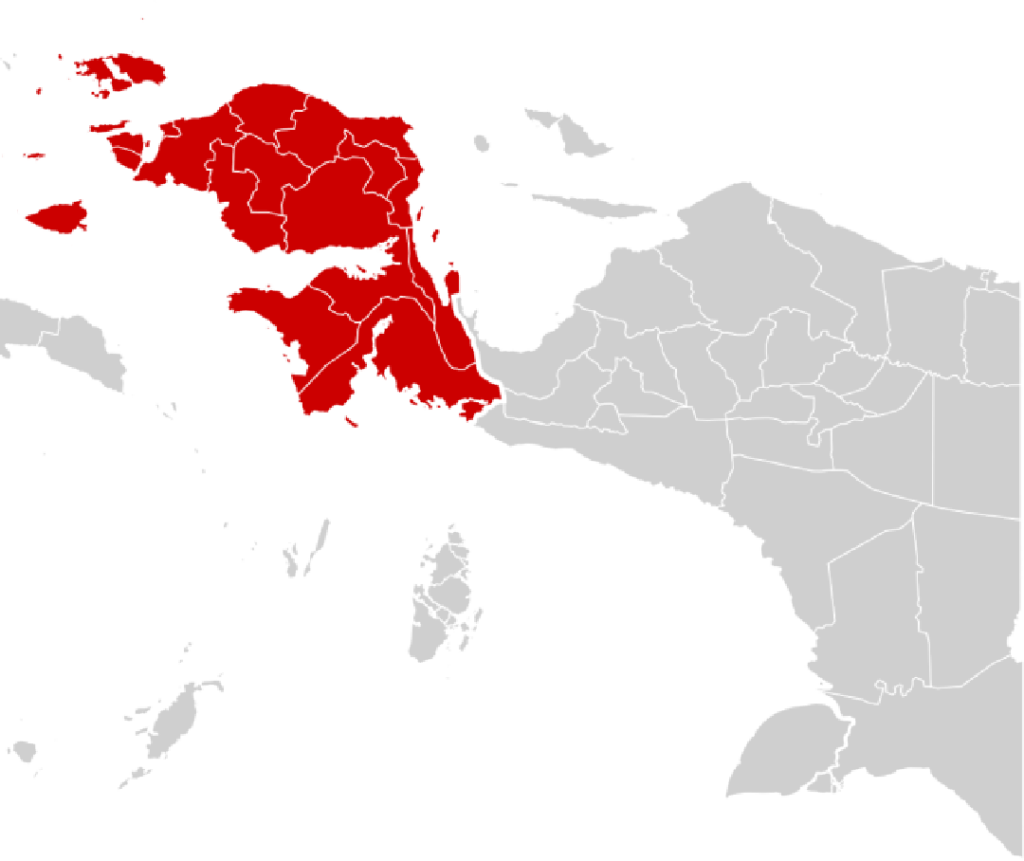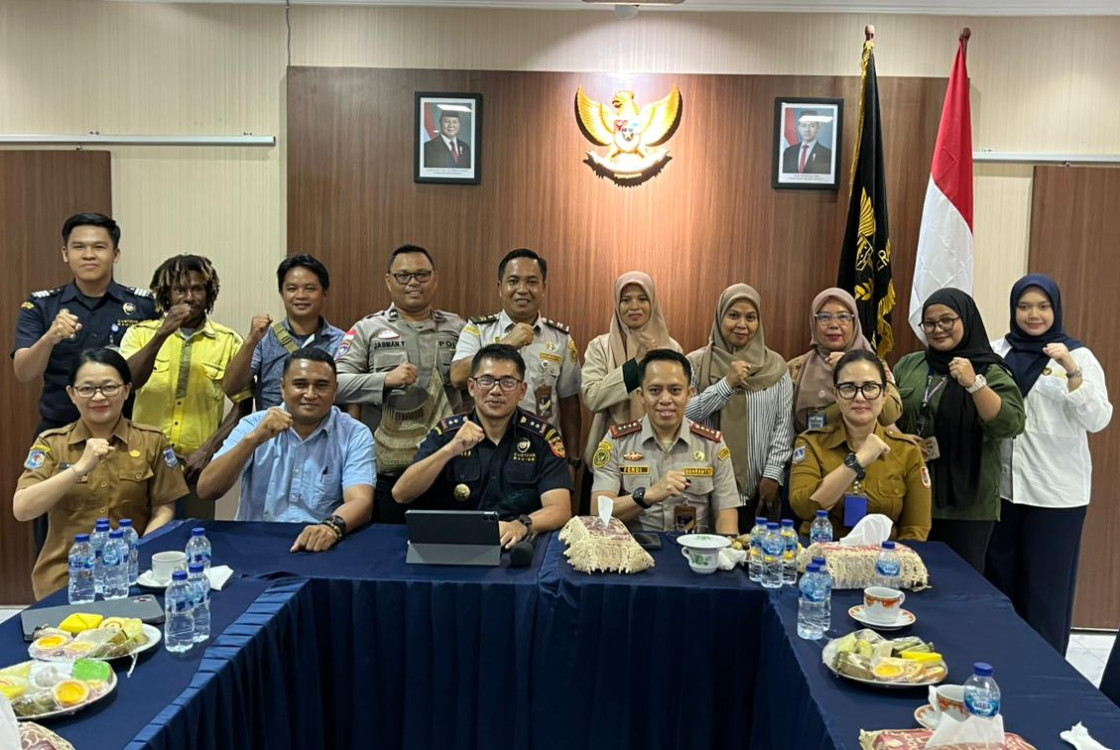
On a humid morning in early December 2025, a modest office of the customs and quarantine authorities in Merauke buzzed with energy and quiet resolve. Dozens of local small-business owners, fishers, and produce gatherers crowded the room, clutching notebooks and hopeful expressions. They had come not to debate prices or local trade, but to learn how to reach international shores—how to transform their local harvests into export-grade commodities capable of crossing borders, and how to meet global standards of packaging, inspection, and documentation.
The event was not just a workshop. It was part of a broader commitment by Bea Cukai and the quarantine agency to uplift the micro, small, and medium enterprises/MSME (UMKM) of Papua Selatan (South Papua)—a region abundant in fish, shrimp, crab, forest products, and unique commodities, but historically challenged by limited access to markets, infrastructure constraints, and barriers to export readiness.
This collaboration—between customs, quarantine, and local communities—signals a potential turning point. For Papua Selatan, it is a chance to harness natural abundance, convert traditional livelihoods into export opportunities, and bring economic gains that could reshape regional prosperity.
From Local Catch to Global Market: Why Papua Selatan Needs Export Support
Papua Selatan—especially around Merauke and adjacent areas—holds a rich treasure trove of natural resources. From dried fish to prawns, from local forest produce to specialty goods, the region’s potential for export has long been recognized. Yet many local producers struggled to access markets beyond domestic supply chains.
Challenges lurked everywhere: irregular packaging, lack of cold-chain logistics, insufficient documentation, and unfamiliarity with export procedures often turned local commodities into missed opportunities. Producers often lacked knowledge of how to handle export-grade packing, how to manage transport arrangements, or how to obtain the necessary sanitary and phytosanitary certificates required for international shipments.
Recognizing these constraints, Bea Cukai and the national quarantine agency decided to step in—offering not simply regulatory oversight, but hands-on guidance and capacity building, tailored to the realities of Papua Selatan’s UMKM.
The Workshop That Sparked Hope
On 2 December 2025, at the office of the regional customs office (KPPBC TMP C Merauke), the agencies launched a program under the banner “Bea & Karantina Mendukung UMKM Berani Ekspor”—a pragmatic name signaling both support and challenge. Local entrepreneurs gathered to hear detailed briefings on every step of the export chain, from procurement, proper packaging, loading, and transport logistics to completing export documents such as the Export Goods Declaration (PEB) and securing the essential identification number for businesses (NIB).
The room was lively. Fishers who had traditionally sold their catch at local markets listened attentively as quarantine officers explained disease-free certification requirements, chilled-chain packing standards, and procedures for exporting perishable marine commodities like shrimp or crab. Others, dealing with forest products or agricultural produce, learned about phytosanitary certification, fumigation rules, and packaging protocols.
Officials from the quarantine office, including the head of the local Karantina unit, emphasized that while Papua Selatan’s commodities already had “export potential,” the missing link had often been standard processing, packaging, and proper documentation. With proper guidance and facilities, those commodities could meet international standards.
The customs side laid out the legal and logistical groundwork: how to register export businesses, how to prepare PEB, how to manage transport and loading, and how to ensure legal compliance. They also walked participants through the importance of proper packaging and labeling, clear export procedures, and compliance with destination-country regulations.
By the end of the workshop, many of the local producers left not just with new knowledge but with a sense of possibility. For the first time, for some, they saw a real path from their village nets and fields to international markets.
More Than a Workshop: Building Institutional Bridges
What sets this initiative apart from past efforts is its collaborative and institutional nature. Bea Cukai and the quarantine agency did not merely conduct a one-off seminar. They committed to ongoing mentorship, technical assistance, and logistical coordination. Together with local government representatives and community stakeholders, they pledged to support UMKM through the entire export chain—from product preparation to shipment.
Quarantine officials pointed out that for many commodities—especially perishable ones like marine products—having properly certified processing, storage, and logistic facilities is key. Without such infrastructure, even well-prepared exports may fail to meet destination-country standards. That’s why the agencies plan to support standardization of warehouses, cold-chain logistics, sanitization protocols, and quality control.
On the legal side, the customs office reiterated the need for proper business documentation—including NIB registration—and clear knowledge of export procedures. For many small producers unaccustomed to formal paperwork, this guidance is crucial, converting informal local trade into documented, legal export.
Moreover, local policymakers—including members of the regional parliament (DPRD)—attending the session underlined the economic importance of supporting UMKM. With the region’s vast natural resources and unique biodiversity, exports could serve as a source of foreign exchange revenue and bring significant economic value to local communities.
Realistic Challenges: From Potential to Practice
Despite the optimism, both officials and local entrepreneurs acknowledged that the road ahead is not easy. First, capacity constraints remain a major hurdle. Many UMKM lack experience in consistent packaging quality, hygiene, cold-chain logistics, or record-keeping—all essential for export. The shift from local, informal trade to a regulated export market demands new discipline and investment in standards.
Then there is infrastructure—remote geography, limited transport networks, inadequate storage and refrigeration capacity, and unreliable electricity or cold-chain logistics can undermine even the most carefully prepared commodities. Without infrastructure, meeting export standards becomes difficult.
Another challenge is regulatory complexity. International export often involves phytosanitary checks, health certificates, permits, and compliance with often-changing regulations in destination markets. For first-time exporters, navigating these requirements can be daunting. The guidance from Bea Cukai and quarantine agencies aims to help, but sustaining compliance will require ongoing support.
Finally, market access remains uncertain. Even if commodities are ready and certified, connecting with buyers abroad—negotiating contracts, ensuring quality consistency, managing shipping costs—demands networks and trust. For many Papua Selatan producers, that means shifting mindsets from selling at local markets to competing globally—a big leap.
The Stakes: What Success Could Mean for Papua Selatan
But the potential gains are real—and significant. For coastal and rural communities in Papua Selatan, successful exports could mean stable income, improved livelihoods, better infrastructure, and stronger integration into national and global economies.
Exporting marine products, fish, shrimp, crabs, forest-based commodities, or unique local produce could generate foreign exchange and elevate the region’s economic profile. It could also encourage investment in cold-chain infrastructure, storage facilities, and logistic networks—improvements that benefit entire communities.
Moreover, formalizing trade—through business registration, export documentation, and quality control—can help UMKM grow sustainably, improve their competitiveness, and build resilience. For many producers, this could be a chance to move beyond subsistence or local markets and establish a stable business foundation.
On a broader level, the collaboration between customs, quarantine, and local producers reflects a shift in how government agencies support grassroots economies—from regulatory enforcers to enablers of economic growth. This could strengthen trust, institutional capacity, and long-term development planning in Papua Selatan.
Toward a New Identity: Papua Selatan as an Export Region, Not Just a Frontier
If the initiative succeeds, Papua Selatan may begin to shed its long-held image as a remote frontier region with limited access and subsistence livelihoods. Instead, it could emerge as a dynamic export hub—a place where fishers, farmers, and local producers connect their local knowledge, natural resources, and hard work to global demand.
The transformation would not be quick; it requires patience, investment, and sustained support. But early signs—from the December 2025 workshop, institutional commitment, and collaboration between agencies—suggest the region may be laying the foundation for long-term change.
For UMKM owners like those who attended the workshop, hope is no longer abstract. They carry home not only certificates and new knowledge but also renewed ambition. The path from local catch to international container is no longer a distant dream. It may well be within reach.
Conclusion
The collaboration between Bea Cukai and the national quarantine agency—targeted at building capacity, providing technical assistance, and guiding small producers—represents more than institutional outreach. It is a strategic push toward inclusive economic development, aimed at leveraging Papua Selatan’s natural resources, supporting local communities, and integrating them into global trade networks.
Success will not be measured merely in exported tons of shrimp or crabs but in livelihoods lifted, local economies strengthened, infrastructure improved, and institutions built. For many in Merauke and surrounding areas, this moment may mark the beginning of a new era: one where their products travel not only across Indonesian islands but also across oceans; where their small boats and farms become the source of meaningful export income; and where Papua Selatan becomes known not for its remoteness but for its promise.