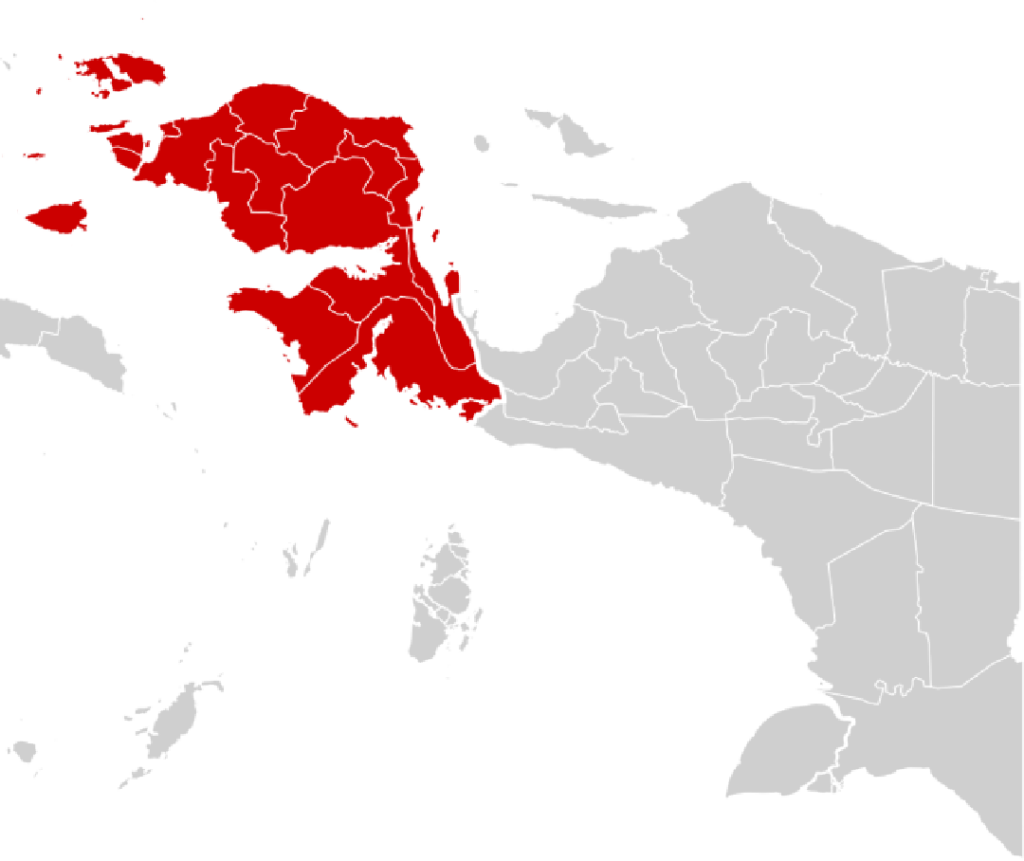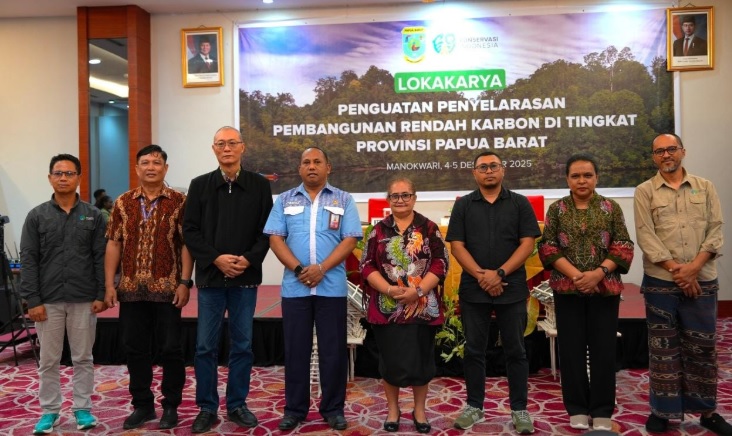
As the tropical breeze swept through the hall in Manokwari recently, voices rose not in talk of new roads or skyscrapers but of forests, mangroves, carbon, and a future reimagined. On that day, government officials, customary leaders, conservation activists, and community representatives gathered around the same table with a shared purpose: to commit to a vision of development rooted in sustainability, in harmony with nature. For Papua Barat, the region long known for its vast rainforests and rich biodiversity, this gathering marked a turning point—a firm pledge to align regional growth with global climate responsibility.
At the heart of this shift lies the province’s new resolve to adopt “low-carbon development.” Spurred by the issuance of Peraturan Presiden Nomor 110 Tahun 2025, which introduces an instrument for evaluating carbon’s economic value (Nilai Ekonomi Karbon, NEK) and mandates greenhouse gas (GHG) emissions control, Papua Barat is now recalibrating its planning and policies. The province’s leadership sees this not as a constraint but as an opportunity—to safeguard its ecological wealth while building resilient, equitable growth.
Ecology as Asset: Recognizing Papua Barat’s Natural Wealth
The scale of what is at stake is vast. Papua Barat encompasses some of Indonesia’s richest ecosystems: roughly 6.18 million hectares of forest, 340,000 hectares of mangrove, and extensive marine conservation zones covering millions of hectares of water.
These landscapes—rainforests, mangroves, coastal meadows, seas—are more than scenic backdrops. They are living assets: natural carbon sinks, guardians of biodiversity, safeguards for coastal resilience, providers of food and livelihoods, and anchors of indigenous heritage.
For decades, these ecosystems have helped sustain life for Papuan communities. But in a changing world—where climate change intensifies storms, threatens sea levels, and upends weather patterns—their value has never been clearer. By committing to low-carbon development, Papua Barat aims to frame its environment not as a barrier to progress but as its strongest foundation.
From Policy to Practice: The Low-Carbon Workshop and Institutional Momentum
This new direction was not born overnight. Over recent years, Papua Barat has gradually built the institutional groundwork—leading up to a high-level cross-sectoral workshop held in Manokwari. The workshop brought together government agencies, conservation partners, customary institutions, academics, and civil society to design a coherent roadmap for low-carbon development.
In an opening statement, a representative of the provincial government reaffirmed the region’s commitment. The message was clear: Papua Barat would actively contribute to national climate goals—especially the target set under the Second Nationally Determined Contribution (SNDC) 2035—by focusing on forestry and land-use sectors, long recognized as critical for emissions reduction.
Officials emphasized that low-carbon development in Papua Barat goes beyond halting deforestation. It involves a holistic rethinking of land use, integrating environmental protection, social justice for indigenous communities, transparent governance, and sustainable livelihoods. According to the Head of Forestry for the province, this strategy includes strengthening forest protection, reducing deforestation, empowering social forestry, enabling customary land governance, and enhancing technical and institutional capacity—including robust monitoring and reporting systems (MRV).
Why Papua Barat Matters—for Indonesia and the Planet
Papua Barat’s significance to Indonesia’s climate future cannot be overstated. With its vast intact tropical rainforests, mangrove belts, and coastal ecosystems, the province plays a critical role in global carbon sequestration. Maintaining these ecosystems helps curb greenhouse gas concentrations, preserves biodiversity, and protects coastal communities from climate impacts.
Moreover, compared to more densely populated or heavily developed regions, Papua Barat retains much of its environmental integrity. That makes it strategic ground for “”leapfrogging”—adopting sustainable development models that balance ecological preservation and economic progress. In essence, the province could become a beacon of how growth and environmental stewardship can go hand in hand.
Challenges Acknowledged: Data, Governance, and Integration
Yet the road ahead is steep. Even as commitment grows, stakeholders at the workshop did not shy away from discussing real challenges. First among them—data. For NEK to function well, accurate assessments of carbon stocks, land-use changes, forest cover, peat, and mangrove conditions are essential. Papua Barat, like many vast and remote regions, suffers from inconsistent data and limited capacity to monitor changes over time.
Beyond technical data, governance remains a complex puzzle. Low-carbon development in Papua demands coordinated planning across multiple sectors—forestry, environment, customary land rights, fisheries, infrastructure, social services—and beyond. That requires strong cross-institutional collaboration and the inclusion of customary communities in decision-making. Without it, policies risk being misaligned, counterproductive, or exclusionary. As local officials noted, success hinges on fairness, transparency, and community participation.
Sustaining commitment is another concern. Transforming decades of business-as-usual—where exploitation rather than conservation was the norm—requires persistent effort, political will, and resources. Technical, institutional, and financial capacity must be strengthened. Monitoring, evaluation, and reporting must be routine, not occasional.
Toward Synergy: Prosperity, Culture, and Conservation
Despite the challenges, the vision articulated during the workshop suggests more than carbon accounting. It holds the promise of a different future—a future where economic growth does not come at the cost of ecological destruction, where infrastructure and social welfare improve alongside healthy forests and vibrant seas, and where indigenous traditions and customary land governance are respected and integrated into planning.
In practical terms, low-carbon development could enable sustainable livelihoods: social forestry, sustainable fisheries, eco-tourism, climate-smart agriculture, community-based resource management, and other green economic opportunities. Through fair benefit-sharing and inclusive governance, local communities—especially indigenous ones—have a stake in preserving their land and environment.
Such an approach can nurture both environmental resilience and social equity: a foundation for long-term prosperity that aligns with global agendas like the Sustainable Development Goals (SDGs) while honoring local identity and rights.
From Pledges to Action: What Needs to Be Done
As the workshop in Manokwari concluded, participants pledged to develop concrete follow-up plans, integrate low-carbon principles into provincial development planning, and strengthen data and institutional capacity.
Key steps ahead would include establishing transparent systems for Monitoring, Reporting, and Verification (MRV) of emissions and carbon stocks; mapping land use and customary land boundaries; incorporating low-carbon strategies into regional development plans; strengthening social forestry and customary land rights; and promoting sustainable economic sectors that leverage natural ecosystems without destroying them.
Moreover, success would depend on participation—from grassroots communities to customary institutions, from local government to civil society, and from development partners to private sector investors. Low-carbon development in Papua Barat must not be imposed top-down; it must grow from the roots of local wisdom, community aspiration, and shared responsibility.
Conclusion
Papua Barat’s commitment to low-carbon development reflects a turning point in the region’s approach to growth. Rather than choosing between economic progress and environmental protection, the province is working to unite the two by aligning local development planning with national and global climate goals, particularly the SNDC 2035 target. Through cross-sector collaboration, strong governance, accurate carbon data systems, and inclusive participation from indigenous and coastal communities, Papua Barat aims to build a sustainable future grounded in ecological stewardship and social justice.
If the vision is carried forward with consistency and community engagement, Papua Barat has the potential to become a national model for climate-resilient development—demonstrating that protecting forests, strengthening mangroves, and empowering local livelihoods not only preserves the environment but also forms the strongest foundation for long-term prosperity and regional competitiveness.