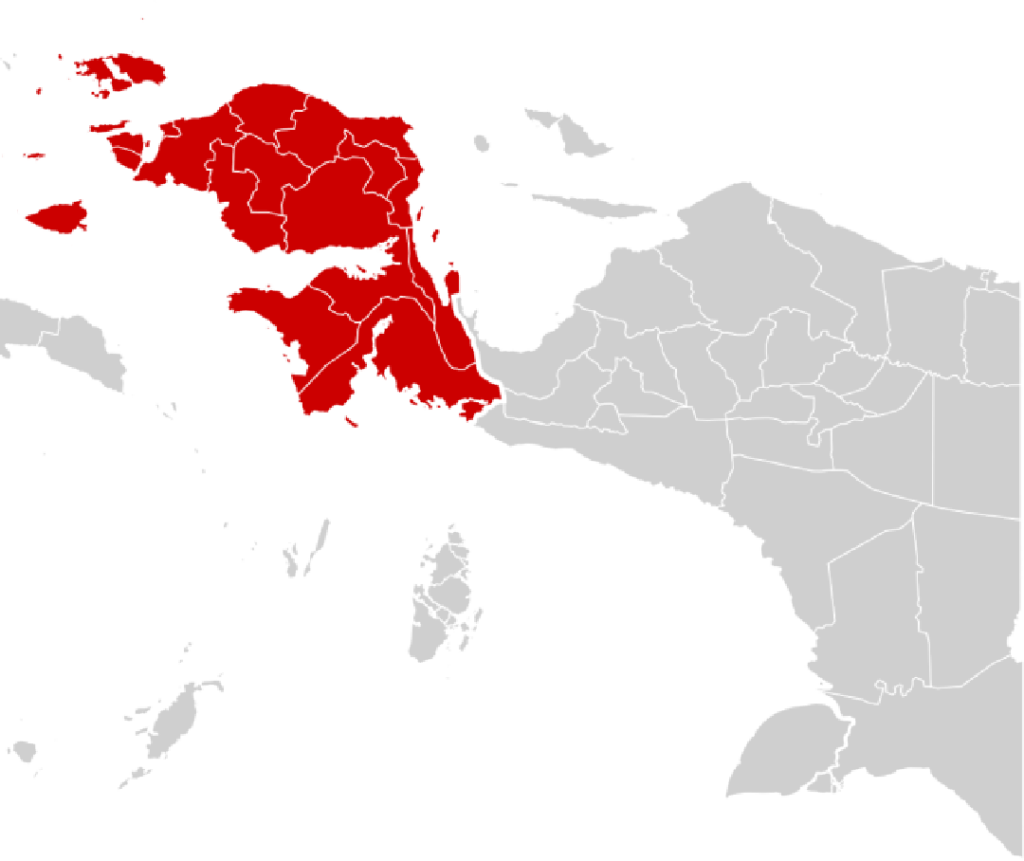
When Vice President Gibran Rakabuming Raka arrived in Sorong and later traveled to Raja Ampat on April 21-22, 2026, the schedule looked typical on paper.
Site visits. Inspections. Meetings.
But on the ground, it felt less formal than that.
The Gibran visit to Papua Barat Daya (Southwest Papua) Province was closer to a check on reality, how far programs have actually reached, and whether they are working in places where distance often slows everything down.
What Development Looks Like at Sea Level
In Raja Ampat, the focus was a coastal settlement built around fishing livelihoods.
The idea behind “the Kampung Nelayan Merah Putih (Red and White Fishermen’s Village)” is simple enough. Provide better housing, improve facilities, and connect people more directly to the local economy.
But the conversations there were not about design.
They were about outcomes.
Residents spoke about income, access, and whether the program would continue once the initial phase ends.
There was no dramatic moment.
Just a series of practical questions, the kind that usually matter more than announcements.
Hospitals and the Distance Problem
Back in Sorong, attention shifted to the regional hospital, RSUD JP Wanane.
The issue here is not new.
Healthcare in Papua often comes down to distance. For serious conditions, patients still need to travel far, sometimes across provinces.
Plans to improve cardiac services at the hospital are part of an attempt to reduce that gap, which will allow patients to receive timely and effective treatment without the need for long-distance travel.
If treatment can be handled locally, it changes everything.
Not in a symbolic way.
In a very practical one.
Small Moments That Say a Lot
There were also smaller interactions that did not make up the main agenda.
Gibran spoke with students, walked through public spaces, and at one point encouraged local women to take part more actively in modern retail environments.
It was not a policy speech.
More of a suggestion, delivered casually.
Moments like that tend to pass quickly, but they give a sense of how national programs are meant to connect with everyday life.
Security, Always in the Background
The visit took place under heavy security.
That part is unavoidable.
In Papua, development and security often move side by side. Even routine visits require planning at a different level.
At one point, there was a brief pause when local land ownership issues came into play.
Nothing escalated.
But it served as a reminder that development here does not happen in a vacuum.
Local customs still matter.
And they shape how projects move forward.
Cultural Signals That Matter
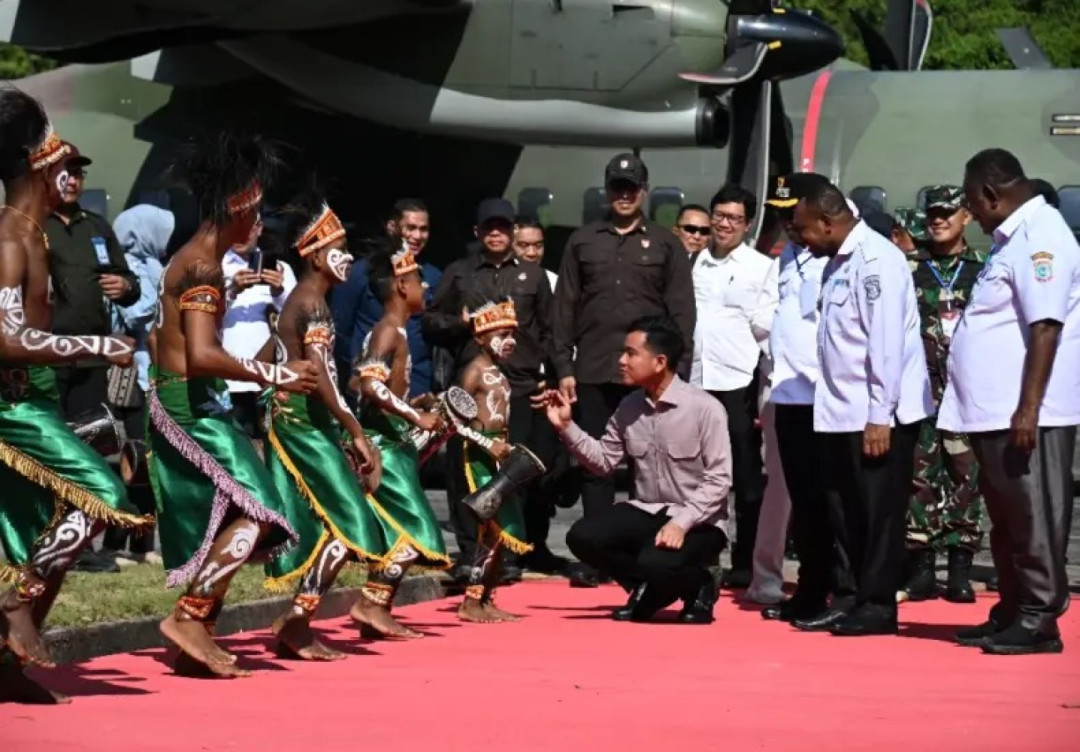
In Raja Ampat, the vice president was welcomed through traditional ceremonies.
These moments are easy to overlook, but they carry meaning.
In Papua, cultural recognition is often tied to acceptance.
Programs tend to move more smoothly when they align with local identity.
It is not always written into policy.
But it shows up in practice.
A Larger Pattern, Seen Up Close
If there was a theme to the visit, it was consistency.
Checking whether programs are not only launched but also sustained.
Whether they reach people who need them.
Whether they adapt to local conditions.
Earlier reporting on westpapuavoice.ac has touched on this before. Development in Papua is rarely about a single project.
It is about how different efforts connect.
Infrastructure, health, education, and local economies are all part of the same picture.
What Happens After the Visit
The visit itself was short.
What matters more is what happens afterward.
Whether the fishermen’s village continues to grow.
Whether hospital services actually expand.
Whether education programs improve over time.
These are slower processes.
They do not change overnight.
But they define whether a visit like this has lasting impact.
Conclusion
The Gibran visit to Sorong and Raja Ampat did not try to present a finished story.
If anything, it showed that development here is still in progress.
In Papua Barat Daya, progress tends to move in small steps.
Sometimes visible.
Sometimes not.
But always shaped by distance, local realities, and how well policies translate into everyday life.