
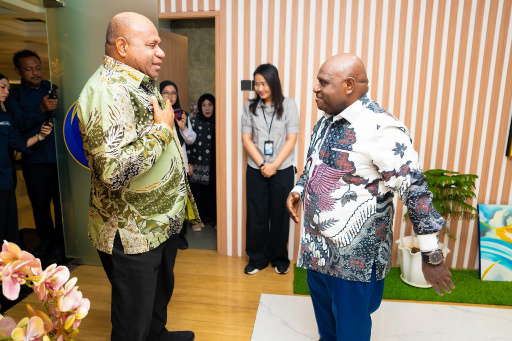
In mid-January 2026, Papua became the focus of a significant national conversation on human rights as Indonesia’s Minister of Human Rights, Natalius Pigai, intensified efforts to build awareness through education and institutional cooperation. Rather than relying solely on legal instruments or enforcement mechanisms, the government chose a long-term path rooted in learning, dialogue, and cultural understanding. This approach reflects a broader shift in how human rights are promoted in Indonesia, especially in regions with deep cultural traditions and complex social dynamics.
Papua, home to hundreds of ethnic groups and distinct customary systems, presents both challenges and opportunities for human rights development. Recognizing this, Pigai emphasized that human rights awareness must grow from within society rather than being imposed from outside. His visit to Jayapura and engagement with Universitas Cenderawasih marked an important step in aligning national human rights policies with local realities.
University of Cenderawasih as a Strategic Partner
University of Cenderawasih, widely known as Uncen, plays a central role in shaping intellectual and social discourse in Papua. As the largest and most influential public university in the region, Uncen attracts students from across Tanah Papua and neighboring provinces. This made it a strategic partner for the Ministry of Human Rights.
On January 19, 2026, the Ministry of Human Rights and Universitas Cenderawasih signed a memorandum of understanding focused on strengthening human rights education. The agreement covers cooperation in teaching, research, community outreach, and institutional capacity building. According to Pigai, universities are the most effective starting point for human rights awareness because they shape future leaders, educators, civil servants, and professionals.
He stated that campuses should become spaces where values of dignity, equality, and justice are discussed openly and applied critically. By embedding human rights into academic life, Pigai believes Papua can develop a generation that understands rights not as political slogans but as ethical foundations of everyday life.
Human Rights Education Beyond the Classroom
One of the key messages delivered by Pigai during his engagement at Uncen was that human rights education must not remain theoretical. While formal coursework is essential, it must be complemented by practical engagement with communities. The cooperation framework encourages students and lecturers to engage in community-based programs that culturally sensitively introduce human rights concepts.
These programs include public discussions, legal awareness sessions, and collaborative research with indigenous communities. The aim is to bridge academic knowledge with lived experiences, ensuring that human rights education remains relevant to local concerns such as access to education, health services, social participation, and cultural protection.
Uncen’s leadership welcomed this approach, noting that it aligns with the university’s commitment to community service. By linking research and teaching with social realities, the university hopes to strengthen its role as an agent of positive change in Papua.
Cultural Roots of Human Rights in Papua
Pigai’s approach stands out for its focus on cultural compatibility. He consistently highlighted the need for human rights education in Papua to honor and incorporate indigenous values. Papua’s traditional ways of life prioritize community unity, respect for elders, shared obligations, and a connection to the environment. Pigai contends that these values don’t clash with the core principles of universal human rights.
He sees them, instead, as a potent base for fostering dignity and equality. By presenting human rights as an extension of local knowledge, rather than an alien idea, the government aims to lessen opposition and boost acceptance among the people.
Pigai warned that human rights messaging that overlooks cultural contexts could easily push communities away.
Therefore, collaboration with universities and local governments is essential to ensure that education programs reflect both international standards and Papuan identity.
Strengthening Institutional Cooperation
Beyond the university partnership, Pigai also held meetings with the Papua provincial government to strengthen coordination on January 22, 2026. Governor Mathius Fakhiri expressed support for the initiative and emphasized the importance of aligning national policies with regional development priorities.
The provincial government sees human rights awareness as complementary to efforts in education, health, and economic empowerment. Officials believe that citizens who understand their rights and responsibilities are better equipped to participate in development processes and maintain social harmony.
Through this coordination, the Ministry of Human Rights aims to integrate awareness programs into existing provincial frameworks. This includes cooperation with local education offices, cultural institutions, and community organizations.
A Regional Vision for Tanah Papua
Pigai’s aspirations reach far beyond Jayapura or even the province of Papua. He stressed the need for a widespread understanding of human rights throughout Tanah Papua, encompassing Papua Barat, Papua Tengah, Papua Selatan, Papua Pegunungan, and Papua Barat Daya. While each region possesses its own distinct qualities, they all grapple with similar issues: access, fairness, and the ability to participate.
The government envisions Universitas Cenderawasih as a key center for developing educational models. These models would be designed for adaptation and replication throughout the region. The goal is for Papua to become a model for culturally sensitive human rights education in Indonesia.
Pigai also pointed out Papua’s potential to influence national discussions on human rights. Instead of being seen solely as a place where policies are implemented, Papua can offer valuable perspectives on how cultural diversity and the protection of rights can work together in a positive way.
Public Response and Academic Engagement
The initiative was well-received by both students and academics. Numerous students voiced their approval of the government’s direct engagement with universities and its constructive approach to human rights. Lecturers, in turn, welcomed the prospect of collaborative research and the chance to develop new curricula.
Civil society observers pointed out that involving academic institutions is key to ensuring the initiative’s longevity. Unlike fleeting campaigns, education-focused efforts have a more enduring effect, shaping values over extended periods.
Experts also recognized that building awareness is a slow process. It demands consistency, a willingness to engage in dialogue, and ongoing investment.
Human rights education necessitates adaptation to societal transformations and the capacity to address novel issues.
Implementation Obstacles
Notwithstanding the prevailing optimism, several impediments persist. The geographical characteristics of Papua pose logistical hurdles in accessing isolated populations. Furthermore, constrained resources and inadequate infrastructure can impede the timely execution of programs. Moreover, variations in cultural norms necessitate adaptable methodologies, as opposed to rigidly uniform solutions.
Pigai recognized these difficulties, yet he underscored that they should not impede advancement. He posited that substantive change frequently originates from modest, targeted endeavors that expand through collaborative efforts and mutual confidence.
The Ministry of Human Rights intends to keep a close eye on program results, ready to tweak its approach when necessary. Input from universities, local governments, and communities will be key in determining how things proceed.
Human Rights: A Collective Duty
Pigai’s core message is that human rights aren’t just the government’s job. Universities, local leaders, civil society, and everyday citizens all have a part to play. The government aims to build a shared commitment to human rights by encouraging collaboration.
This strategy shifts the focus away from strict enforcement and toward education and empowerment. It understands that genuine respect for human rights takes root when people grasp their significance and how they apply to their lives.
Conclusion
The collaboration between the Ministry of Human Rights, University of Cenderawasih, and the Papua provincial government represents a thoughtful and forward-looking effort to strengthen human rights awareness in Papua. By placing education at the center and respecting cultural context, the initiative seeks to build understanding rather than confrontation.
For international observers, Papua’s experience offers valuable lessons on how human rights education can be adapted to diverse cultural environments. Rather than imposing uniform solutions, Indonesia’s approach in Papua highlights the importance of dialogue, partnership, and local engagement.
As these programs develop, their success will depend on sustained commitment and genuine collaboration. If implemented consistently, this initiative has the potential to shape a more informed, inclusive, and dignified future for Papua and contribute meaningfully to Indonesia’s broader human rights landscape.

