
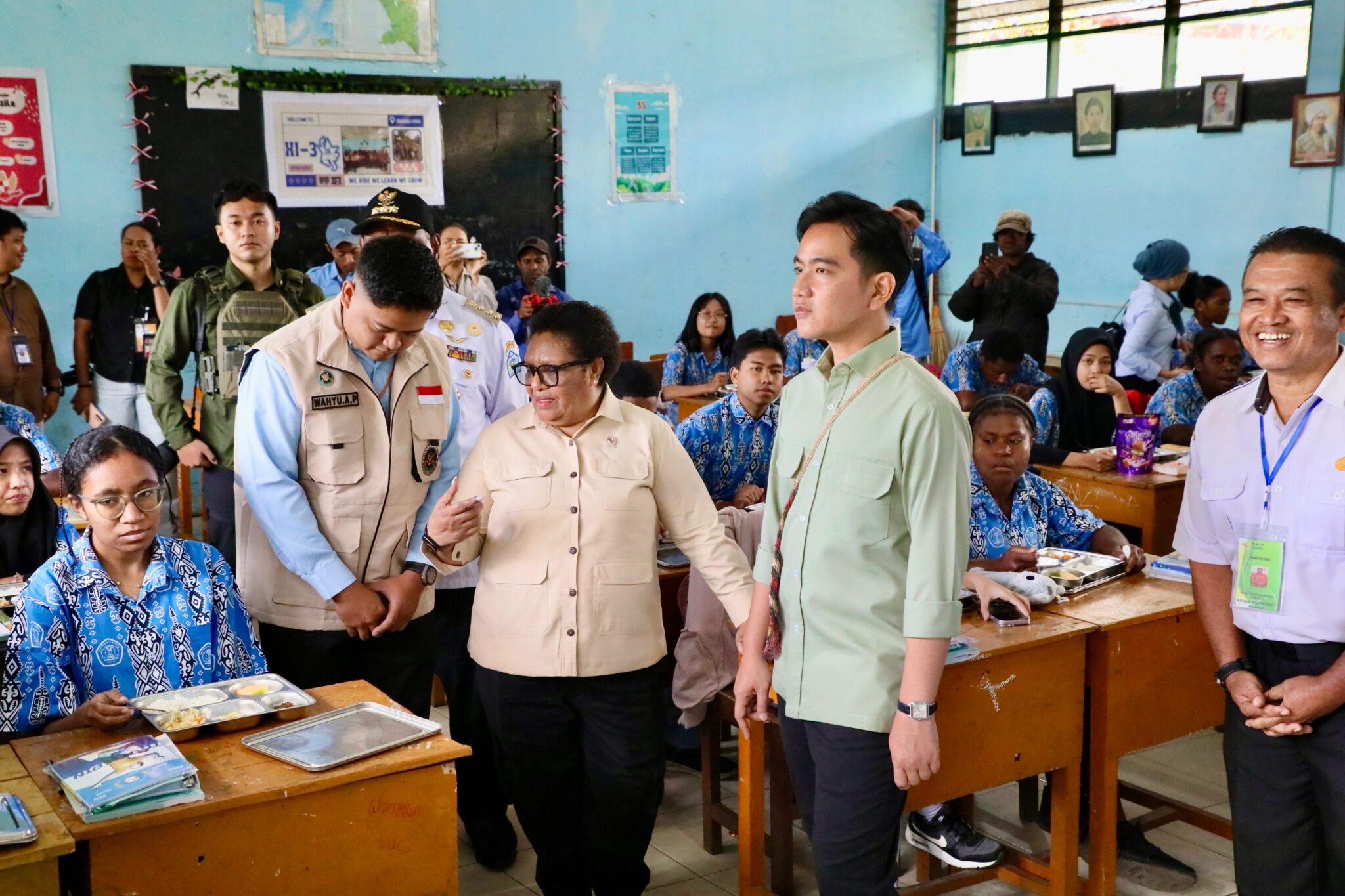
The Indonesian government has once again reaffirmed its long-term commitment to accelerating development and improving welfare across Papua, as Vice Minister of Home Affairs Ribka Haluk delivered a series of firm statements during recent official engagements. Her remarks, delivered while accompanying Vice President Gibran Rakabuming Raka on a working visit to several regions in Papua, underline Jakarta’s determination to ensure that development in the easternmost provinces progresses in a measurable, inclusive, and sustainable manner.
Ribka Haluk, who has long been involved in governance and development efforts in Papua, emphasized that it remains a national priority. According to her, development policies in Papua are not merely administrative obligations but a constitutional mandate that reflects Indonesia’s commitment to justice, equality, and unity across its diverse regions.
Her statements came amid growing public attention to the pace of development in Papua, particularly following the implementation of the Special Autonomy framework and the establishment of new autonomous provinces. Through these policies, the government seeks to close long-standing gaps in infrastructure, education, healthcare, and economic opportunity while respecting Papua’s cultural and social uniqueness.
Papua’s development, Ribka Haluk pointed out, isn’t just a regional concern; it’s woven into Indonesia’s broader national development plan. The government sees Papua as more than just a distant area; it’s a key region. Its advancement, she argued, has a direct impact on the nation’s unity and its future stability.
In her public statements, she stressed the importance of a holistic approach to Papua’s development. To see real improvements in the lives of the people there, we need to work on infrastructure, social services, and economic empowerment all at once. Ribka believes that piecemeal efforts won’t be enough to tackle the complex issues Papua faces.
She also mentioned that the central government is still working closely with provincial and district administrations. This ensures that national programs are effectively implemented at the local level.
This coordination, she said, is essential to avoid policy fragmentation and to ensure that development outcomes are felt evenly across both urban and remote areas.
Strengthening Special Autonomy Implementation
A central theme in Ribka Haluk’s remarks was the importance of strengthening the implementation of Special Autonomy for Papua. She emphasized that Special Autonomy is not merely a fiscal arrangement but a governance framework designed to empower local communities and ensure the greater participation of indigenous Papuans in decision-making processes.
Ribka acknowledged that while significant progress has been made since the introduction of Special Autonomy, challenges remain in ensuring that its benefits reach the grassroots level. Therefore, the government persists in refining policies, enhancing oversight, and bolstering institutional capacity at the regional level.
She also underscored the role of the Executive Committee for the Acceleration of Papua’s Special Autonomy Development, where coordination between ministries, local governments, and other stakeholders is consolidated. Her participation in this committee demonstrates the government’s commitment to upholding high-level oversight and guaranteeing the effective and transparent use of Special Autonomy funds.
The Vice President’s Visit to Papua: Development in Action
The delivery of Ribka Haluk’s statements coincided with Vice President Gibran Rakabuming Raka’s working visit to Papua on 13-14 January 2026, adding to their significance. The visit, which included direct engagement with local communities and inspections of public facilities, served as a concrete demonstration of the government’s commitment to hands-on leadership.
During the visit, Ribka emphasized that high-level attention from national leaders is essential to accelerating development. According to her, leadership presence in Papua sends a strong message that the central government is not distant from local realities.
She noted that the vice president’s visit was not ceremonial but focused on evaluating progress, identifying obstacles, and listening to community feedback.Ribka indicated that she’d leverage these field observations to fine-tune policies, ensuring development programs directly address the real-world requirements.
Accelerating Infrastructure and Basic Services
A central focus for Ribka Haluk is the swift advancement of infrastructure in Papua. Roads, bridges, schools, healthcare facilities, and public utilities are all vital components for both economic expansion and the well-being of the populace.
Ribka explained that better infrastructure is key to linking isolated communities, cutting down on logistical expenses, and broadening access to vital services. She stressed the importance of tailoring infrastructure projects to local circumstances, considering Papua’s difficult terrain and environmental sensitivities.
She emphasized the need to bolster fundamental public services, alongside physical infrastructure. Education and healthcare, she argued, are vital to human progress and deserve consistent focus. The government, she observed, is still investing in deploying teachers, improving school facilities, and expanding medical infrastructure to guarantee fair access throughout Papua.
Economic Empowerment and Local Participation
Ribka Haluk also highlighted the importance of economic empowerment that directly engages local communities. She asserted that development in Papua should generate opportunities for indigenous Papuans to actively participate in economic endeavors, both as employees and business owners.
She emphasized the need to back small and medium-sized businesses, agriculture, fisheries, and community-driven economic projects. These areas, she argued, could provide lasting livelihoods while also safeguarding local customs and the environment.
Ribka further insisted that development policies should put local involvement front and center, making sure Papuans aren’t just passive recipients but active participants in their own progress. This, she believed, was vital for fostering a sense of ownership and ensuring lasting success.
Governance, Coordination, and Accountability
Another central point in Ribka Haluk’s remarks was the critical role of sound governance in speeding up development.
She stressed the importance of seamless collaboration between central and local governments to ensure the successful execution of development initiatives.
Ribka pointed out the government’s ongoing efforts to bolster monitoring and evaluation systems, aiming to guarantee accountability in the allocation of public funds, especially those designated for Special Autonomy. She underscored that transparency is key to maintaining public confidence and ensuring development resources are used as intended.
Furthermore, she urged regional leaders to enhance administrative capabilities and improve the delivery of public services. Ribka believes that robust local institutions are essential for translating national policies into real-world benefits.
Development: A Path to Unity and Stability
Ribka Haluk’s comments consistently tied development to the concepts of national unity and stability. She argued that fostering equitable development is a powerful means of bolstering social cohesion and reinforcing Papuans’ sense of belonging within Indonesia.
Papua’s development policies are guided by the principle of inclusivity, with the goal of ensuring no community is left behind. The government is working to rectify structural inequalities that have historically stoked discontent, focusing on improving welfare and creating more opportunities.
Ribka also stressed the significance of dialogue and collaboration with local leaders, traditional institutions, and civil society. Development, she stated, must be founded on trust and mutual respect.
Looking Ahead: A Long-Term Commitment to Papua
Ribka Haluk’s remarks signal a dedication to a sustained presence in Papua, mirroring Indonesia’s evolving development plan for the region. She stressed that progress in Papua demands more than quick fixes; it requires enduring effort, steady application, and unwavering political resolve.
The government, Ribka noted, is still dedicated to assessing its advancements, drawing lessons from difficulties, and adjusting policies to meet evolving circumstances. This flexible strategy, she argued, is vital to keeping development initiatives pertinent and impactful.
She ended by reiterating that Papua’s future is intrinsically linked to Indonesia’s overarching goal of inclusive and fair development.
The government’s goal is to ensure that Papua’s varied communities can fully engage with and gain from the nation’s advancement by speeding up development and enhancing welfare.
Conclusion
Vice Minister of Home Affairs Ribka Haluk’s strong pronouncements highlight Indonesia’s renewed commitment to boost development and welfare in Papua. The government aims to bring about real improvements throughout the region by implementing special autonomy more effectively, coordinating governance efforts, expanding infrastructure, and empowering communities economically.
Her involvement in accompanying the vice president and participating in key development forums emphasizes the significance of strong leadership in turning policy promises into reality. As Papua moves forward, the government’s focus on inclusivity, accountability, and ongoing engagement will be vital for achieving lasting progress and fostering national unity.

