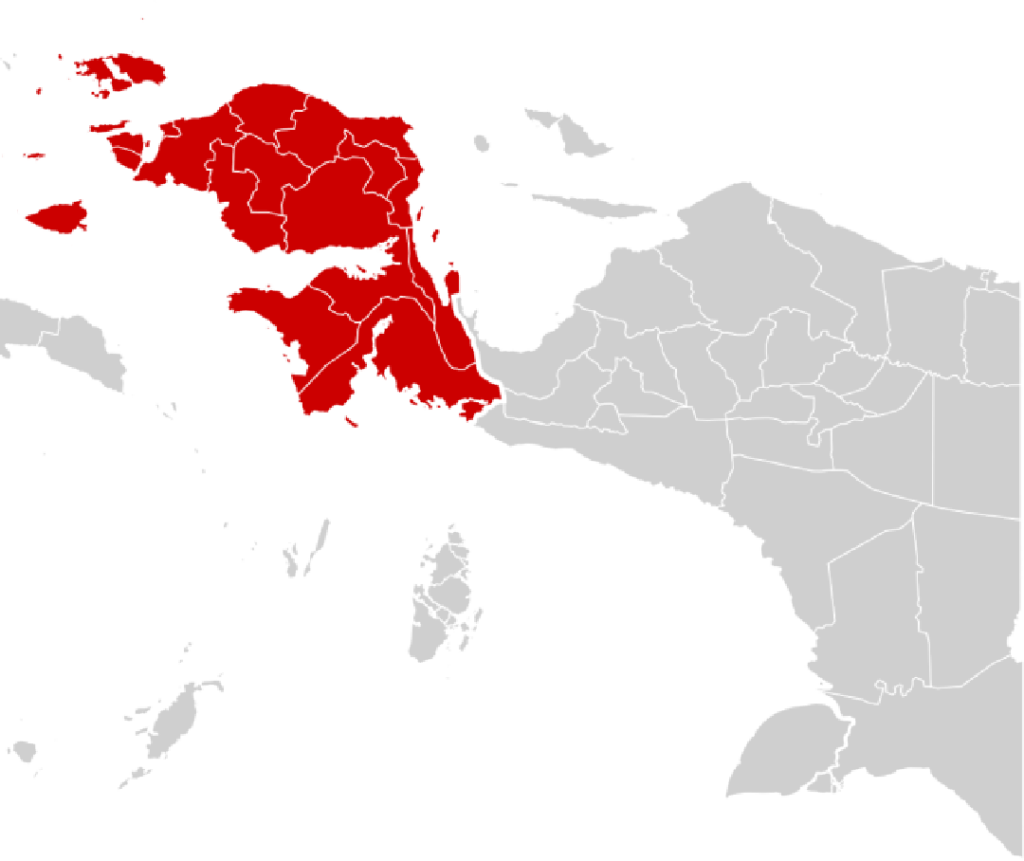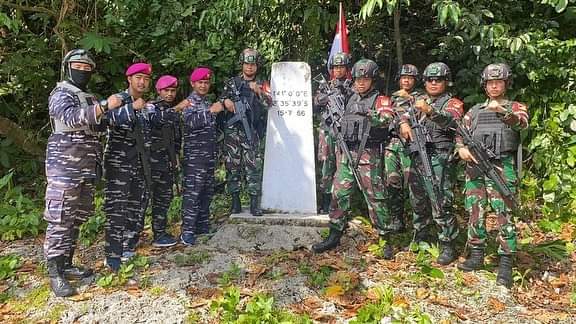
At the eastern edge of Indonesia lies one of the country’s most complex and sensitive frontiers. The border between Papua and Papua New Guinea is not only a political boundary but also a living landscape shaped by shared geography, history, and social ties. Coastal villages, river routes, and maritime corridors have connected communities on both sides of the border for generations. Yet in the modern era, this same openness has created vulnerabilities that are increasingly exploited by criminal networks.
For Indonesia, the maritime segment of the Papua–Papua New Guinea border represents a strategic challenge. Vast waters, limited infrastructure, and difficult terrain make constant monitoring a demanding task. These conditions have allowed smuggling networks to operate with relative ease, moving illicit goods such as narcotics, illegal fuel, and other contraband through sea routes that are hard to police. In response to these growing threats, the Indonesian Navy has significantly intensified patrol operations in the region.
The expansion of naval patrols marks a shift toward a more proactive security posture. Rather than reacting after crimes occur, the navy is now focused on deterrence, visibility, and sustained presence in Indonesia’s eastern maritime frontier.
Rising Concerns Over Smuggling and Cross-Border Crime
Over the past several years, Indonesian authorities have recorded repeated cases of cross-border smuggling linked to the Papua–Papua New Guinea route. Among the most serious concerns is the trafficking of narcotics, particularly marijuana, which security officials say frequently enters Papua through maritime channels from across the border.
These illegal flows have broader consequences than simple lawbreaking. Drug trafficking fuels local crime, damages public health, and undermines social stability in communities that already face economic challenges. For residents in coastal areas of Papua, the impact is felt directly in daily life, from rising insecurity to the erosion of trust in informal trade networks.
Recognizing these risks, the Indonesian government has placed border security in Papua high on its national defense and law enforcement agenda. Naval patrols have become a central pillar of this strategy, aimed at cutting off smuggling routes before illegal goods can reach land.
A Stronger Naval Presence at Sea
The Indonesian Navy’s response has been both visible and sustained. Warships and patrol vessels have been deployed more frequently to waters near the Papua–Papua New Guinea border, conducting routine patrols and targeted operations in areas identified as smuggling corridors.
According to official statements, the navy has mobilized multiple assets from its eastern command, ensuring that patrol coverage is not limited to sporadic missions but maintained as a continuous presence. This approach is designed to deny criminal groups the opportunity to predict patrol patterns and exploit gaps in enforcement.
Naval commanders have emphasized that these patrols are not symbolic. Each deployment involves surveillance, identification of suspicious vessels, and readiness to intercept illegal activities at sea. The goal is to create an environment in which smuggling becomes increasingly risky and less profitable.
Leadership and Operational Oversight
At the operational level, naval forces based in Papua play a key role in executing the patrol strategy. From Jayapura, commanders oversee maritime operations that extend across coastal waters and into Indonesia’s outer maritime zones.
Senior officers have repeatedly stressed that maintaining discipline and professionalism is essential in these missions. Crews are trained not only to conduct enforcement operations but also to engage respectfully with local fishermen and coastal residents. This balance is important in a region where traditional fishing routes intersect with international boundaries.
The navy’s leadership has also underscored that patrols are conducted in accordance with international maritime law, ensuring that Indonesia’s actions reinforce its legitimacy and commitment to lawful border management.
Interagency Cooperation on the Maritime Frontier
While the navy plays a central role, maritime security along the Papua–Papua New Guinea border is not the responsibility of a single institution. The Indonesian Navy works closely with the national police, customs authorities, and local governments to create a coordinated security framework.
Information sharing has become a critical component of this cooperation. Intelligence gathered by one agency can trigger patrols or inspections by another, creating a networked response to emerging threats. This integrated approach reflects an understanding that smuggling networks are adaptive and require equally adaptive enforcement strategies.
Joint operations and coordination meetings are now more frequent, particularly in areas identified as high risk. These efforts help ensure that naval patrols are supported by land-based enforcement once illegal goods are intercepted or suspects are detained.
Geography as Both Challenge and Opportunity
The physical environment of Papua’s maritime border is one of its defining characteristics. Dense forests, winding coastlines, and remote islands create natural concealment for illicit activities. For smugglers, these features offer routes that are difficult to monitor using conventional means.
For the navy, however, geography also presents an opportunity. By deploying patrols strategically and leveraging local knowledge, naval forces can focus on chokepoints and high traffic corridors where illegal movements are most likely to occur.
The expansion of patrols has been accompanied by improvements in maritime awareness. Better coordination and observation allow authorities to build a clearer picture of activity patterns at sea, making it easier to distinguish legitimate fishing operations from suspicious movements.
Protecting Communities, Not Just Borders
Beyond the strategic implications, increased naval patrols have a tangible impact on everyday life in Papua’s coastal communities. Fishermen operating near the border often express concern about encountering smugglers or becoming inadvertently entangled in illegal activities.
A stronger naval presence provides reassurance. When patrol vessels are visible, fishermen report feeling safer at sea and more confident that their livelihoods are protected. This sense of security is an important but often overlooked outcome of maritime enforcement.
Naval officers have also engaged with local communities, encouraging residents to report suspicious activity and explaining the purpose of patrol operations. Such outreach helps build trust and reinforces the idea that border security is a shared responsibility.
Smuggling as a Regional Security Issue
The challenge of smuggling along the Papua–Papua New Guinea border is not isolated to Indonesia. It is part of a broader regional issue that affects multiple countries in the Pacific. Criminal networks often operate across borders, exploiting differences in enforcement capacity and legal frameworks.
Indonesia’s intensified patrols send a signal beyond its own waters. They demonstrate a commitment to regional stability and the rule of law. While patrols are conducted within Indonesian jurisdiction, they contribute to a broader effort to reduce cross-border crime in the region.
Indonesian officials have emphasized that while enforcement is firm, cooperation with neighboring countries remains important. Security measures are designed to complement diplomatic engagement, not replace it.
Technology and the Future of Patrol Operations
Looking ahead, the Indonesian Navy is expected to continue modernizing its patrol capabilities. Advances in surveillance technology, communication systems, and maritime monitoring tools offer new ways to enhance coverage across vast waters.
While human presence remains essential, technology can multiply the effectiveness of patrols by improving detection and response times. Investments in these areas are seen as critical to sustaining gains made through increased deployment.
Training is another key factor. Naval personnel operating in Papua must be prepared for complex environments that require both technical skill and cultural sensitivity. Ongoing professional development ensures that crews are equipped to handle the unique demands of border operations.
Measuring Impact and Maintaining Momentum
The effectiveness of expanded patrols is measured not only by seizures and arrests but also by longer term trends in crime and security. Officials have indicated that disruptions to smuggling routes are already being observed, with criminal groups forced to change tactics or abandon certain routes.
However, authorities remain cautious. Smuggling networks are resilient and adaptable, and sustained pressure is necessary to prevent a resurgence. This reality underscores the importance of maintaining patrol intensity even when immediate threats appear to subside.
Public communication also plays a role in sustaining momentum. By keeping communities informed about patrol efforts and their results, authorities help reinforce public confidence in security institutions.
Sovereignty and National Presence in Eastern Indonesia
At a deeper level, naval patrols along the Papua–Papua New Guinea border are about more than crime prevention. They are a demonstration of sovereignty and state presence in a region that has long been perceived as distant from central authority.
For residents of Papua, seeing the Indonesian flag on naval vessels reinforces a sense of inclusion within the national framework. It signals that the state is attentive to their security concerns and committed to protecting their rights and livelihoods.
This symbolic dimension should not be underestimated. In regions where geography and history have sometimes fostered feelings of marginalization, visible state presence can strengthen national cohesion.
Conclusion
The Indonesian Navy’s intensified patrols along the Papua–Papua New Guinea border reflect a strategic commitment to safeguarding one of the country’s most sensitive frontiers. Through sustained deployments, interagency cooperation, and community engagement, the navy is working to reduce smuggling, deter criminal activity, and enhance safety in coastal waters.
While challenges remain, the expanded patrols mark an important step toward long term maritime security in eastern Indonesia. They demonstrate that border protection is not a temporary campaign but an ongoing responsibility that requires vigilance, adaptability, and partnership with local communities.
As Indonesia continues to strengthen its presence in Papua’s maritime domain, the success of these patrols will ultimately be measured by their ability to create safer seas, stronger communities, and a more secure national frontier.