
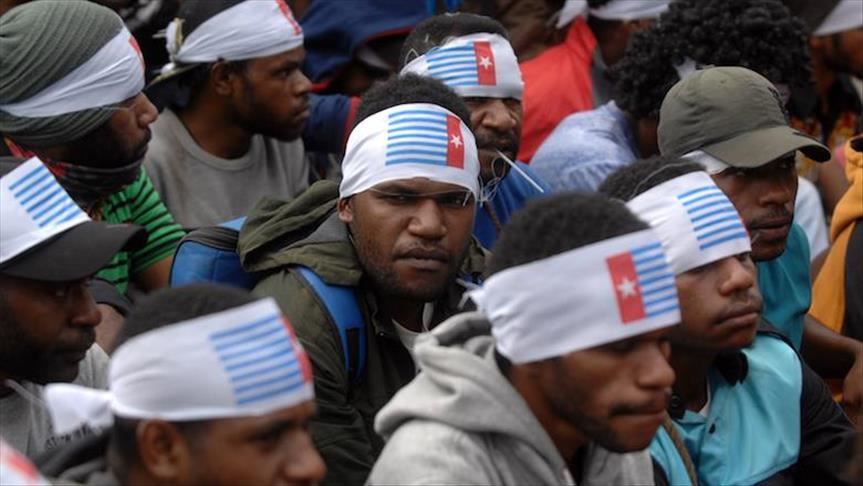
In the quiet town of Dekai, the capital of Yahukimo Regency in Papua’s mountainous interior, an unsettling reality surfaced at the end of 2025. Indonesian security authorities revealed that approximately 100 young people had been recruited by the armed faction of the Free Papua Movement, also known as Organisasi Papua Merdeka or OPM. The disclosure sent shockwaves through local communities, underscoring a troubling pattern in which vulnerable youth are drawn into armed networks amid persistent social and economic challenges.
For many families in Yahukimo, the news was not entirely surprising. The region has long struggled with limited access to education, job opportunities, and public services. Yet seeing the number put into concrete terms brought renewed urgency. These were not abstract statistics but young men who once attended local schools, helped their families in subsistence farming, or dreamed of a better future beyond the isolation of the highlands.
The recruitment of such a significant number of youth reflects a deeper crisis that goes beyond security concerns. It highlights the intersection of poverty, unemployment, disrupted education, and prolonged conflict that continues to shape daily life in parts of Papua.
How Recruitment Took Place in Yahukimo
According to police statements, the recruitment occurred primarily in Dekai and surrounding areas throughout 2025. Many of those recruited were reportedly unemployed and had dropped out of school. This combination made them particularly vulnerable to persuasion by OPM operatives, who often exploit frustration and lack of opportunity to gain new followers.
Security officials explained that recruitment was not always carried out through overt ideological indoctrination. In many cases, young people were approached through personal networks, peer influence, or promises of belonging and protection. Some were enticed with narratives portraying armed struggle as a form of resistance or identity, while others were drawn in simply because they saw no viable alternatives for survival or self-worth.
Investigations following security operations in Yahukimo revealed that the recruitment intensified after the disruption of several OPM cells. Rather than weakening the group, these losses triggered a push to replenish manpower by targeting young people with limited prospects. The result was a surge in youth involvement that alarmed both local authorities and community leaders.
Youth Vulnerability and the Roots of Radicalization
The involvement of young people in armed movements rarely occurs in a vacuum. In Yahukimo, structural challenges have created conditions where radicalization can take hold more easily. Geographic isolation remains a defining feature of the regency, with many villages accessible only by air or long treks through difficult terrain. This isolation complicates the delivery of education, healthcare, and economic programs.
Educational attainment in parts of Yahukimo remains uneven. While schools exist, teacher shortages, limited facilities, and security disruptions often undermine consistent learning. When students drop out, pathways to vocational training or employment are scarce. For many young people, the transition from adolescence to adulthood becomes a period of uncertainty and frustration.
Unemployment compounds the problem. Formal job opportunities are extremely limited, and informal work does not always provide stable income. In this environment, armed groups can position themselves as an alternative structure offering purpose, status, or material support, even if the reality is far harsher than promised.
The Security Response and Its Limitations
Indonesia’s response to the recruitment of youth by OPM has included intensified security operations through task forces such as Damai Cartenz. These operations aim to dismantle armed networks, arrest key figures, and prevent further violence against civilians and security personnel.
Police officials have emphasized that firm law enforcement is necessary to protect communities from intimidation and violence. The presence of armed groups not only threatens security but also disrupts education, healthcare delivery, and local governance. From this perspective, restoring order is seen as a prerequisite for development.
However, authorities increasingly acknowledge the limitations of a purely security-based approach. While arrests and patrols may disrupt recruitment temporarily, they do not eliminate the underlying drivers that push young people toward armed groups. Without parallel efforts to improve living conditions, recruitment risks re-emerge in new forms.
Government Strategy Shifts Toward Welfare and Development
In response to these realities, the Indonesian government has reiterated its commitment to addressing the root causes of conflict in Papua through welfare-oriented policies. Officials have emphasized that preventing the regeneration of OPM requires sustained investment in human development, not just security enforcement.
National and regional governments have framed education, healthcare, and economic empowerment as essential tools for peace. Programs aimed at improving school access, providing scholarships, and expanding vocational training are increasingly positioned as part of a broader conflict prevention strategy.
Economic initiatives also play a central role. By supporting agriculture, small businesses, and local industries, the government hopes to create employment opportunities that anchor young people in productive livelihoods. Infrastructure development, including roads and telecommunications, is intended to reduce isolation and integrate remote regions like Yahukimo into broader economic networks.
Education as a Shield Against Recruitment
Education stands out as one of the most critical factors in preventing youth involvement in armed groups. When young people are engaged in meaningful learning, they are less susceptible to recruitment narratives that exploit frustration and alienation.
Government programs in Papua have sought to expand access to education through school construction, teacher deployment, and scholarship schemes. Special attention has been given to Indigenous Papuan students, reflecting a broader commitment to inclusive development under the Special Autonomy framework.
Beyond formal education, vocational training is increasingly emphasized. Skills-based programs in areas such as mechanics, carpentry, agriculture, and digital services aim to provide practical pathways to employment. For youth who have already left school, these programs offer a second chance to build a future outside the cycle of violence.
Community Voices and Local Leadership
Community leaders in Yahukimo have repeatedly stressed that development initiatives must involve local participation to be effective. Elders, religious figures, and traditional leaders play a vital role in shaping norms and guiding young people. When these figures are included in development planning, programs are more likely to resonate with local values and realities.
Some community members argue that strengthening family and cultural institutions is as important as economic assistance. In many Papuan societies, communal ties and customary practices provide a sense of belonging that can counter the appeal of armed groups. Supporting these institutions through inclusive governance can reinforce social resilience.
Local leaders have also called for greater dialogue and trust-building between communities and the state. When people feel heard and respected, they are more willing to engage with government programs and less likely to view armed movements as their only voice.
Breaking the Cycle of Regeneration
One of the most pressing concerns for policymakers is the cycle of regeneration that sustains armed groups. As older members are arrested or killed, younger recruits step in to fill the ranks. Breaking this cycle requires sustained, long-term commitment rather than short-term interventions.
The recruitment of 100 young people in Yahukimo serves as a stark reminder of how quickly this cycle can continue if conditions remain unchanged. Each recruited youth represents not only a security risk but also a lost opportunity for development.
Government officials have framed welfare programs as preventive measures that reduce the pool of potential recruits. By improving living standards and expanding opportunities, they aim to make armed movements less attractive and less viable.
A Long Road Toward Stability
Papua’s challenges are complex and deeply rooted in history, geography, and socio-economic disparities. There are no quick solutions. Yet the growing recognition that welfare and development are central to peace marks an important shift in approach.
While security operations will remain necessary to protect civilians, they are increasingly complemented by policies that prioritize human dignity and opportunity. The success of these efforts depends on consistency, transparency, and genuine engagement with local communities.
In Yahukimo, the hope is that future generations of young people will see education, work, and civic participation as realistic paths forward. When those paths are visible and accessible, the appeal of armed recruitment diminishes.
Conclusion
The recruitment of 100 young people by OPM in Yahukimo is more than a security incident. It is a reflection of the vulnerabilities faced by youth in regions where opportunity remains scarce. Addressing this challenge requires a comprehensive approach that balances law enforcement with meaningful investment in human development.
Indonesia’s efforts to improve welfare in Papua represent an attempt to rewrite the narrative of conflict into one of inclusion and progress. The stakes are high. Every young person diverted from violence toward education and employment is a step closer to lasting peace.
Ultimately, preventing the regeneration of armed groups is not only about stopping recruitment. It is about ensuring that young Papuans can envision a future defined by opportunity rather than conflict. The path is difficult, but with sustained commitment, it is a future that remains within reach.

