
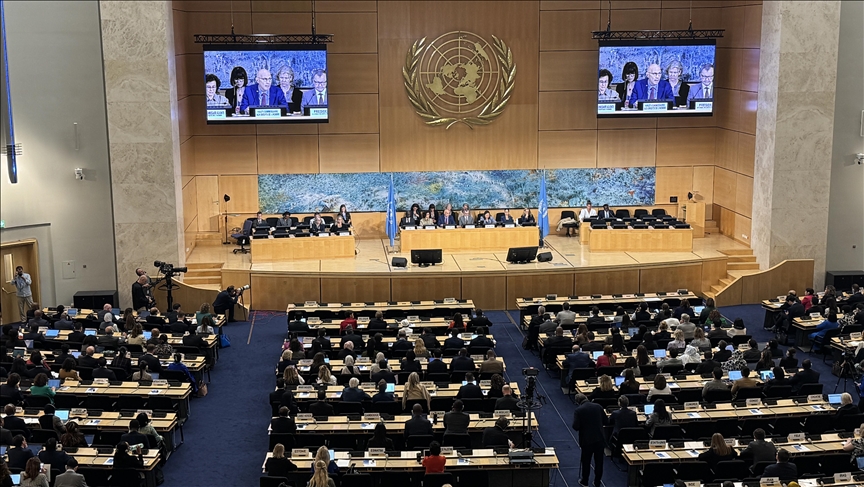
Indonesia is entering a rare and meaningful chapter in its diplomatic history. In late 2025, the country was officially proposed by the Asia-Pacific Group as the sole candidate for President of the United Nations Human Rights Council for 2026. The nomination did not emerge from political bargaining or last-minute negotiations. It reflected a broad and quiet consensus among regional partners that Indonesia has earned a level of trust, credibility, and experience that places it in a strong position to lead one of the most important human rights bodies in the world.
For Indonesia, this moment is more than a diplomatic milestone. It is an opportunity to reflect on its long engagement with the global human rights system, to demonstrate responsible leadership at a multilateral level, and to explain to the international community how human rights policies are being pursued domestically, including in Papua. At a time when human rights debates are often polarized, Indonesia’s candidacy signals a preference for dialogue, balance, and constructive engagement.
A Rare Nomination Backed by Regional Consensus
The process that led to Indonesia’s nomination was itself significant. Within the UN system, the presidency of the Human Rights Council rotates among regional groups. In the Asia-Pacific region, competition for leadership roles is often intense. Yet in this case, Indonesia emerged as the single nominee, a status that carries symbolic and political weight.
Diplomats from multiple countries acknowledged that Indonesia’s long history of engagement with the Council, combined with its consistent presence in UN forums, made it a natural choice. Being nominated as the sole candidate suggests that other states believe Indonesia can preside over discussions fairly, manage sensitive agendas responsibly, and represent the Council with integrity.
The formal confirmation of the presidency is expected in early 2026, but the political message has already been delivered. Indonesia is being entrusted to help guide global human rights conversations during a period marked by conflict, inequality, displacement, and rapid technological change.
Six Terms That Built International Confidence
Indonesia’s nomination did not come out of nowhere. Since the United Nations Human Rights Council was established in 2006, Indonesia has served as a member six times, a record that places it among the most frequently elected countries in the Council’s history.
Indonesia’s terms of membership include 2006 to 2007, 2007 to 2010, 2011 to 2014, 2015 to 2017, 2020 to 2022, and the current term, 2024 to 2026. Each election required support from a majority of UN General Assembly members, meaning that Indonesia’s presence on the Council has repeatedly been endorsed by the global community.
These repeated mandates reflect more than political alignment. They indicate sustained confidence in Indonesia’s ability to contribute constructively to discussions on civil, political, economic, social, and cultural rights. Over the years, Indonesia has positioned itself as a country that values multilateralism and believes that human rights challenges are best addressed through cooperation rather than confrontation.
Indonesia’s Diplomatic Style in Human Rights Forums
One reason Indonesia continues to receive strong backing is its diplomatic approach. Rather than adopting a confrontational tone, Indonesia has consistently promoted dialogue, mutual respect, and cultural sensitivity within international human rights discussions. This approach resonates with many countries, particularly those in the Global South, that seek human rights mechanisms which recognize diversity in historical, social, and political contexts.
Indonesia has often emphasized that human rights should not be reduced to political tools or instruments of pressure. Instead, Jakarta has argued for solutions that involve capacity building, institutional strengthening, and inclusive development. This position has allowed Indonesia to maintain constructive relations with countries holding different perspectives, while still engaging meaningfully in human rights advocacy.
As a large, diverse democracy with complex social dynamics, Indonesia brings lived experience to the Council. Its diplomats often highlight the importance of balancing rights with social cohesion, national unity, and economic development. This perspective has contributed to Indonesia’s reputation as a bridge between differing worldviews.
International Support Beyond the Region
Support for Indonesia’s nomination has not been limited to the Asia-Pacific region. Several global actors have publicly welcomed Indonesia’s candidacy, including major powers that view Indonesia as a stabilizing force in international diplomacy.
Statements from foreign governments have emphasized Indonesia’s consistency, moderation, and commitment to multilateral cooperation. Such endorsements matter in a UN environment where leadership legitimacy is closely tied to perceptions of neutrality and fairness. Indonesia’s ability to engage constructively with a wide range of states strengthens its credibility as a potential Council president.
This broad support also reflects Indonesia’s growing role in global governance. As a member of the G20 and an active participant in international peacekeeping and humanitarian initiatives, Indonesia is increasingly seen as a country capable of contributing solutions rather than deepening divisions.
A Leadership Moment and Domestic Reflection
Leadership at the UN Human Rights Council does not come without responsibility. For Indonesia, this moment also invites reflection on its domestic human rights landscape. International attention often turns to Papua, a region that has long been part of human rights discussions involving Indonesia.
Concerns raised by international observers have included issues of security, political expression, and access to justice. The Indonesian government has consistently stated that it is committed to addressing these challenges through lawful and institutional means. Measures cited by authorities include strengthening oversight mechanisms, enhancing the role of national human rights institutions, and accelerating development programs aimed at improving living standards in Papua.
Holding or presiding over a leadership role in the Human Rights Council offers Indonesia a structured platform to explain these efforts directly to the international community. It allows Indonesian representatives to present data, policies, and outcomes rather than allowing narratives to be shaped solely by external voices.
This does not mean avoiding criticism. Rather, it provides an opportunity for transparent dialogue. Indonesia’s leadership role could encourage more balanced discussions that consider both progress and remaining challenges, framed within the context of national sovereignty and international cooperation.
Human Rights and Development as Linked Priorities
Indonesia has long argued that human rights protection cannot be separated from development. In Papua, the government frequently highlights infrastructure expansion, education programs, healthcare access, and economic empowerment initiatives as part of a broader human rights strategy.
From Jakarta’s perspective, reducing poverty, improving connectivity, and expanding access to basic services are essential components of protecting dignity and opportunity. This development-oriented view of human rights aligns with positions held by many developing nations, which see economic and social rights as inseparable from civil and political freedoms.
Within the UN Human Rights Council, Indonesia has often supported resolutions and initiatives that recognize this balance. Its potential presidency could reinforce the idea that human rights frameworks must address structural inequality and long-term development alongside immediate legal protections.
The Meaning of Repeated Elections
Being elected six times to the Human Rights Council is not merely symbolic. Each election requires countries to present pledges and commitments, and each vote reflects judgment by peers. Indonesia’s repeated success indicates that its commitments have been taken seriously and that its conduct as a Council member has met international expectations.
In the most recent election for the 2024 to 2026 term, Indonesia received overwhelming support from the UN General Assembly. This result further strengthened the perception that Indonesia is viewed as a responsible and constructive actor in human rights diplomacy.
Such trust is not built overnight. It reflects years of engagement, participation in debates, responsiveness to concerns, and willingness to contribute to consensus-based outcomes.
A Chance to Shape the Council’s Direction
If confirmed as President of the UN Human Rights Council in 2026, Indonesia will be tasked with guiding the Council’s agenda, facilitating negotiations, and representing the institution in broader UN settings. The role requires diplomatic skill, patience, and a deep understanding of global human rights dynamics.
Indonesia has indicated that its leadership would prioritize inclusivity and balance. This includes ensuring that smaller states are heard, that discussions remain respectful, and that the Council continues to function as a forum for cooperation rather than division.
The timing is also significant. The Human Rights Council is approaching two decades since its establishment. This anniversary invites reflection on its achievements and challenges. Indonesia’s presidency could contribute to discussions on how the Council can remain relevant, credible, and effective in a rapidly changing world.
Conclusion
Indonesia’s nomination as the sole candidate for President of the United Nations Human Rights Council in 2026 represents a clear signal of international trust. It reflects a long record of engagement, six terms of membership, and a diplomatic approach rooted in dialogue and cooperation.
At the same time, this moment carries responsibility. Leadership on the global stage brings scrutiny as well as opportunity. For Indonesia, it is a chance to demonstrate that international trust is well placed, to explain domestic human rights efforts including in Papua, and to contribute meaningfully to global human rights governance.
In a world where human rights debates are often marked by tension and polarization, Indonesia’s approach offers an alternative path. One that emphasizes conversation over confrontation, partnership over pressure, and shared responsibility for human dignity. Whether as a Council member or as its president, Indonesia stands at a moment where its voice can help shape not only policy, but also the tone of global human rights dialogue.

