
As December approaches and the air fills with the promise of Christmas and the New Year, a quiet hope stirs across the islands, coasts, and highlands of Papua. For many Papuan families, the festive season is more than just parties or gatherings—it is a deep longing to return to ancestral villages, to see extended family, to reconnect with traditions, and to gather under familiar roofs in kampungs often far from urban centers. But for much of the population, the cost and difficulty of travel make those hopes distant. Sea routes, limited flights, and expensive fares make the journey home feel like a luxury, out of reach for many. This year, however, the tide may turn for thousands of Papuans: the provincial government has launched a free homecoming program, aiming to make “going home for the holidays” a reality for those who need it most.
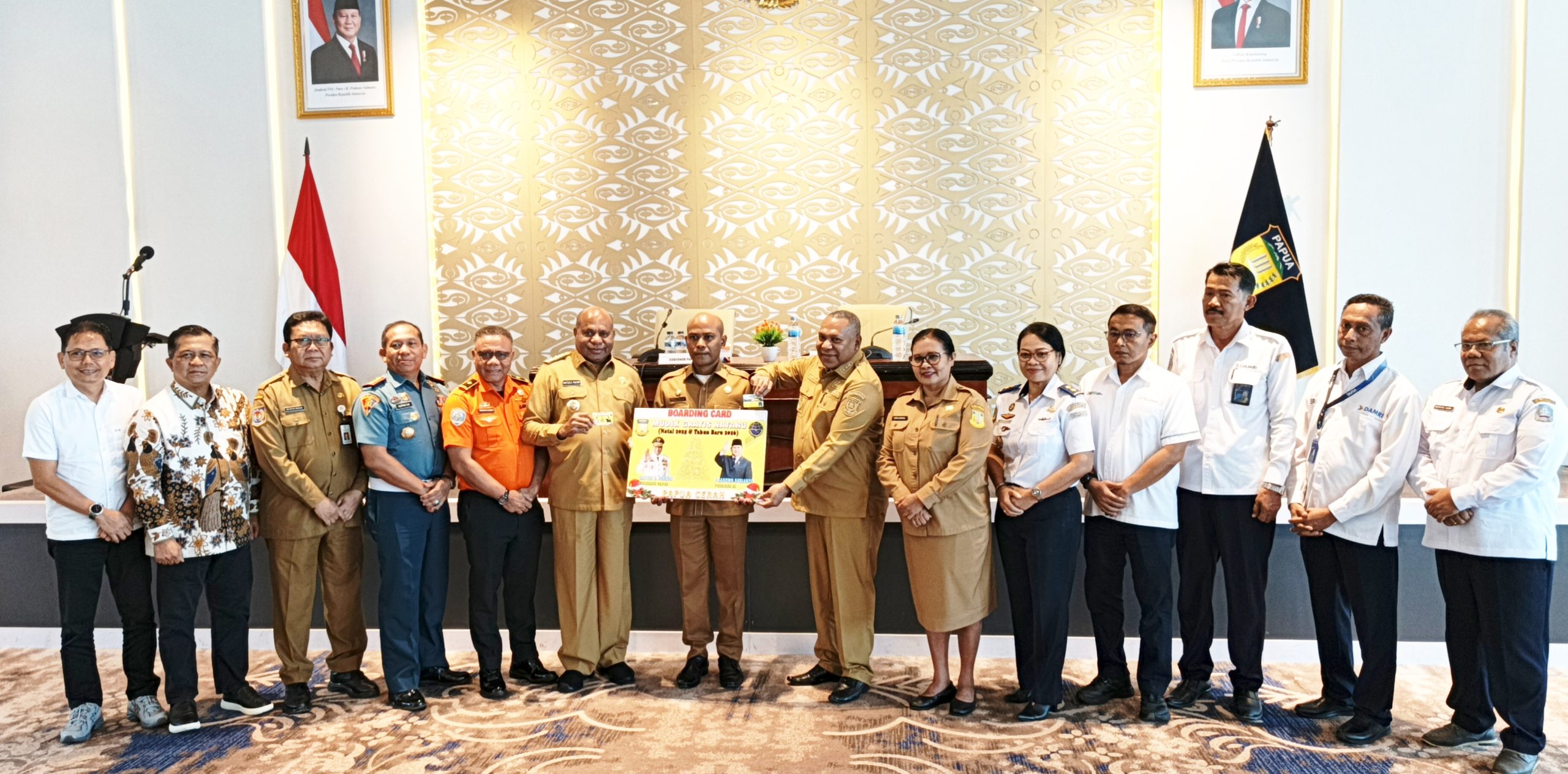
On December 8, 2025 in Jayapura, the capital of Papua, local officials announced the new program that promises free transportation for 16,000 residents during the Christmas 2025 and New Year 2026 period. The initiative is described as an effort to relieve economic burdens and ensure that no one misses the chance to reunite with loved ones because of cost. What had once been a distant dream for many suddenly feels within reach.
Why Papua Needs This: Geography, Cost, and Distance
Papua is a land of staggering natural beauty—and daunting challenges. Rugged mountains, dense forests, sprawling coastlines, and a multitude of islands define its geography. For many Papuans, traveling from one district to another involves long boat rides, rough sea crossings, or difficult land transport through remote terrain. Infrastructure is uneven; roads may be absent, flights rare and costly, and sea travel often the only option.
Because of this, returning home for holidays has long been a costly affair. For families earning modest incomes, the expenses for travel—tickets, food, lodging—are often beyond their reach. In many cases, the cost of just one person’s journey might equal a significant fraction of monthly earnings. During holiday seasons, prices tend to increase further due to demand, making the dream of reuniting with family even more challenging. Therefore, the decision by the provincial government to provide free tickets is not just a convenience—it is a crucial intervention that acknowledges the harsh realities of geography, transport limitations, and economic hardship in Papua.
The Logistics Behind the Free Ride: Sea, Land, and Coordination
Putting a program of this scale into motion is no small feat. To deliver 16,000 free tickets across the varied terrain of Papua—from coastal villages to remote island districts—careful planning and coordination were required. The government has partnered with several agencies, including the marine transport operator PT Pelni, to run ships and pioneer routes during the holiday period.
According to Pelni’s Jayapura branch, six large passenger vessels and three pioneer boats are being prepared to serve the heavy flow of travelers during Natal and Tahun Baru (Nataru). Vessels like KM Gunung Dempo, KM Ciremai, KM Dobonsolo, and KM Dorolonda are among those slated to operate—alongside pioneer ships tasked with reaching more remote and less-accessible communities.
But sea transport is not the only focus: the program also considers overland or inter-regional routes where applicable to ensure connectivity from urban centers like Jayapura to hinterland and coastal areas. Provincial authorities say they are working with the national transportation ministry and local district administrations to guarantee that transport links—whether by sea or by land—are functional, safe, and timely.
The logistical challenge extends beyond transport: it encompasses port management, safety, scheduling, fuel supply, and administrative coordination to distribute tickets fairly. The fact that the government is attempting to cover such a wide range of transport modes—sea, land, coastal, island—reflects an understanding of Papua’s unique geography and the diversity of its communities.
The Human Impact: What This Means for Families
For many Papuans, this program is more than just a free ticket—it is a bridge back to family, tradition, and belonging. Imagine a mother living in Jayapura who hasn’t seen her children in the highlands for months because travel costs made the trip impossible. Or a young man working in a coastal area, longing to return to his village of birth for a traditional gathering or to celebrate Christmas with aging parents. For them, this initiative represents hope—real, tangible, and immediate.
The emotional weight of Christmas and New Year in Papua is different; it’s not just about celebrations—it’s about identity, roots, and community. Many villages hold ancestral ceremonies, customary gatherings, or simple family prayers. By making travel accessible, the government is helping families preserve cultural bonds and social cohesion. In addition, for communities in remote areas with limited access to markets, health services, or social infrastructure, returning relatives may bring news, resources, or help—strengthening ties across distances.
The free mudik program, then, is not merely about transport; it is about restoring connections—connecting people to their roots, families, culture, and community.
Government Intentions: Solidarity, Equity, and Inclusivity
The decision to launch such a broad-based free homecoming program reflects a deliberate political and social choice. As stated by the provincial leadership, the government sees itself as having a responsibility to “be ”present”—especially for those who are economically disadvantaged or geographically isolated.
This initiative also aims to promote equity. In a region where gaps in access—to transport, services, and opportunities—remain wide, subsidizing transport for the least advantaged can help mitigate inequality. It sends a message: economic hardship or geographic isolation should not determine whether a family can reunite for important cultural and religious celebrations.
Moreover, the inclusion of safety measures, like travel insurance, signals that the government is not just offering a ride but trying to guarantee dignity, safety, and comfort for travelers. In a region where sea travel can be unpredictable, where weather conditions or limited infrastructure pose real risks, the decision to include insurance and to cooperate with established operators like Pelni shows a commitment to responsibility.
Finally, by coordinating with local governments, ministries, shipping companies, and port authorities, the program reflects an effort at inter-institutional cooperation—an approach that may serve as a model for future social programs in Papua and beyond.
Challenges Ahead: Distribution, Demand, and Fairness
Despite the promise, the free homecoming program faces real challenges. Distributing 16,000 tickets across a region as vast and heterogeneous as Papua is not easy. Rural and remote communities may have less access to information, administrative support, or registration channels than urban dwellers, risking uneven distribution. Without attentive management, there is a real danger that those who most need the benefit may be the least likely to receive it.
There are also operational concerns: weather conditions, sea safety, coordination of ports, fuel availability, and time scheduling all pose risks. Sea travel—especially in remote or coastal Papua—can be unpredictable; storms, rough seas, or poor port infrastructure could cause delays or cancellations. Ensuring all participating vessels pass safety inspections, are properly maintained, and can navigate safely is essential.
Additionally, demand may outstrip supply. With only 16,000 tickets but potentially tens of thousands of people wanting to go home for the holidays, the selection process must be transparent, fair, and widely communicated—a tall order in a region with limited internet connectivity and scattered populations. The government will need to monitor closely to ensure that the program does not inadvertently favor more connected or urban communities.
What Residents Need to Know: How to Prepare
For those considering using the program, staying informed is critical. Registration processes, ticket distribution points, deadlines, and required documentation should be communicated clearly by local administrations, community leaders, or transport offices. Because routes vary—some by sea, some by land, some through pioneer boats—travellers must confirm which vessel or route suits their home village or destination.
It will also be important to follow safety instructions: observe boarding schedules, ensure tickets and travel documents are in order, and adhere to any safety briefings. For families traveling with elderly members or children, early arrival at ports or terminals might help avoid overcrowding during peak departure times.
And for those who cannot secure a free ticket—there may still be hope: private or commercial transport, carpooling with community members, or combining land and sea legs with subsidized parts may offer alternatives. The mere existence of this program could encourage more affordable transport options overall.
What This Could Mean for the Future: A Model for Inclusive Connectivity
If executed successfully, Papua’s free homecoming program could set an important precedent—not just for holiday transport, but for long-term infrastructure policy, social welfare, and regional connectivity. By recognizing that mobility is a basic need, especially in geographically challenged regions, the government affirms that remote or coastal communities deserve equal access to public services.
This program may also encourage further investment in transport infrastructure—port upgrades, safer vessels, better scheduling, and more frequent connections. Over time, what starts as a holiday initiative could evolve into regular subsidized routes, or at least more affordable, accessible transport for all Papuans.
Moreover, the social impact—strengthened family ties, preserved cultural practices, and community solidarity—is hard to measure but deeply important. In a region as diverse as Papua, where many small ethnic groups, villages, and languages coexist, maintaining connection across distances is crucial for unity and identity.
The free mudik initiative, therefore, may be more than a seasonal project: it could mark a shift in how the state supports mobility, inclusion, and social cohesion in remote regions of Indonesia.
Conclusion
As December days shorten and festive lights begin to appear in Jayapura’s streets, the mood across Papua is one of cautious hope. For thousands of families, the possibility of returning home for Christmas and New Year no longer feels like a distant dream but a real possibility—thanks to a government program that dares to believe in solidarity, equity, and connection.
If everything goes according to plan—routes running on schedule, vessels safely traversing seas, tickets distributed fairly—then this holiday season could be the first in many years where thousands of Papuans arrive home not just with bags and gifts, but with hearts full of reunion, belonging, and the joy of shared laughter around familiar fires.
In the end, the free homecoming program is more than a logistical exercise. It is a gesture of care—a recognition that travel is not just about moving bodies from point A to B, but about restoring human bonds, preserving identity, and honoring the simple but profound truth that home is where family waits.

