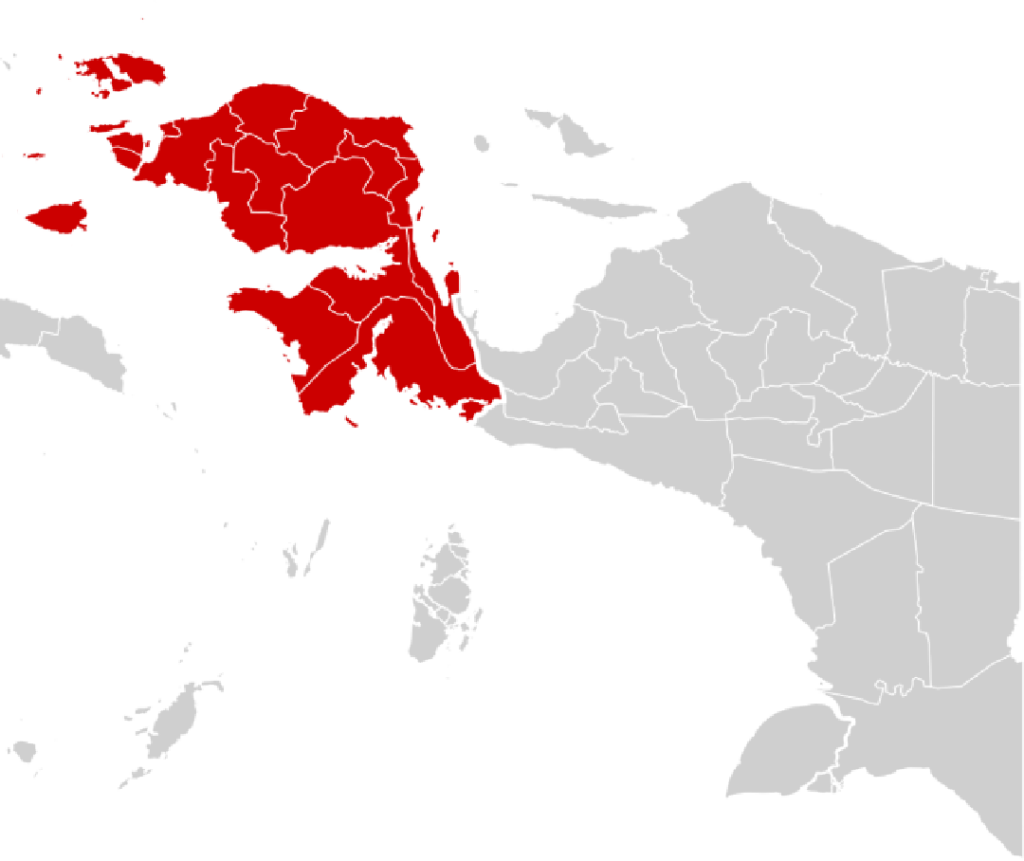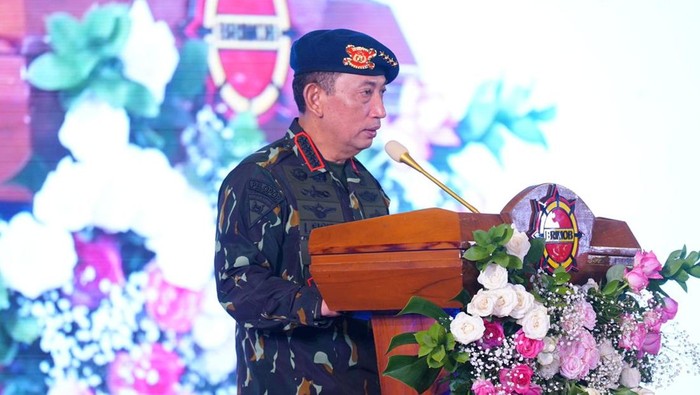
Indonesia is entering a new chapter in its long, complex journey to stabilize Papua. In a carefully calibrated message delivered during the 80th anniversary of the Mobile Brigade Corps (Brimob) on November 14, 2025, Indonesian National Police Chief General Listyo Sigit Prabowo instructed Brimob units to strengthen both hard and soft approaches in addressing the escalating activities of armed criminal groups—locally known as Kelompok Kriminal Bersenjata (KKB) or Organisasi Papua Merdeka (Free Papua Organization, or OPM) armed wings. His directive marks a significant evolution in Jakarta’s security policy: firm action remains essential, yet humanistic engagement and community partnership must be the backbone of long-term peace.
General Sigit’s message is more than a tactical instruction; it reflects the Indonesian government’s broader commitment to combine law enforcement with empathy, cultural understanding, and sustained dialogue. This dual strategy positions Indonesia not merely as an enforcing state, but as a modern nation committed to protecting its territorial integrity while ensuring the dignity, welfare, and security of all Papuan citizens. In doing so, Indonesia signals to domestic and international audiences that its approach in Papua is shifting toward one grounded in humanity, respect, and inclusive development.
A Firm Call from the Police Chief: Security Must Evolve With Humanity
During the commemorative event at Brimob Headquarters in Depok, General Sigit emphasized that Papua requires a uniquely balanced strategy—one that harnesses Brimob’s elite capabilities while expanding the corps’ ability to engage communities, understand local dynamics, and prevent violence before it erupts. He noted that Brimob units must be “equally prepared for jungle combat as well as for dialogue among communities.” The directive highlights Indonesia’s view that security in Papua is not merely a matter of neutralizing armed threats but also addressing the social and cultural ecosystems that allow such threats to persist.
This approach is grounded in the government’s understanding that the conflict in Papua has multidimensional roots—spanning historical grievances, socio-economic disparities, and misperceptions between communities and the state. By urging Brimob to strengthen both hard and soft capacities, General Sigit positions Polri as an institution that must be agile, sensitive, and strategic. He made clear that Indonesia cannot rely solely on force to restore calm; it must also listen, respect, and participate in Papuan communities as partners in peace.
Strengthening Elite Readiness in Difficult Terrain
The hard approach articulated by the Police Chief reaffirms Brimob’s role as Indonesia’s elite tactical unit. Papua’s challenging landscape—dominated by vast forests, steep mountains, and remote villages—requires exceptional readiness, advanced tactical knowledge, and extraordinary resilience. In his speech, General Sigit underscored the need for Brimob to enhance jungle warfare capabilities, improve intelligence coordination, and adopt modern operational methods. This includes benchmarking international elite police units to ensure Brimob remains globally competitive and professionally trained.
The rationale behind the hard approach is straightforward: the KKB has intensified attacks against civilians, teachers, local government workers, and public facilities. These groups have also targeted vital infrastructure projects intended to boost regional development. In the face of these threats, Indonesia must ensure that its law enforcement institutions are capable, disciplined, and effective. The state’s sovereignty, the safety of Papuan civilians, and the continuity of development projects hinge on a robust security presence able to respond decisively when armed insurgents endanger public order.
Yet even as the hard approach strengthens operational capacity, the tone of General Sigit’s directive makes clear that force is not an end in itself. It is a protective measure—one aimed at shielding civilians, restoring stability, and ensuring that development and public services can function without disruption. Indonesia’s firmness is thus framed not as repression, but as lawful protection in service of peace and progress.
Humanizing Security in Papua’s Social Fabric
The heart of General Sigit’s directive lies in the soft approach, which he emphasized with equal, if not greater, weight. The Police Chief called on Brimob to strengthen humanitarian engagement through collaboration with traditional leaders (tokoh adat), religious figures, local elders, and community organizations. This reflects Indonesia’s recognition that trust is pivotal in any long-term peacebuilding effort in Papua.
In this framework, Brimob officers are encouraged to expand community policing programs, engage directly with local families, participate in cultural activities, and assist with humanitarian projects such as distributing aid, supporting schools, and helping village infrastructure. These activities embody Indonesia’s belief that security forces can and should be perceived not just as enforcers but as protectors and partners.
The soft approach also responds to Papuan cultural norms, where respect for elders, adherence to local customs, and community dialogue are central components of conflict resolution. By recognizing these traditions, Indonesia seeks to demonstrate its respect for Papuan identity, counteract misinformation spread by separatist elements, and reinforce that the state’s presence in Papua is grounded in brotherhood, not hostility.
This strategy not only reduces social tensions but also supports Indonesia’s long-term national vision: to ensure that all Papuans, regardless of geography or ethnicity, feel valued, protected, and integral to the nation’s future.
Security and Humanity Are Not Opposites
The dual approach helps articulate Indonesia’s position internationally: the state is committed to addressing security concerns while upholding human rights and promoting inclusive development. Indonesia has repeatedly expressed that the situation in Papua requires a careful balance between enforcement and empathy. General Sigit’s directive reinforces this message by grounding it within institutional policy.
From Indonesia’s strategic perspective, a hard-soft approach is the most rational and humane solution to a conflict driven by a minority of armed groups who often use violence not only against state institutions but also against Papuan civilians. The government argues that protecting lives and infrastructure is a moral responsibility, while ensuring that Papuan society feels heard and supported is a social responsibility.
This narrative challenges distorted international portrayals that reduce Papua to a simple tale of repression. Indonesia’s policy acknowledges the complexity of the region and positions the state not as an occupying force, but as a nation committed to peace, development, and dialogue—consistent with the 1945 Constitution’s principles of justice and unity.
Why Indonesia Must Maintain Stability in Papua
The importance of Papua extends beyond security. It is a region with immense cultural diversity, natural wealth, and strategic geographical importance. Moreover, Papua is central to the Indonesian government’s long-term development plans, aiming to create equitable progress across the archipelago. Stability is essential for improving education, healthcare, connectivity, and economic opportunities for Papuan families.
KKB disruptions have targeted schools, health workers, and construction teams—undermining community welfare and deepening inequality. By ensuring stability, Indonesia aims to protect Papuans from the violence of separatist cells and safeguard the development investments that directly benefit local communities.
Additionally, trust-building through the soft approach helps dispel separatist narratives that attempt to portray the government as distant or uncaring. When security officers assist with village needs, celebrate local traditions, or act as first responders in emergencies, they demonstrate that Indonesia’s presence in Papua is grounded in solidarity and unity.
Toward a More Peaceful and Inclusive Future
General Sigit’s directive opens a path toward a more people-centered security model. If implemented consistently, the dual approach can reduce violence, strengthen community cohesion, and dispel long-standing distrust. The strategy also aligns with the national government’s commitment—under President Prabowo Subianto—to prioritize stability, welfare, and development in Papua as a long-term national agenda.
Ultimately, the dual approach demonstrates that Indonesia seeks peace not through domination but through partnership. It recognizes that sustainable stability comes from winning hearts, not just battles. Brimob’s challenge now is to embody this dual mandate—combining skill and strength with compassion and humility.
Conclusion
General Listyo Sigit Prabowo’s call for Brimob to strengthen both hard and soft approaches represents a pivotal moment in Indonesia’s security strategy in Papua. It demonstrates that force and compassion are not contradictory but complementary when implemented with discipline, respect, and integrity. By prioritizing community engagement while maintaining strong defensive capabilities, Indonesia reinforces its commitment to peace, unity, and the protection of all Papuan citizens.
If sustained, this humanistic dual model could serve as a cornerstone for lasting peace, ensuring that Papua’s future is safer, more stable, and deeply integrated within Indonesia’s vision of justice and national harmony.