
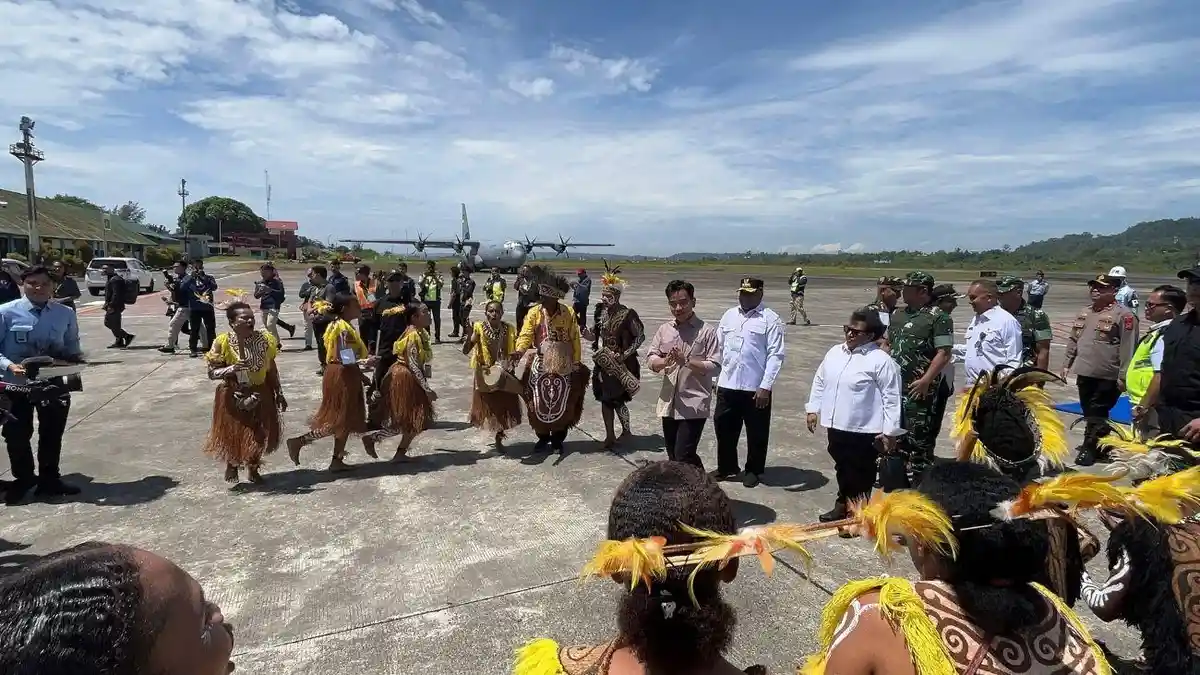
On 13-14 January 2026, Indonesian Vice President Gibran Rakabuming Raka began an official working visit to Papua that took him to Biak Numfor, Yahukimo, and Wamena. The journey was closely followed by national and regional media because it reflected the government’s stated commitment to inclusive development in Papua. From the moment he arrived, the visit was framed not merely as a ceremonial tour, but as an effort to see conditions on the ground and engage directly with communities that have often felt distant from decision making centers in Jakarta.
In Biak Numfor, Gibran was welcomed with traditional dances performed by local residents. Such ceremonies are deeply rooted in Papuan culture and symbolize respect, openness, and communal pride. The reception set the tone for a visit that emphasized human interaction and cultural recognition alongside policy discussions. Observers noted that the vice president consistently wore a Papuan noken bag during his activities, a traditional woven bag that carries strong cultural meaning and is recognized internationally as a symbol of Papuan identity.
Biak Numfor and the Coastal Perspective
Biak Numfor represented the coastal face of Papua, where livelihoods are closely tied to the sea. Gibran, while in the regency, didn’t just stick to official business; he mingled with the locals in their daily lives. A particularly memorable instance involved him buying fish from local vendors, even though the weather was less than ideal. This kind of action resonates with many Papuans, as it shows a genuine connection with the people, rather than just sticking to a rigid schedule.
The vice president also took the time to visit an educational facility in Biak. He toured the classrooms, dining areas, and other supporting structures, asking about the everyday difficulties faced by both students and teachers. Education has always been a key concern in Papua, especially regarding access, quality, and fairness.
Gibran’s visit to a school underscored the idea that education is a cornerstone of inclusive development, not just an afterthought.
Local educators seized the chance to voice their needs, pointing to the necessity of better facilities, reliable nutrition programs, and ongoing support for teachers. Though no new policies were unveiled during the visit, the very act of engaging with the schools brought education to the forefront of Papua’s development discussions.
Education as a Key to Inclusion
Education was a consistent theme throughout his travels. Papua still grapples with significant educational disparities, particularly in remote and mountainous regions. Schools frequently face resource shortages, uneven teacher distribution, and geographical hurdles.
Gibran’s examination of school conditions was thus seen as a clear signal: inclusive development begins with investing in people.
Education extends far beyond classrooms and curricula; it’s about fostering spaces where children can learn without fear, eat well, and imagine futures where they can actively participate in their communities. The vice president’s interactions with teachers and students highlighted the importance of grounding development policies in the actual experiences of people, rather than just aiming for numerical goals.
Yahukimo and the Challenge of Isolation
After visiting the coastal areas, Gibran proceeded to Yahukimo, one of Papua’s most isolated regencies. Yahukimo is frequently mentioned as a place where geographical remoteness exacerbates social and economic difficulties. Access to education, healthcare, and basic infrastructure is limited, and communities depend significantly on government assistance to overcome these obstacles.
The vice president’s inclusion of Yahukimo in his schedule was widely regarded as noteworthy. Visits by high-ranking national leaders to such distant regions are uncommon, primarily due to logistical and security issues.
Gibran’s trip to Yahukimo signaled a commitment to ensuring that inclusive development reaches even the most remote areas.
While there, he and his team focused on fundamental services and the well-being of the community. The vice president heard firsthand accounts of challenges related to education, transportation, and the need for development initiatives that are sensitive to local realities. This visit underscored the government’s stance: development shouldn’t be limited to cities or easily reached places.
Wamena as the Highland Hub
Wamena, the final significant destination, is the largest city in Papua’s central highlands. It serves as a crucial economic and administrative center for the surrounding districts. Wamena is also a key location for discussions about highland development, social unity, and long-term stability.
Gibran’s visit to Wamena was his inaugural official trip there as vice president. Local leaders greeted him warmly, seeing him as a central government figure who was willing to venture into the highlands, rather than just sticking to the provincial capitals. Word was that Gibran spent the night in Wamena, a move that was seen as a gesture of genuine interest and respect for the local people.
During his time in Wamena, the focus was on infrastructure, education, and public services. Community members stressed the need for development programs to actually improve the lives of everyday people. The vice president’s presence underscored the government’s commitment to tackling regional inequalities by directly involving highland communities.
Inclusive Development as a National Narrative
During the visit, the official narrative repeatedly highlighted the idea of inclusive development. This concept holds particular weight in Papua. It signifies more than just economic expansion; it encompasses fair access to education, healthcare, and opportunities, along with a commitment to cultural preservation.
Papua has historically lagged behind other Indonesian regions in terms of development. Although infrastructure improvements have enhanced connectivity in certain areas, social progress hasn’t always kept pace. By emphasizing inclusion during the visit, the government seemed to recognize that development must prioritize people and address local needs.
Gibran’s engagements with students, educators, traders, and community leaders were showcased as demonstrations of this approach.
The visit underscored that listening, engagement, and cultural recognition are key to sustainable development, not just big projects.
Symbols, Culture, and Public Perception
Symbolic acts were significant throughout the visit. The vice president’s frequent use of the noken bag garnered considerable attention. For many Papuans, these symbols hold deep meaning. They signal recognition of identity and history, elements frequently absent from policy debates.
Local observers, however, emphasized that symbolism needs to be backed by tangible results.
Cultural acknowledgment can certainly foster trust, yet that trust endures only when policies are consistently enacted and tangible improvements in living standards are evident. Gibran’s visit, then, was viewed as a beginning, not an end, a signal that the central government was expected to follow through.
Public Reaction and Anticipation
The public’s reaction to the visit was varied, though largely favorable. Many Papuans were grateful for the vice president’s willingness to venture into remote and mountainous regions. Media reports emphasized the vice president’s direct engagement with local communities, a move that resonated with people in Papua and throughout Indonesia.
Still, there was a prevailing sense of cautious optimism.
Past encounters have fostered a certain wariness among Papuans regarding high-profile visits that fail to deliver tangible, enduring benefits. For the younger populace, the quality of education, job prospects, and social integration are still paramount. Gibran’s involvement with schools and youth programs, therefore, resonated strongly.
Papua’s Place in Indonesia’s Development Plans
The visit emphasized Papua’s significance within Indonesia’s overall development framework. By visiting various areas across Papua, the vice president brought attention to the province’s multifaceted challenges. Coastal communities, remote interior regions, and urban centers in the highlands each demand distinct strategies and policy instruments.
Government representatives stressed that Papua’s development must be both flexible and rooted in local realities. This kind of inclusive development isn’t a one-off initiative; it’s a long-term undertaking. It demands collaboration between the central and regional governments, alongside genuine involvement from the people who live there.
Ongoing Development Hurdles
Even with the optimistic tone of the visit, considerable obstacles persist. Infrastructure deficiencies, a shortage of skilled workers, and social disparities won’t be fixed overnight. Security concerns in some regions also hinder the provision of public services and the execution of development projects.
Experts point out that inclusive development in Papua will depend on consistent political commitment, sufficient financial resources, and transparent governance practices.
Visits from national leaders can certainly shine a spotlight on important issues and generate some initial energy, but real, lasting change requires sustained effort and a system of checks and balances.
From Visit to Lasting Change
Gibran Rakabuming Raka’s trip to Biak Numfor, Yahukimo, and Wamena underscored the idea that development starts with being there and getting involved. By visiting schools, markets, and local gathering places, the vice president signaled that Papua is a priority within Indonesia’s broader goals.
The question now is whether this visit will lead to meaningful, long-term results. Papuans will be paying close attention to see if the problems highlighted during the visit result in tangible policies and programs. For the time being, this trip serves as a clear statement of purpose, one that puts inclusive development front and center in discussions about Papua’s future.
Conclusion
The vice president’s sojourn in Papua underscored both optimism and obligation. True inclusive development necessitates more than mere symbolic gestures; it demands consistent efforts to rectify disparities and honor indigenous identities. Gibran’s interactions with Papuan communities provided a glimpse of a more participatory governance model.
As Indonesia formulates its developmental strategies, Papua presents a crucial litmus test. The visits to Biak Numfor, Yahukimo, and Wamena reinforced the principle that inclusive development should encompass all regions, irrespective of geographical constraints. The present challenge is to translate this presence into tangible progress, ensuring that the pledges of inclusion materialize as a tangible reality for Papuan communities.

